All Articles

Esophagus

Esophagus Facts For Kids

The esophagus is a muscular tube that connects the throat to the stomach, allowing the passage of food and liquids through a coordinated series of muscle contractions.

🎨 Reading age for 6-8
Background blob
Esophagus
Esophagus
Facts for Kids!
Image by Olek Remesz (wiki-pl: Orem , commons: Orem ), licensed under Creative Commons Attribution-Share Alike 2.5

Do more with AI

Introduction

The esophagus is a special tube in our body that connects our mouth to our stomach. 🥤When we eat or drink, food travels down this tube! The esophagus is about 10 inches long in adults and is located in our chest area, behind our trachea (the windpipe). It is made of stretchy muscles that help push food forward. Everyone, including animals like dogs and cats, has an esophagus! This tube plays a big role in digestion, helping to move yummy food to a place where we can turn it into energy. 🌟

Images of Esophagus

Upper and lower human gastrointestinal tract

Upper and lower human gastrointestinal tract

Photos of EsophagusImage by Derivative by Mikael Häggström of original by ZooFari ., licensed under Creative Commons Attribution-Share Alike 3.0
The position and relation of the esophagus in the cervical region and in the posterior mediastinum. Seen from behind. (Poirier and Charpy.)

The position and relation of the esophagus in the cervical region and in the posterior mediastinum. Seen from behind. (Poirier and Charpy.)

The esophagus is constricted in three places.[inconsistent]

The esophagus is constricted in three places.[inconsistent]

Photos of EsophagusImage by Samir@enwiki, licensed under Creative Commons Attribution-Share Alike 3.0
Photos of Esophagus
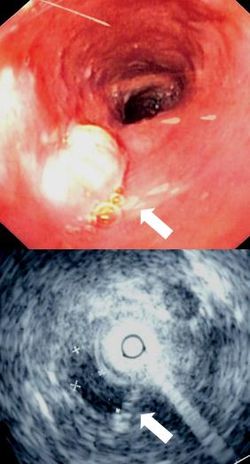
A mass seen during an endoscopy and an ultrasound of the mass conducted during the endoscopy session.Image by Samir at English Wikipedia, licensed under Creative Commons Attribution-Share Alike 3.0

A mass seen during an endoscopy and an ultrasound of the mass conducted during the endoscopy session.

Anatomy of a snake.file info esophagustracheatracheal lungsrudimentary left lungright lungheartliverstomachair sacgallbladderpancreasspleenintestinetesticleskidneysImage by Uwe Gille, licensed under Creative Commons Attribution 2.5

Anatomy of a snake.file info esophagustracheatracheal lungsrudimentary left lungright lungheartliverstomachair sacgallbladderpancreasspleenintestinetesticleskidneys

1. Bile ducts: 2. Intrahepatic bile ducts 3. Left and right hepatic ducts 4. Common hepatic duct 5. Cystic duct 6. Common bile duct 7. Ampulla of Vater 8. Major duodenal papilla 9. Gallbladder 10–11. Right and left lobes of liver 12. Spleen 13. Esophagus 14. Stomach 15. Pancreas: 16. Accessory pancreatic duct 17. Pancreatic duct 18. Small intestine: 19. Duodenum 20. Jejunum 21–22. Right and left kidneys The front border of the liver has been lifted up (brown arrow).[42]Image by Jmarchn, licensed under Creative Commons Attribution-Share Alike 3.0

1. Bile ducts: 2. Intrahepatic bile ducts 3. Left and right hepatic ducts 4. Common hepatic duct 5. Cystic duct 6. Common bile duct 7. Ampulla of Vater 8. Major duodenal papilla 9. Gallbladder 10–11. Right and left lobes of liver 12. Spleen 13. Esophagus 14. Stomach 15. Pancreas: 16. Accessory pancreatic duct 17. Pancreatic duct 18. Small intestine: 19. Duodenum 20. Jejunum 21–22. Right and left kidneys The front border of the liver has been lifted up (brown arrow).[42]

Upper and lower human gastrointestinal tract

Upper and lower human gastrointestinal tract

Photos of EsophagusImage by Derivative by Mikael Häggström of original by ZooFari ., licensed under Creative Commons Attribution-Share Alike 3.0
The position and relation of the esophagus in the cervical region and in the posterior mediastinum. Seen from behind. (Poirier and Charpy.)

The position and relation of the esophagus in the cervical region and in the posterior mediastinum. Seen from behind. (Poirier and Charpy.)

The esophagus is constricted in three places.[inconsistent]

The esophagus is constricted in three places.[inconsistent]

Photos of EsophagusImage by Samir@enwiki, licensed under Creative Commons Attribution-Share Alike 3.0
Photos of Esophagus
A mass seen during an endoscopy and an ultrasound of the mass conducted during the endoscopy session.Image by Samir at English Wikipedia, licensed under Creative Commons Attribution-Share Alike 3.0

A mass seen during an endoscopy and an ultrasound of the mass conducted during the endoscopy session.

Anatomy of a snake.file info esophagustracheatracheal lungsrudimentary left lungright lungheartliverstomachair sacgallbladderpancreasspleenintestinetesticleskidneysImage by Uwe Gille, licensed under Creative Commons Attribution 2.5

Anatomy of a snake.file info esophagustracheatracheal lungsrudimentary left lungright lungheartliverstomachair sacgallbladderpancreasspleenintestinetesticleskidneys

1. Bile ducts: 2. Intrahepatic bile ducts 3. Left and right hepatic ducts 4. Common hepatic duct 5. Cystic duct 6. Common bile duct 7. Ampulla of Vater 8. Major duodenal papilla 9. Gallbladder 10–11. Right and left lobes of liver 12. Spleen 13. Esophagus 14. Stomach 15. Pancreas: 16. Accessory pancreatic duct 17. Pancreatic duct 18. Small intestine: 19. Duodenum 20. Jejunum 21–22. Right and left kidneys The front border of the liver has been lifted up (brown arrow).[42]Image by Jmarchn, licensed under Creative Commons Attribution-Share Alike 3.0

1. Bile ducts: 2. Intrahepatic bile ducts 3. Left and right hepatic ducts 4. Common hepatic duct 5. Cystic duct 6. Common bile duct 7. Ampulla of Vater 8. Major duodenal papilla 9. Gallbladder 10–11. Right and left lobes of liver 12. Spleen 13. Esophagus 14. Stomach 15. Pancreas: 16. Accessory pancreatic duct 17. Pancreatic duct 18. Small intestine: 19. Duodenum 20. Jejunum 21–22. Right and left kidneys The front border of the liver has been lifted up (brown arrow).[42]

Esophageal Motility

Esophageal motility is a fancy way of saying how well the muscles of the esophagus work. 💪These muscles must contract and relax to move food down properly. In some people, the muscles might not work correctly, leading to motility disorders. This means food may not move smoothly down the esophagus. 😟Doctors can use tests to check how well the esophagus is working. Knowing about motility helps us understand how to keep our tummy happy! 🥳

Esophageal Disorders

Sometimes, things can go wrong with our esophagus. One common problem is called acid reflux, where stomach acid goes back up into the esophagus causing discomfort. 😖Another issue is called esophagitis, which is when the esophagus gets irritated and inflamed. This can happen due to infections, allergies, or even spicy foods! 🌶️ If you ever feel pain when swallowing, it's important to talk to a doctor to find out what's wrong. They can help!

Anatomy Of The Esophagus

The esophagus has three main parts: the upper esophagus, the middle esophagus, and the lower esophagus. It starts in our throat (that's the upper esophagus) and goes down through our chest (the middle esophagus) to our stomach (the lower esophagus). The walls of the esophagus are made up of muscle and tissues that help push food along. 📏At the bottom, there is a special muscle called the lower esophageal sphincter, which prevents food from going back up. It’s like a gatekeeper! 🚪

Functions Of The Esophagus

The main job of the esophagus is to carry food and liquids from our mouth to our stomach. When we chew, our tongue helps push the food down into the esophagus. 😋The muscles in the esophagus then contract (squeeze) in a wave-like motion, moving the food down! This process is called peristalsis. It also helps keep our food safe, as it prevents things like food and drinks from going up into our throat again. 🛡️

Eating And Swallowing Process

Eating starts with chewing! When we put food in our mouths and chew, our saliva (spit) helps break it down. 🤤Once it's all mushy, our tongue pushes the food toward the throat, which then travels into the esophagus. Our body has a special reflex to swallow, which means our esophagus opens and allows food to slide down. 🚀It's important to swallow properly to prevent choking, a situation where food gets stuck in our throat. So, chew well and take your time while eating! 🍽️

Interesting Facts About The Esophagus

Did you know that the esophagus can transport food at speeds of up to 5 centimeters per second? 🏃‍♂️ That's pretty fast for a tube! The esophagus can also stretch and contract, helping it swallow large bites. Some animals, like snakes, have longer esophagi to swallow big prey! 🐍Also, the esophagus doesn't have any taste buds, meaning it can't taste food. 🍏Isn't that neat? These fun facts show how amazing and unique our bodies can be!

Treatment Options For Esophageal Disorders

If someone has an esophageal disorder, there are many ways to help! Doctors might recommend medication to reduce acid or to help with swallowing. 💊Some people may need to change their eating habits, like avoiding spicy food or eating smaller meals. In more serious cases, surgery might be necessary to fix the problem. 🏥Always remember: it's essential to follow your doctor's advice and always eat safely to keep your esophagus happy! 😊

Diagnostic Procedures For Esophageal Issues

If someone has problems with their esophagus, doctors may need to find out what's wrong. They can perform something called an endoscopy, where a small camera is put down the throat to see inside. 📷This helps doctors check for problems like inflammation or blockages. Another test is called a barium swallow, where a person drinks a special drink that shows up on X-rays, helping doctors see how the esophagus is working. 🩻These tests help keep our esophagus healthy and ensure we can eat without issues!

Esophagus Quiz

Q1
Question 1 of 10

Learn more about Esophagus

Ready to create?

Drop Files here
Make

To create a safe space for kid creators worldwide!

Create

Vibe Coding

Kids GPT

All Tools

Kibu

Resources

Worksheets

SafeTube

Blog

FAQ

Account

Pricing

Log-in

Sign-up

Data Deletion

Company

About

Community Guidelines

Privacy Policy

Terms of Service

2025, URSOR LIMITED. All rights reserved. DIY is in no way affiliated with Minecraft™, Mojang, Microsoft, Roblox™ or YouTube. LEGO® is a trademark of the LEGO® Group which does not sponsor, endorse or authorize this website or event. Made with love in San Francisco.