All Articles

Epic Of Gilgamesh

Epic Of Gilgamesh Facts For Kids

The Epic of Gilgamesh is an ancient Mesopotamian epic that narrates the adventures of Gilgamesh, a king who learns about friendship and accepting mortality through his quest for eternal life.
🎨 Reading age for 6-8
Background blob
Epic Of Gilgamesh
Facts for Kids!

Do more with AI

Introduction

The Epic of Gilgamesh is one of the oldest stories in the world! 🌍It comes from ancient Mesopotamia, an area between the Tigris and Euphrates rivers in modern-day Iraq. 📜This epic poem tells the adventures of a hero named Gilgamesh, who was a king of the city of Uruk. The story has many exciting parts, including battles, friendships, and deep searches for knowledge! 🦁✨ It teaches us about friendship, life, and what it means to be human, making it special even today!

Images of Epic Of Gilgamesh

Enkidu, Gilgamesh's friend. From Ur, Iraq, 2027–1763 BC, Iraq MuseumImage by Osama Shukir Muhammed Amin FRCP(Glasg), licensed under Creative Commons Attribution-Share Alike 4.0

Enkidu, Gilgamesh's friend. From Ur, Iraq, 2027–1763 BC, Iraq Museum

The Gilgamesh Dream tablet. From Iraq. Middle Babylonian Period, First Sealand Dynasty, 1732–1460 BCE. Iraq Museum, Baghdad. This dream tablet recounts a part of the epic of Gilgamesh in which the hero (Gilgamesh) describes his dreams to his mother (the goddess Ninsun), who interprets them as announcing the arrival of a new friend, who will become his companion.Image by Osama Shukir Muhammed Amin FRCP(Glasg), licensed under Creative Commons Attribution-Share Alike 4.0

The Gilgamesh Dream tablet. From Iraq. Middle Babylonian Period, First Sealand Dynasty, 1732–1460 BCE. Iraq Museum, Baghdad. This dream tablet recounts a part of the epic of Gilgamesh in which the hero (Gilgamesh) describes his dreams to his mother (the goddess Ninsun), who interprets them as announcing the arrival of a new friend, who will become his companion.

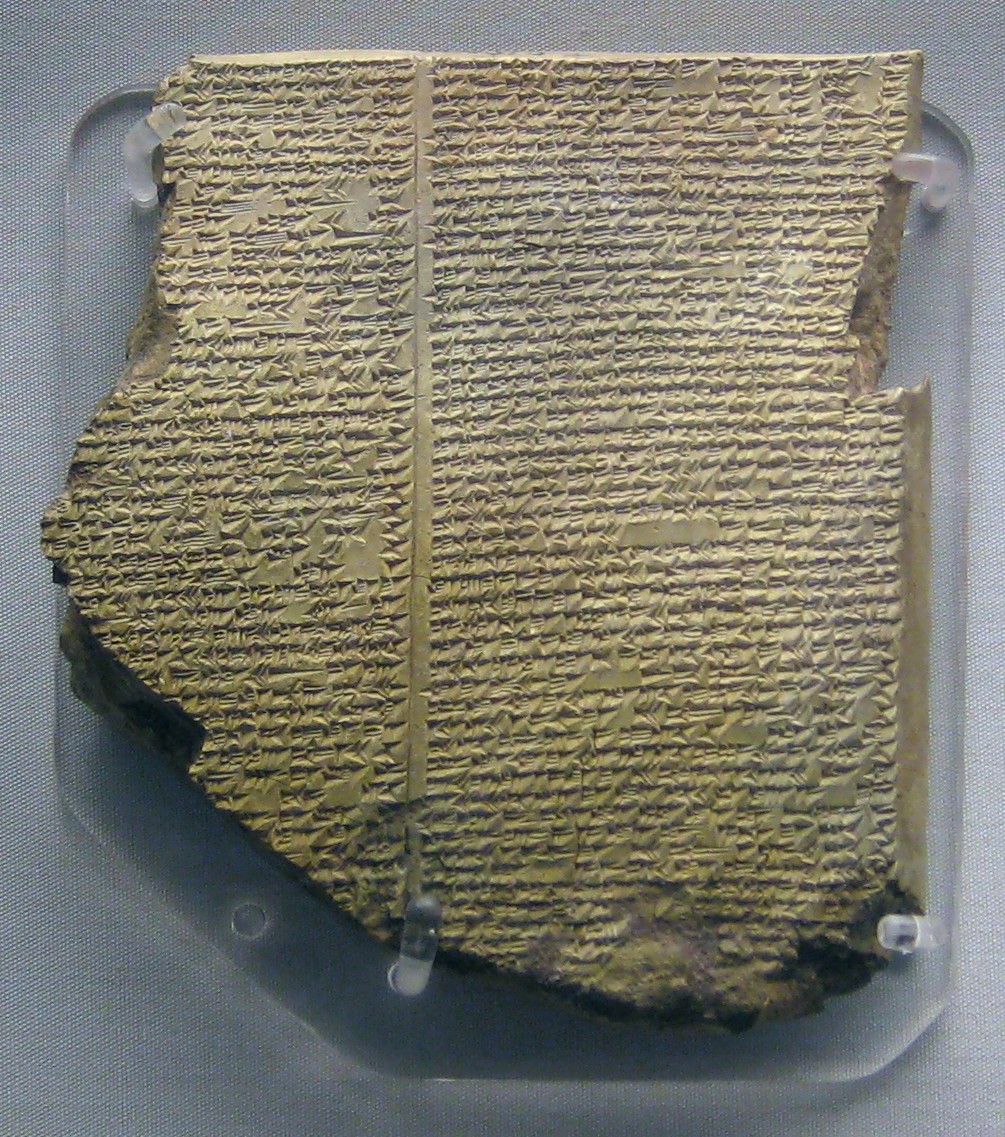
Tablet XI (or the Flood Tablet) of the Epic of Gilgamesh. British Museum.Image by Osama Shukir Muhammed Amin FRCP(Glasg), licensed under Creative Commons Attribution-Share Alike 4.0

Tablet XI (or the Flood Tablet) of the Epic of Gilgamesh. British Museum.

George Smith transliterated Tablet XIImage by Osama Shukir Muhammed Amin FRCP(Glasg), licensed under Creative Commons Attribution-Share Alike 4.0

George Smith transliterated Tablet XI

Fragment of Tablet II of the Epic of Gilgamesh, Sulaymaniyah Museum, IraqImage by Osama Shukir Muhammed Amin FRCP(Glasg), licensed under Creative Commons Attribution-Share Alike 4.0

Fragment of Tablet II of the Epic of Gilgamesh, Sulaymaniyah Museum, Iraq

The second dream of Gilgamesh on the journey to the Forest of Cedar. Epic of Gilgamesh tablet from Hattusa, Turkey. 13th century BCE. Neues Museum, Germany.Image by Osama Shukir Muhammed Amin FRCP(Glasg), licensed under Creative Commons Attribution-Share Alike 4.0

The second dream of Gilgamesh on the journey to the Forest of Cedar. Epic of Gilgamesh tablet from Hattusa, Turkey. 13th century BCE. Neues Museum, Germany.

Tablet V of the Epic of GilgameshImage by Osama Shukir Muhammed Amin FRCP(Glasg), licensed under Creative Commons Attribution-Share Alike 4.0

Tablet V of the Epic of Gilgamesh

Enkidu, Gilgamesh's friend. From Ur, Iraq, 2027–1763 BC, Iraq MuseumImage by Osama Shukir Muhammed Amin FRCP(Glasg), licensed under Creative Commons Attribution-Share Alike 4.0

Enkidu, Gilgamesh's friend. From Ur, Iraq, 2027–1763 BC, Iraq Museum

The Gilgamesh Dream tablet. From Iraq. Middle Babylonian Period, First Sealand Dynasty, 1732–1460 BCE. Iraq Museum, Baghdad. This dream tablet recounts a part of the epic of Gilgamesh in which the hero (Gilgamesh) describes his dreams to his mother (the goddess Ninsun), who interprets them as announcing the arrival of a new friend, who will become his companion.Image by Osama Shukir Muhammed Amin FRCP(Glasg), licensed under Creative Commons Attribution-Share Alike 4.0

The Gilgamesh Dream tablet. From Iraq. Middle Babylonian Period, First Sealand Dynasty, 1732–1460 BCE. Iraq Museum, Baghdad. This dream tablet recounts a part of the epic of Gilgamesh in which the hero (Gilgamesh) describes his dreams to his mother (the goddess Ninsun), who interprets them as announcing the arrival of a new friend, who will become his companion.

Tablet XI (or the Flood Tablet) of the Epic of Gilgamesh. British Museum.Image by Osama Shukir Muhammed Amin FRCP(Glasg), licensed under Creative Commons Attribution-Share Alike 4.0

Tablet XI (or the Flood Tablet) of the Epic of Gilgamesh. British Museum.

George Smith transliterated Tablet XIImage by Osama Shukir Muhammed Amin FRCP(Glasg), licensed under Creative Commons Attribution-Share Alike 4.0

George Smith transliterated Tablet XI

Fragment of Tablet II of the Epic of Gilgamesh, Sulaymaniyah Museum, IraqImage by Osama Shukir Muhammed Amin FRCP(Glasg), licensed under Creative Commons Attribution-Share Alike 4.0

Fragment of Tablet II of the Epic of Gilgamesh, Sulaymaniyah Museum, Iraq

The second dream of Gilgamesh on the journey to the Forest of Cedar. Epic of Gilgamesh tablet from Hattusa, Turkey. 13th century BCE. Neues Museum, Germany.Image by Osama Shukir Muhammed Amin FRCP(Glasg), licensed under Creative Commons Attribution-Share Alike 4.0

The second dream of Gilgamesh on the journey to the Forest of Cedar. Epic of Gilgamesh tablet from Hattusa, Turkey. 13th century BCE. Neues Museum, Germany.

Tablet V of the Epic of GilgameshImage by Osama Shukir Muhammed Amin FRCP(Glasg), licensed under Creative Commons Attribution-Share Alike 4.0

Tablet V of the Epic of Gilgamesh

Enkidu, Gilgamesh's friend. From Ur, Iraq, 2027–1763 BC, Iraq MuseumImage by Osama Shukir Muhammed Amin FRCP(Glasg), licensed under Creative Commons Attribution-Share Alike 4.0

Enkidu, Gilgamesh's friend. From Ur, Iraq, 2027–1763 BC, Iraq Museum

The Gilgamesh Dream tablet. From Iraq. Middle Babylonian Period, First Sealand Dynasty, 1732–1460 BCE. Iraq Museum, Baghdad. This dream tablet recounts a part of the epic of Gilgamesh in which the hero (Gilgamesh) describes his dreams to his mother (the goddess Ninsun), who interprets them as announcing the arrival of a new friend, who will become his companion.Image by Osama Shukir Muhammed Amin FRCP(Glasg), licensed under Creative Commons Attribution-Share Alike 4.0

The Gilgamesh Dream tablet. From Iraq. Middle Babylonian Period, First Sealand Dynasty, 1732–1460 BCE. Iraq Museum, Baghdad. This dream tablet recounts a part of the epic of Gilgamesh in which the hero (Gilgamesh) describes his dreams to his mother (the goddess Ninsun), who interprets them as announcing the arrival of a new friend, who will become his companion.

Tablet XI (or the Flood Tablet) of the Epic of Gilgamesh. British Museum.Image by Osama Shukir Muhammed Amin FRCP(Glasg), licensed under Creative Commons Attribution-Share Alike 4.0

Tablet XI (or the Flood Tablet) of the Epic of Gilgamesh. British Museum.

George Smith transliterated Tablet XIImage by Osama Shukir Muhammed Amin FRCP(Glasg), licensed under Creative Commons Attribution-Share Alike 4.0

George Smith transliterated Tablet XI

Fragment of Tablet II of the Epic of Gilgamesh, Sulaymaniyah Museum, IraqImage by Osama Shukir Muhammed Amin FRCP(Glasg), licensed under Creative Commons Attribution-Share Alike 4.0

Fragment of Tablet II of the Epic of Gilgamesh, Sulaymaniyah Museum, Iraq

The second dream of Gilgamesh on the journey to the Forest of Cedar. Epic of Gilgamesh tablet from Hattusa, Turkey. 13th century BCE. Neues Museum, Germany.Image by Osama Shukir Muhammed Amin FRCP(Glasg), licensed under Creative Commons Attribution-Share Alike 4.0

The second dream of Gilgamesh on the journey to the Forest of Cedar. Epic of Gilgamesh tablet from Hattusa, Turkey. 13th century BCE. Neues Museum, Germany.

Tablet V of the Epic of GilgameshImage by Osama Shukir Muhammed Amin FRCP(Glasg), licensed under Creative Commons Attribution-Share Alike 4.0

Tablet V of the Epic of Gilgamesh

Enkidu, Gilgamesh's friend. From Ur, Iraq, 2027–1763 BC, Iraq Museum

Enkidu, Gilgamesh's friend. From Ur, Iraq, 2027–1763 BC, Iraq Museum

The Gilgamesh Dream tablet. From Iraq. Middle Babylonian Period, First Sealand Dynasty, 1732–1460 BCE. Iraq Museum, Baghdad. This dream tablet recounts a part of the epic of Gilgamesh in which the hero (Gilgamesh) describes his dreams to his mother (the goddess Ninsun), who interprets them as announcing the arrival of a new friend, who will become his companion.

The Gilgamesh Dream tablet. From Iraq. Middle Babylonian Period, First Sealand Dynasty, 1732–1460 BCE. Iraq Museum, Baghdad. This dream tablet recounts a part of the epic of Gilgamesh in which the hero (Gilgamesh) describes his dreams to his mother (the goddess Ninsun), who interprets them as announcing the arrival of a new friend, who will become his companion.

Tablet XI (or the Flood Tablet) of the Epic of Gilgamesh. British Museum.

Tablet XI (or the Flood Tablet) of the Epic of Gilgamesh. British Museum.

George Smith transliterated Tablet XI

George Smith transliterated Tablet XI

Fragment of Tablet II of the Epic of Gilgamesh, Sulaymaniyah Museum, Iraq

Fragment of Tablet II of the Epic of Gilgamesh, Sulaymaniyah Museum, Iraq

The second dream of Gilgamesh on the journey to the Forest of Cedar. Epic of Gilgamesh tablet from Hattusa, Turkey. 13th century BCE. Neues Museum, Germany.

The second dream of Gilgamesh on the journey to the Forest of Cedar. Epic of Gilgamesh tablet from Hattusa, Turkey. 13th century BCE. Neues Museum, Germany.

Tablet V of the Epic of Gilgamesh

Tablet V of the Epic of Gilgamesh

Main Characters

The main character of the epic is Gilgamesh, the brave king of Uruk. 👑He is two-thirds divine and one-third human, making him very strong! His best friend, Enkidu, starts as a wild man but becomes a hero alongside Gilgamesh. They also meet several important characters like the goddess Ishtar, who loves Gilgamesh but gets angry when he refuses her. 💔Utnapishtim, a wise man, tells Gilgamesh about the great flood and the search for immortality. 🐥Together, these characters show us the life lessons in the story!

Themes And Motifs

The Epic of Gilgamesh teaches us many important lessons! 🌟One big theme is friendship, shown through Gilgamesh and Enkidu's bond. 💖The story also explores the fear of death, highlighting how everyone must face it someday. Another theme is the importance of living a good life. 🌱Gilgamesh learns that being remembered for good deeds is better than living forever. Additionally, nature plays a key role as Enkidu begins as a wild man. 🌳Nature is often a mix of wonder and danger in the epic!

Historical Context

The Epic of Gilgamesh was written over 4,000 years ago, around 2100 BCE! ⏳Mesopotamia is often called the “cradle of civilization” because it was one of the first places where people built cities and wrote stories. The story of Gilgamesh is a mix of history and myth, reflecting daily life and beliefs at that time. People in ancient Mesopotamia believed in many gods, like Anu and Enlil, who played big roles in the story. 🏺✍️ This epic was written in cuneiform on clay tablets, which are still found by archaeologists today!

Literary Techniques

The Epic of Gilgamesh uses great literary techniques to engage readers! 🎉One technique is repetition, which helps people remember key moments. For example, Gilgamesh’s dreams often repeat, showing his fears and goals! 🌌Imagery is also important, with vivid descriptions of battles, forests, and monsters that bring the story to life. 🦁Additionally, the story has dialogue, making characters come alive as they talk and interact. 📜These techniques make the epic an exciting read, allowing us to imagine and feel the emotions of the characters!

Summary Of The Epic

The Epic of Gilgamesh starts with Gilgamesh being a strong but selfish king. 💪🏽 The gods send a wild man named Enkidu to challenge him. They become best friends and go on adventures together, fighting monsters and making new friends. 🦸‍♂️🐉 Sadly, Enkidu dies, and Gilgamesh is heartbroken. He goes on a journey to find the secret of immortality, meeting various creatures and wise people along the way. In the end, Gilgamesh learns that being a good king and enjoying life is what truly matters! 🌈🏰

Cultural Significance

The Epic of Gilgamesh is important for many reasons! 🎓It helps us understand ancient Mesopotamian culture, including their beliefs, stories, and heroes. The story influences other tales, including the biblical flood story, showing how stories can connect across time. 🌊Additionally, many artistic works like paintings and movies have been inspired by Gilgamesh’s adventures. The epic is still studied today, shaping our understanding of literature and history! It teaches us about the human experience in a fun and engaging way! 📚👩‍🏫

Comparative Literature

The Epic of Gilgamesh is often compared to other famous stories! 🥇For example, it has similarities to the Bible, especially the story of Noah and the flood. 🌊Both tales speak about a great flood and a hero. Greek epics like The Iliad and The Odyssey also share themes of friendship and adventure with Gilgamesh's story! 🏛️ These comparisons show how ancient cultures had similar ideas about heroes and the challenges they faced. It’s fascinating to see how stories can connect people from different times and places! 🌍✨

Modern Interpretations

Today, the Epic of Gilgamesh is reimagined in various ways! 🎭Some authors have rewritten the story as novels, comics, or even plays! 🎨Young readers enjoy new adaptations that make the ancient tale feel fresh and exciting! Video games also include themes inspired by Gilgamesh's adventures, allowing players to explore the same heroic quests in a fun way. 🎮These modern interpretations keep the spirit of the epic alive, teaching lessons about friendship, bravery, and the importance of life while making it enjoyable for younger audiences! 🌈

Archaeological Findings

Archaeologists have found many clay tablets with parts of the Epic of Gilgamesh written on them! 🏺Excavations in ancient cities, like Uruk, have uncovered these amazing finds. The tablets come from the library of Ashurbanipal, a king in the 7th century BCE. 🏰These discoveries help us understand how stories were shared long ago. Some tablets are even written in a language called Akkadian. 📖It’s exciting to see how archaeologists piece together these stories from the past, giving us valuable lessons and entertainment! 🎉

Influence On Later Works

The Epic of Gilgamesh has influenced many writers and artists through history! 🌟Some famous authors, like Homer and Shakespeare, drew inspiration from its themes of friendship and the quest for understanding. ✍️ Even modern movies and books reference Gilgamesh! The themes of adventure and seeking knowledge resonate with many stories we tell today. 📖🎬 This influence demonstrates how storytelling transcends time, allowing us to continue learning from Gilgamesh’s adventures in our world today!

Did you know?

🌍 The Epic of Gilgamesh is one of the oldest stories in the world, dating back over 4,000 years!

📜 It comes from ancient Mesopotamia, located between the Tigris and Euphrates rivers in modern-day Iraq.

💪🏽 The main character, Gilgamesh, is a strong king who is two-thirds divine and one-third human.

🦁 Gilgamesh goes on many exciting adventures with his best friend, Enkidu, fighting monsters along the way.

🌈 After losing Enkidu, Gilgamesh searches for the secret of immortality but learns the value of living a good life.

🏺 The story was written in cuneiform on clay tablets, which archaeologists continue to discover.

🏆 Many characters in the epic, like the goddess Ishtar and wise Utnapishtim, share important lessons with Gilgamesh.

🌟 Friendship is a major theme in the epic, shown through the bond between Gilgamesh and Enkidu.

🎓 The Epic of Gilgamesh influences many stories today, including the flood tale in the Bible and even modern movies.

📚 It teaches us about the importance of life, friendship, and facing our fears, making it relevant even now!

Epic Of Gilgamesh Quiz

Q1
Question 1 of 10

Learn more about Epic Of Gilgamesh

Ready to create?

Drop Files here
Make

To create a safe space for kid creators worldwide!

Create

Vibe Coding

Kids GPT

All Tools

Kibu

Resources

Worksheets

SafeTube

Blog

FAQ

Account

Pricing

Log-in

Sign-up

Data Deletion

Company

About

Community Guidelines

Privacy Policy

Terms of Service

2025, URSOR LIMITED. All rights reserved. DIY is in no way affiliated with Minecraft™, Mojang, Microsoft, Roblox™ or YouTube. LEGO® is a trademark of the LEGO® Group which does not sponsor, endorse or authorize this website or event. Made with love in San Francisco.