All Articles

Electromagnetic Radiation

Electromagnetic Radiation Facts For Kids

Electromagnetic radiation (EMR) is a form of energy that travels in waves made up of oscillating electric and magnetic fields, moving through space and carrying energy.

🎨 Reading age for 6-8
Background blob
Electromagnetic Radiation
Facts for Kids!

Do more with AI

Introduction

Electromagnetic radiation is a special type of energy that travels in waves. 🌊These waves can be found all around us in the air, space, and even through walls! They help us see, hear, and communicate. The sun is a major source of this energy, giving us light and warmth. ☀️ Other examples include radio waves, microwaves, and X-rays. Scientists study electromagnetic radiation to understand how the universe works! ✨So, next time you use a remote control or watch TV, remember, you're using the power of electromagnetic waves! 📺

Images of Electromagnetic Radiation

Rough plot of Earth's atmospheric absorption and scattering (or opacity) of various wavelengths of electromagnetic radiation

Rough plot of Earth's atmospheric absorption and scattering (or opacity) of various wavelengths of electromagnetic radiation

The relative wavelengths of the electromagnetic waves of three different colours of light (blue, green, and red) with a distance scale in micrometers along the x-axis
The relative wavelengths of the electromagnetic waves of three different colours of light (blue, green, and red) with a distance scale in micrometers along the x-axis

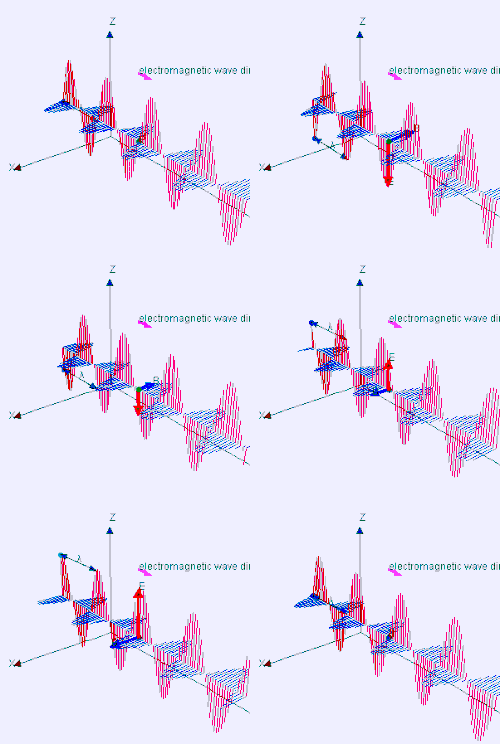
Electromagnetic waves can be imagined as a self-propagating transverse oscillating wave of electric and magnetic fields. This 3D animation shows a plane linearly polarized wave propagating from left to right. The electric and magnetic fields in such a wave are in phase with each other, reaching minima and maxima together.

Electromagnetic waves can be imagined as a self-propagating transverse oscillating wave of electric and magnetic fields. This 3D animation shows a plane linearly polarized wave propagating from left to right. The electric and magnetic fields in such a wave are in phase with each other, reaching minima and maxima together.

Representation of the electric field vector of a wave of circularly polarized electromagnetic radiation

Representation of the electric field vector of a wave of circularly polarized electromagnetic radiation

James Clerk Maxwell (1831–1879)

James Clerk Maxwell (1831–1879)

Electromagnetic spectrum with visible light highlighted. The bottom graph (visible spectrum) shows wavelength in units of nanometers (nm).

Electromagnetic spectrum with visible light highlighted. The bottom graph (visible spectrum) shows wavelength in units of nanometers (nm).

In electromagnetic radiation (such as microwaves from an antenna, shown here) the term radiation applies only to the parts of the electromagnetic field that radiate into infinite space and decrease in intensity by an inverse-square law of power, such that the total energy that crosses through an imaginary sphere surrounding the source is the same regardless of the size of the sphere. Electromagnetic radiation thus reaches the far part of the electromagnetic field around a transmitter. A part of the near field (close to the transmitter) includes the changing electromagnetic field, but that is not electromagnetic radiation.

In electromagnetic radiation (such as microwaves from an antenna, shown here) the term radiation applies only to the parts of the electromagnetic field that radiate into infinite space and decrease in intensity by an inverse-square law of power, such that the total energy that crosses through an imaginary sphere surrounding the source is the same regardless of the size of the sphere. Electromagnetic radiation thus reaches the far part of the electromagnetic field around a transmitter. A part of the near field (close to the transmitter) includes the changing electromagnetic field, but that is not electromagnetic radiation.

Electromagnetic spectrum with visible light highlighted. The bottom graph (visible spectrum) shows wavelength in units of nanometers (nm).Image by User:Zedh and User:Gringer, licensed under Creative Commons Attribution-Share Alike 3.0

Electromagnetic spectrum with visible light highlighted. The bottom graph (visible spectrum) shows wavelength in units of nanometers (nm).

The relative wavelengths of the electromagnetic waves of three different colours of light (blue, green, and red) with a distance scale in micrometers along the x-axis

The relative wavelengths of the electromagnetic waves of three different colours of light (blue, green, and red) with a distance scale in micrometers along the x-axis

Electromagnetic waves can be imagined as a self-propagating transverse oscillating wave of electric and magnetic fields. This 3D animation shows a plane linearly polarized wave propagating from left to right. The electric and magnetic fields in such a wave are in phase with each other, reaching minima and maxima together.Image by Lookang, licensed under Creative Commons Attribution-Share Alike 3.0

Electromagnetic waves can be imagined as a self-propagating transverse oscillating wave of electric and magnetic fields. This 3D animation shows a plane linearly polarized wave propagating from left to right. The electric and magnetic fields in such a wave are in phase with each other, reaching minima and maxima together.

Representation of the electric field vector of a wave of circularly polarized electromagnetic radiation

Representation of the electric field vector of a wave of circularly polarized electromagnetic radiation

James Clerk Maxwell (1831–1879)

James Clerk Maxwell (1831–1879)

Legend: γ = Gamma rays HX = Hard X-rays SX = Soft X-rays EUV = Extreme-ultraviolet NUV = Near-ultraviolet Visible light (colored bands) NIR = Near-infrared MIR = Mid-infrared FIR = Far-infrared EHF = Extremely high frequency (microwaves) SHF = Super-high frequency (microwaves) UHF = Ultrahigh frequency (radio waves) VHF = Very high frequency (radio) HF = High frequency (radio) MF = Medium frequency (radio) LF = Low frequency (radio) VLF = Very low frequency (radio) VF = Voice frequency ULF = Ultra-low frequency (radio) SLF = Super-low frequency (radio) ELF = Extremely low frequency (radio)Image by Light_spectrum.png : Original uploader was Denelson83 at en.wikipedia derivative work: B. Jankuloski ( talk ), licensed under Creative Commons Attribution-Share Alike 3.0

Legend: γ = Gamma rays HX = Hard X-rays SX = Soft X-rays EUV = Extreme-ultraviolet NUV = Near-ultraviolet Visible light (colored bands) NIR = Near-infrared MIR = Mid-infrared FIR = Far-infrared EHF = Extremely high frequency (microwaves) SHF = Super-high frequency (microwaves) UHF = Ultrahigh frequency (radio waves) VHF = Very high frequency (radio) HF = High frequency (radio) MF = Medium frequency (radio) LF = Low frequency (radio) VLF = Very low frequency (radio) VF = Voice frequency ULF = Ultra-low frequency (radio) SLF = Super-low frequency (radio) ELF = Extremely low frequency (radio)

Rough plot of Earth's atmospheric absorption and scattering (or opacity) of various wavelengths of electromagnetic radiation

Rough plot of Earth's atmospheric absorption and scattering (or opacity) of various wavelengths of electromagnetic radiation

In electromagnetic radiation (such as microwaves from an antenna, shown here) the term radiation applies only to the parts of the electromagnetic field that radiate into infinite space and decrease in intensity by an inverse-square law of power, such that the total energy that crosses through an imaginary sphere surrounding the source is the same regardless of the size of the sphere. Electromagnetic radiation thus reaches the far part of the electromagnetic field around a transmitter. A part of the near field (close to the transmitter) includes the changing electromagnetic field, but that is not electromagnetic radiation.

In electromagnetic radiation (such as microwaves from an antenna, shown here) the term radiation applies only to the parts of the electromagnetic field that radiate into infinite space and decrease in intensity by an inverse-square law of power, such that the total energy that crosses through an imaginary sphere surrounding the source is the same regardless of the size of the sphere. Electromagnetic radiation thus reaches the far part of the electromagnetic field around a transmitter. A part of the near field (close to the transmitter) includes the changing electromagnetic field, but that is not electromagnetic radiation.

Interactions With Matter

When electromagnetic waves come into contact with different materials, they can do several things! 🤔Some waves pass through, while others are absorbed or reflected. For example, light waves travel through clear glass but bounce off a mirror, making it shiny! 🪞Microwave waves heat up food because the water molecules inside absorb the energy. Different types of light can even cause chemical reactions, like how plants use sunlight to grow through photosynthesis! 🌱These interactions help us explore and understand the world around us better! 🌍

The Electromagnetic Spectrum

The electromagnetic spectrum is like a giant rainbow of different types of electromagnetic waves, 🌈each with its own special properties. The spectrum ranges from long radio waves to short gamma rays. 📡Radio waves help us listen to music, while microwaves heat our food. In the middle, you can find visible light, the colorful part we can see! 🌈All these waves travel at the same speed but have different wavelengths. Longer wavelengths mean less energy, while shorter wavelengths have more energy! 😊

Types Of Electromagnetic Waves

There are many types of electromagnetic waves, each serving different purposes! Here are a few:
1. Radio Waves: Used for radio, TV, and cell phone communication. 📻
2. Microwaves: Make popcorn pop in microwave ovens! 🍿
3. Infrared Waves: Felt as heat, for example from the sun. ☀️
4. Visible Light: The only part we can see, like red, blue, and yellow! 🌈
5. Ultraviolet (UV) Waves: Can give you sunburns! ☀️
6. X-rays: Help doctors see inside our bodies! 🩻
7. Gamma Rays: High-energy waves used in cancer treatment! 💊

What Is Electromagnetic Radiation?

Electromagnetic radiation, or EM radiation, is a kind of energy made of invisible waves. ⚡These waves are created by moving electric and magnetic fields. When they combine, they form electromagnetic waves! These waves can travel through empty space at a super-fast speed of about 299,792 kilometers per second (or about 186,282 miles per second)! 🚀That’s faster than a rocket! Electromagnetic radiation plays a big role in our daily lives; without it, we wouldn't have light, heat, or even our cell phones! 📱

How Electromagnetic Radiation Travels

Electromagnetic radiation travels through space in waves, kind of like the ripples you see when you throw a stone in a pond! 🪨The waves can move through the vacuum of space without needing air or anything else! This is why sunlight can reach us even though it travels about 93 million miles (150 million kilometers) from the sun! ☀️ The waves spread out in all directions, moving super-fast and carrying energy with them. So, whether they're coming from your TV or the stars, these waves are always on the go! 🌠

Applications Of Electromagnetic Radiation

Electromagnetic radiation is used in many cool ways! 😎For example, radio waves let us listen to music on the radio or talk on our phones. 📞Microwaves heat yummy food in ovens, while infrared waves help us see at night with special goggles. 🌙Hospitals use X-rays to check our bones and teeth! 🦷Scientists even use gamma rays to treat cancer! 🎗️ In space, telescopes catch different types of light from stars to learn more about them. 🌌EM radiation helps us every day, even if we don't see it!

Historical Discoveries In Electromagnetism

The discovery of electromagnetic radiation goes back a long way! 🤓In 1865, James Clerk Maxwell, a Scottish scientist, created equations to explain electricity and magnetism. ⚡His work showed how electric and magnetic fields interact! Later, in 1888, Heinrich Hertz demonstrated that electromagnetic waves exist by creating them in his lab! 🎓The invention of radio by Guglielmo Marconi in the late 1890s let people communicate over long distances using radio waves. 📡These discoveries helped create the technology we use today! 🚀

Health Effects Of Electromagnetic Radiation

Most types of electromagnetic radiation are safe, but some can be harmful if we aren't careful. ⚠️ For example, too much ultraviolet (UV) light from the sun can cause sunburns and skin damage. ☀️ This is why we wear sunscreen and hats! Some very strong waves, like X-rays, are also used carefully to avoid harm. 🩻Most everyday devices, like smartphones and microwaves, use low levels of radiation that are considered safe! 👍So, it’s important to learn how to use these things wisely to stay healthy! 😊

Future Developments In Electromagnetic Technology

The future of electromagnetic technology is super exciting! ✨Scientists are exploring new uses for EM waves every day. For example, researchers are working on faster communication methods that utilize light waves for the internet! 🌐There's also research on improving medical imaging to help doctors even more! 🏥In space exploration, better telescopes can use EM waves to learn about faraway galaxies. 🌌Finally, technology like 5G is already changing how we connect with the world, making it faster and more efficient! 🌍Who knows what advancements are coming next? 😊

Electromagnetic Radiation Quiz

Q1
Question 1 of 10

Learn more about Electromagnetic Radiation

Ready to create?

Drop Files here
Make

To create a safe space for kid creators worldwide!

Create

Vibe Coding

Kids GPT

All Tools

Kibu

Resources

Worksheets

SafeTube

Blog

FAQ

Account

Pricing

Log-in

Sign-up

Data Deletion

Company

About

Community Guidelines

Privacy Policy

Terms of Service

2025, URSOR LIMITED. All rights reserved. DIY is in no way affiliated with Minecraft™, Mojang, Microsoft, Roblox™ or YouTube. LEGO® is a trademark of the LEGO® Group which does not sponsor, endorse or authorize this website or event. Made with love in San Francisco.