Cookiecutter Shark Facts For Kids
The cookiecutter shark is a small, deep-sea shark known for its unique feeding method and bioluminescent properties.
Select reading age
Cookiecutter Shark Facts For Kids
Videos & Quizzesincluded
About this topic
The cookiecutter shark is a fascinating little fish! 🦈It’s known scientifically as Isistius brasiliensis. This shark is small, typically growing to about 20 inches long (51 cm). You can find it in warm waters, especially in the Pacific and Atlantic Oceans! 🌊What’s really special about cookiecutter sharks is that they have a unique way of eating: they take "cookies" out of larger animals, leaving round holes! They are named after the cookie cutter tool, which makes circular shapes in cookies. So, let’s dive in and learn more about these amazing sharks!
Explore with ChatDinoKey Points
The cookiecutter shark is currently not considered endangered.
The cookiecutter shark has inspired many stories and cultural representations!
Cookiecutter sharks are really interesting when it comes to having babies!
Cookiecutter sharks are quite unique eaters!
Cookiecutter sharks can be found in warmer oceans around the world.
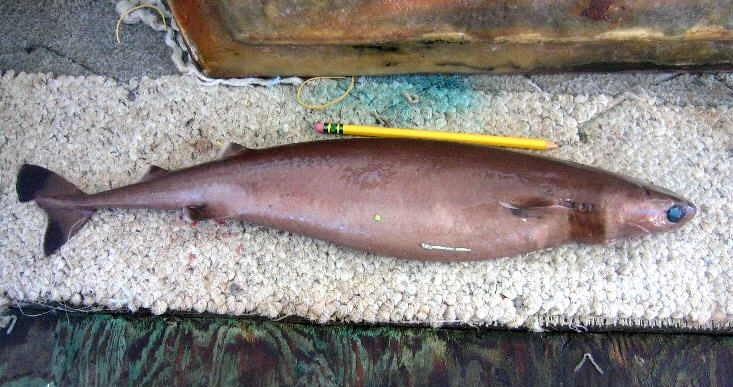
Cookiecutter sharks have a very interesting appearance!
Many scientists are curious about cookiecutter sharks!
Compared to other shark species like the great white or tiger shark, cookiecutter sharks are tiny!
Photos of Cookiecutter Shark

Cookiecutter Shark — photo 1

Cookiecutter Shark — photo 2

Cookiecutter Shark — photo 3

Cookiecutter Shark — photo 4

Cookiecutter Shark — photo 5

Cookiecutter Shark — photo 6

Cookiecutter Shark — photo 7

The suctorial lips and large lower teeth of the cookiecutter sharks are adaptations for its parasitic lifestyle.

The dark collar of the cookiecutter shark is believed to act as a lure.
😌 Conservation Status
The cookiecutter shark is currently not considered endangered. 😌However, it faces threats from overfishing and habitat loss due to pollution. 🌊Organizations like the International Union for Conservation of Nature (IUCN) keep track of shark populations and help protect their habitats. To know more, scientists study how many of these sharks live in oceans. 🌍By spreading awareness and protecting marine environments, we can help ensure that cookiecutter sharks and their friends remain safe in our oceans!
Go deeper🎨 Cultural Significance
The cookiecutter shark has inspired many stories and cultural representations! 🎨They appear in various cartoons and children's books, often as funny or quirky characters. The name "cookiecutter" even makes people think of cookies, and that’s fun for kids! 🍪Additionally, researchers study these sharks, which helps us learn more about marine life and ocean ecosystems. Understanding cookiecutter sharks helps people appreciate the ocean's wonders and the importance of every creature in it, no matter how big or small! 🌊
Go deeper🍼 Reproductive Behavior
Cookiecutter sharks are really interesting when it comes to having babies! 🍼They are ovoviviparous, which means that the females keep the eggs inside their bodies until they hatch! After a gestation period of about 10 to 12 months, they give birth to around 6 to 12 young sharks, called pups. 🦈These pups are born already about 8 inches long (20 cm)—pretty big considering their mom is so small! After birth, the pups are independent and must swim away to start their own lives in the ocean. Bye-bye, mom! 🌊
Go deeper🍽️ Diet And Feeding Habits
Cookiecutter sharks are quite unique eaters! 🍽️ They are known as "suction feeders." They will bite into larger fish and even whales, taking round plugs of flesh out! They usually feed at night, and their diet mostly consists of fish, squid, and even marine mammals. 🍳The round holes they leave behind are like little "cookies," and that's how they got their name! They have a special ability to swim backward quickly after they bite so they can escape before their meal notices them. Clever, right? 🧠
Go deeper🌍 Habitat And Distribution
Cookiecutter sharks can be found in warmer oceans around the world. 🌍They live mainly in deep waters, usually around 3,300 feet (1,000 meters) deep, but sometimes can be found at depths of up to 10,000 feet (3,048 meters)! These sharks prefer regions like the Gulf of Mexico, Hawaii, and the coast of South Africa. 🌊They often migrate to shallower areas at night to hunt for food. This unique distribution makes them a special part of the ocean's ecosystem, thriving in places where many other sharks can’t!
Go deeper🎨 Physical Characteristics
Cookiecutter sharks have a very interesting appearance! They are dark brown or gray on top and light on the bottom, helping them blend in with the ocean floor. 🎨Their most unique feature is their circular mouth filled with sharp teeth, perfect for their cookie-like bites! Each shark has about 26 upper teeth and 19 lower teeth. They also have large eyes to help them see in the dark waters where they live. 🕶️ These little sharks don’t look like the big, scary sharks you might think of; they are much smaller and less aggressive!
Go deeper🦈 Research And Discoveries
Many scientists are curious about cookiecutter sharks! 🦈Research on these sharks began in the 19th century! 🌟Scientists study their behavior, diet, and how they interact with other marine animals. They are interesting because cookiecutter sharks can change color to blend in with their surroundings! 🎨Studies have shown they can even travel in packs called schools. Researchers continue to discover new things about these animals every day, helping us learn how to protect our oceans and its creatures effectively! 📚
Go deeper🦈 Comparison With Other Shark Species
Compared to other shark species like the great white or tiger shark, cookiecutter sharks are tiny! 🦈While a great white can grow to over 20 feet (6 meters), cookiecutters are just 2 feet (0.61 meters) long! 🌊Unlike many sharks that have a reputation as predators, cookiecutter sharks specialize in a unique feeding habit of taking bites out of larger animals. They also have a softer, rounded body shape, unlike the lean, powerful bodies of bigger sharks. 🦈Every shark species plays a unique role in maintaining the balance of marine ecosystems!
Go deeper