All Articles

Barred Owl

Barred Owl Facts For Kids

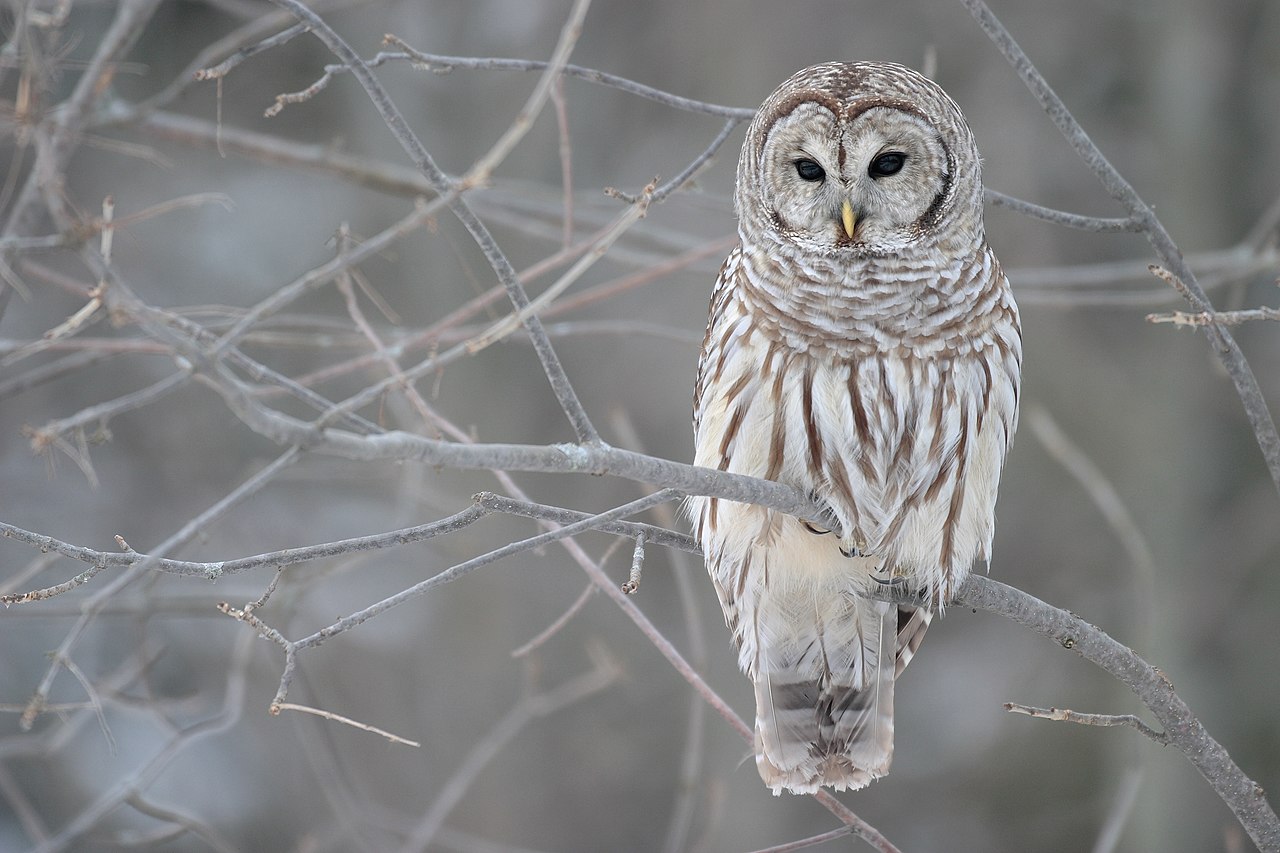
The barred owl is a medium-sized, nocturnal bird of prey known for its distinctive call and distinctive appearance with mottled brown and white plumage.
🎨 Reading age for 6-8
Background blob
Barred Owl
Barred Owl
Facts for Kids!
Image by Mdf, licensed under Creative Commons Attribution-Share Alike 3.0

Do more with AI

Introduction

The Barred Owl is a wonderful bird that can be found across North America! 🦉This owl has a round face, dark eyes, and beautiful brown and white stripes, which help it blend in with tree bark. They are medium-sized, usually about 16 to 25 inches long, and have a wingspan of 38 to 49 inches. Barred Owls are nighttime hunters, so they are most active after sunset! 🌙These wise creatures are known for their “Who cooks for you? Who cooks for you all?” call. Isn't that a funny sound? Their scientific name is Strix varia!

Images of Barred Owl

Although previously considered a subspecies of barred owl, the fulvous owl is now considered a distinct speciesImage by Dominic Sherony, licensed under Creative Commons Attribution-Share Alike 2.0

Although previously considered a subspecies of barred owl, the fulvous owl is now considered a distinct species

Some subspecies such as S. v. georgica from Florida differ from northern barred owls by their darker brown streaks and, more noticeably, their bare toes

Some subspecies such as S. v. georgica from Florida differ from northern barred owls by their darker brown streaks and, more noticeably, their bare toes

The Texas subspecies, S. v. heveola, has mostly bare and relatively sizable toes and distinctly cinnamon-hued plumageImage by Don Faulkner, licensed under Creative Commons Attribution-Share Alike 2.0

The Texas subspecies, S. v. heveola, has mostly bare and relatively sizable toes and distinctly cinnamon-hued plumage

A barred owl in OntarioImage by Peter K Burian, licensed under Creative Commons Attribution-Share Alike 4.0

A barred owl in Ontario

A barred owl using its tail as an air dam and brakeImage by Alannyiri, licensed under Creative Commons Attribution-Share Alike 3.0

A barred owl using its tail as an air dam and brake

Winter in VermontImage by Alannyiri, licensed under Creative Commons Attribution-Share Alike 3.0

Winter in Vermont

A juvenile barred owl peers out in the verdant forests of Washington, where the species is an "invasive" recent invader

A juvenile barred owl peers out in the verdant forests of Washington, where the species is an "invasive" recent invader

The barred owl usually makes its home in deciduous forests

The barred owl usually makes its home in deciduous forests

Barred pattern, Ontario, CanadaImage by Peter K Burian, licensed under Creative Commons Attribution-Share Alike 4.0

Barred pattern, Ontario, Canada

Interesting Facts

Did you know that Barred Owls are one of the few owl species that have adapted to living in urban areas? 🌆They can sometimes be spotted in parks or even in big cities! They don't mind being close to humans as long as there are big trees to nest in. Also, Barred Owls have excellent hearing, allowing them to hunt even in complete darkness! 🌌They can even hear their prey moving around under thick snow. Isn't that cool? Moreover, while many owls are nocturnal, some Barred Owls can be active during the day when searching for food!

Conservation Status

Barred Owls are currently not considered endangered, but their habitats can sometimes be threatened by logging or human development. 🌳It’s important to protect their homes so they can continue to thrive in the wild! Organizations like the Audubon Society work to help preserve forests and raise awareness about the importance of these beautiful birds. 🌍Everyone can help by being kind to nature and planting trees or keeping areas around their homes clean!

Cultural Significance

In many cultures, owls are seen as wise creatures and are often featured in stories and legends. 🦉📚 The Barred Owl is no exception! Native American tribes and folklore sometimes see owls as symbols of knowledge and change. They carry special meanings, and some people believe they bring messages about the future! Owls are also commonly seen in cartoons and children’s books, teaching kids about nature and wildlife while being fun and friendly characters!

Habitat And Distribution

Barred Owls love to live in wooded areas, swamps, and forests! 🌲🦉 They prefer places with lots of trees where they can hide and hunt. You can find them in the eastern United States, all the way to the west coast, and even parts of Canada! They like to roost in large trees during the day and swoop down at night to find food. These owls are very adaptable, which means they can live in many different places as long as there are enough trees and food around!

Physical Characteristics

Barred Owls have some cool features that make them very special! They have soft, brown feathers with white spots and vertical stripes that look like bars—hence their name! 🟤⚪ These feathers help them stay warm during the chilly nights while they hunt for food. Their large, round heads and keen eyesight help them spot little animals from far away. Their feet have sharp talons that help them catch their prey. Can you believe they can turn their heads almost all the way around to see what’s happening behind them? 🎥Isn’t that amazing?

Behavior And Communication

Barred Owls are known for their unique way of talking! They make a wide range of sounds, but their most famous call sounds like they're asking, “Who cooks for you?” 😮 They use these sounds to communicate with each other and can even recognize their partners through their calls. During the day, Barred Owls are usually quiet and rest in trees, but they come alive at night to hunt. They are very good at being sneaky, using their silent wings to catch prey without being noticed! 👀

Reproduction And Lifecycle

Barred Owls usually mate in late winter or early spring. They do not build nests but instead lay their eggs in tree cavities or old nests made by other birds. 🥚A female typically lays 2 to 4 eggs, which she incubates for about 28 to 33 days. Once the baby owls, called owlets, hatch, they stay in the nest for several weeks. After about 4 to 6 weeks, the owlets are ready to start flying and learning how to hunt for themselves! 🦉They'll stay close to their parents for several months, learning how to survive in the wild.

Diet And Hunting Techniques

What do Barred Owls eat? They are great hunters! 🦉💨 Their diet mostly includes small animals like mice, voles, rabbits, and even birds. They hunt by using their amazing eyesight and excellent hearing to spot their prey in tall grass and bushes. Once they find their meal, they swoop down silently and grab it with their sharp talons! They usually swallow their food whole or tear it apart. Sometimes, they even regurgitate the bones and fur later as little pellets. Yuck! But it's important for scientists to study what owls eat!

Barred Owl Quiz

Q1
Question 1 of 10

Learn more about Barred Owl

Ready to create?

Drop Files here
Make

To create a safe space for kid creators worldwide!

Create

Vibe Coding

Kids GPT

All Tools

Kibu

Resources

Worksheets

SafeTube

Blog

FAQ

Account

Pricing

Log-in

Sign-up

Data Deletion

Company

About

Community Guidelines

Privacy Policy

Terms of Service

2025, URSOR LIMITED. All rights reserved. DIY is in no way affiliated with Minecraft™, Mojang, Microsoft, Roblox™ or YouTube. LEGO® is a trademark of the LEGO® Group which does not sponsor, endorse or authorize this website or event. Made with love in San Francisco.