Anguila Eléctrica Facts For Kids
The electric eel (Electrophorus electricus) is a unique fish known for its ability to generate electric shocks, primarily found in the freshwater rivers and swamps of South America.
Select reading age
Anguila Eléctrica Facts For Kids
Videos & Quizzesincluded
About this topic
The electric eel, known scientifically as Electrophorus electricus, is an amazing fish found in the rivers of South America! 🌎They can grow up to 10 feet long—about the size of a small car! They mostly live in the Amazon and Orinoco river basins, which are located in countries like Brazil, Colombia, and Venezuela. The electric eel is not actually an eel; it’s a type of knifefish. These creatures are famous for their ability to generate electric shocks. ⚡️ They use this power for hunting, navigation, and communication with other electric eels!
Explore with ChatDinoKey Points
Electric eels play an important role in their ecosystem!
People have been fascinated by electric eels for centuries!
Currently, electric eels are not considered endangered, but their habitat is threatened.
Electric eels have inspired stories and folklore in various cultures, especially in South America!
Electric eels are carnivores, which means they eat meat!
Electric eels thrive in freshwater habitats, specifically slow-moving rivers and floodplains.
Electric eels are unique because of their long, cylindrical shape!
Electric eels reproduce in the wet season, which happens between December and March.
The electric eel belongs to the family Gymnotidae.
Electric eels are mostly solitary creatures, spending time alone in their habitat.
Photos of Anguila Eléctrica


Anatomy of an electric eel's electric organs

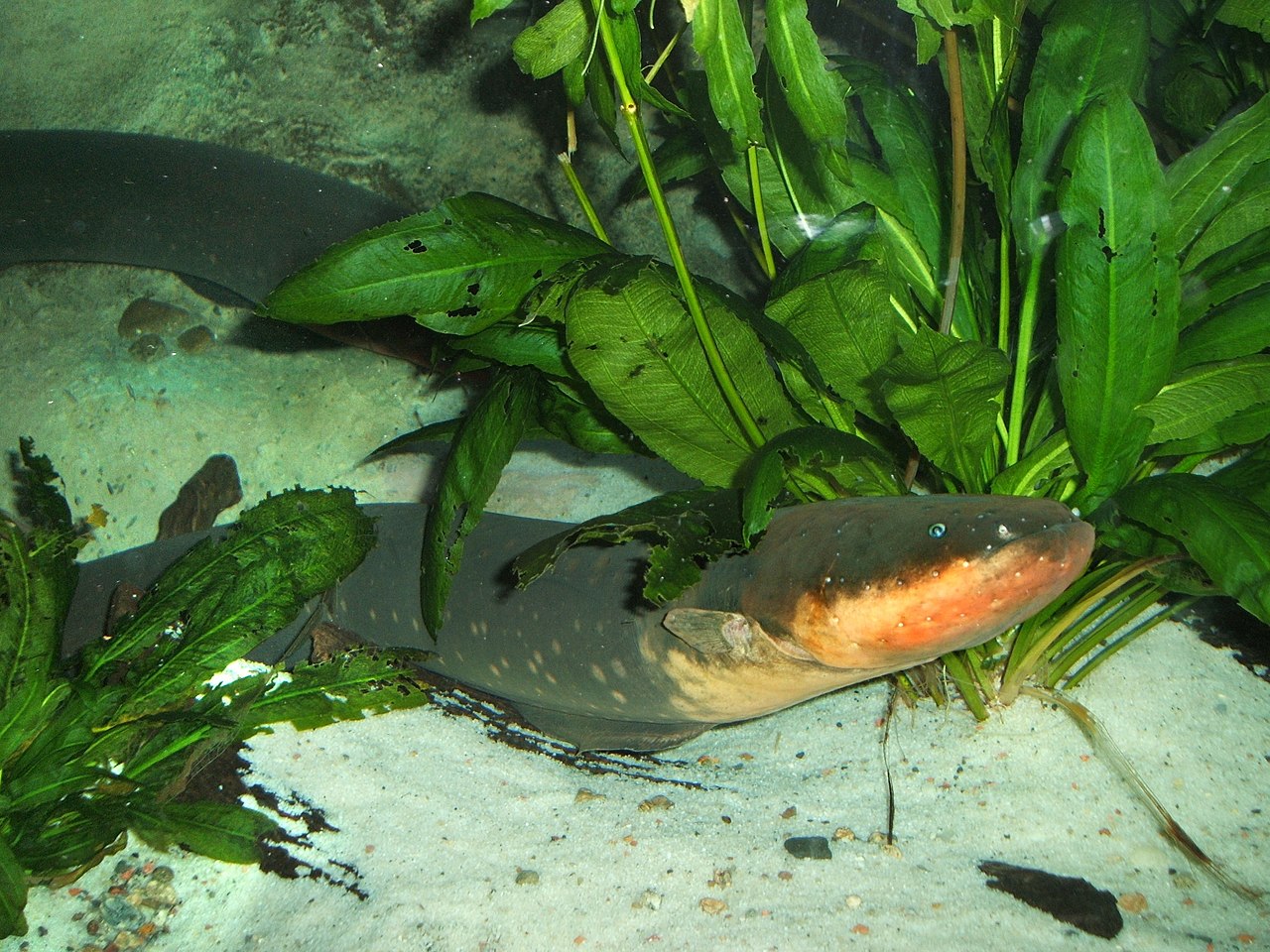
Electric eel at the New England Aquarium
🌍 Ecological Role
Electric eels play an important role in their ecosystem! 🌍As predators, they help keep fish populations in balance, which is essential for a healthy river environment. They are also prey for larger animals like caimans and birds, contributing to the food chain. The electricity they generate can affect other fish in the area, which helps in keeping populations strong. 🌿By living in the rivers, electric eels help maintain the balance of life in freshwater ecosystems, ensuring that all creatures have their place!
Go deeper⚡ Human Interaction
People have been fascinated by electric eels for centuries! ⚡In some cultures, they are used in traditional medicine and rituals due to their unique abilities. Curious scientists study electric eels to learn about their electrical systems and how they produce electricity. ⚗️ However, electric eels can be dangerous to humans if startled. If you ever spot one while swimming or fishing, it's best to keep a safe distance! 🛑Understanding these magnificent creatures helps people appreciate their role in nature!
Go deeper💔 Conservation Status
Currently, electric eels are not considered endangered, but their habitat is threatened. 💔Deforestation and pollution of rivers affect their populations. As humans clear forests for agriculture, less water flows to river systems where electric eels live. The International Union for Conservation of Nature (IUCN) monitors the species, and it's essential for people to be aware that protecting rivers helps keep electric eels and their ecosystems healthy! 🌳Efforts to clean rivers and protect habitats can help ensure that these incredible creatures remain safe.
Go deeper🌟 Cultural Significance
Electric eels have inspired stories and folklore in various cultures, especially in South America! 🌟Some indigenous tribes believe that electric eels are guardians of the rivers, and their shocks symbolize power. They're also popular in documentaries and nature shows, captivating audiences with their unique abilities. Electric eels are featured in modern media, showing their stunning powers and sparking interest in science and biology among kids and adults. 🎬By learning about electric eels, cultures can value nature’s wonders and support conservation efforts!
Go deeper🦐 Diet And Feeding Habits
Electric eels are carnivores, which means they eat meat! 🦐They mainly hunt for fish, but they also enjoy snacks like frogs and crustaceans. When hunting, they use their electric shocks, which can be up to 600 volts! ⚡This stuns their prey, making it easier to catch. Electric eels have excellent senses that help them find food, and they can even locate prey in dark waters. They usually hunt at night, using their electricity to navigate and hunt. It’s like having a built-in flashlight and stun gun!
Go deeper🌊 Habitat And Distribution
Electric eels thrive in freshwater habitats, specifically slow-moving rivers and floodplains. 🌊They love warm waters and usually stay in areas with plenty of plant life, which provides hiding places. You can find these fascinating creatures in the Amazon River in Brazil and along the Orinoco River in Colombia and Venezuela. They prefer regions where the water depth is around 3 to 4 meters (about 10-13 feet) deep. 🌱These habitats provide the perfect environment for electric eels to swim, hunt, and communicate!
Go deeper🐍 Physical Characteristics
Electric eels are unique because of their long, cylindrical shape! 🐍They can appear dark blue or greenish on top and have a lighter color underneath. Their bodies have special cells called electrocytes that help them produce electricity. An electric eel has a slimy outer skin that helps them glide through water easily. 🎣They also have a large mouth filled with sharp teeth for catching prey! Even though they look like eels, their closest relatives are actually catfish! Isn’t that surprising?
Go deeper🌧️ Reproduction And Lifespan
Electric eels reproduce in the wet season, which happens between December and March. 🌧️ During this time, the female lays her eggs in nests made of leaves. The male electric eel guards the nest until the eggs hatch, which usually takes about 10 days. The baby electric eels are small and look similar to their parents, but they are only a few inches long! 🐟In the wild, electric eels can live around 15 years or more, while in captivity, some have been known to live up to 20 years!
Go deeper🐟 Taxonomy And Classification
The electric eel belongs to the family Gymnotidae. 🐟It is part of the order Gymnotiformes, which includes other knifefish. There are three types of electric eels: the Electrophorus electricus, the Electrophorus voltai, and the Electrophorus varii. The first, Electrophorus electricus, is the most well-known and studied. Scientists classify animals in groups based on their characteristics, and electric eels are grouped with their relatives, other fish that produce electricity! ⚡️ This classification helps researchers understand more about these interesting creatures.
Go deeper🌊 Behavior And Social Structure
Electric eels are mostly solitary creatures, spending time alone in their habitat. 🌊However, they can be seen together during breeding season when they attract a mate. They communicate through electric signals, which help them find each other and navigate in murky waters. Electric eels can produce different levels of electricity depending on what they need, like low voltage for communication and high voltage for hunting. ⚡They also have the ability to relax and recharge their electrical systems when needed. It’s like taking a power nap!
Go deeper