All Articles

Amazon Basin

Amazon Basin Facts For Kids

The Amazon Basin is the part of South America drained by the Amazon River and its tributaries, known for its vast rainforest, biodiversity, and Indigenous cultures.
🎨 Reading age for 6-8
Background blob
Amazon Basin
Amazon Basin
Facts for Kids!
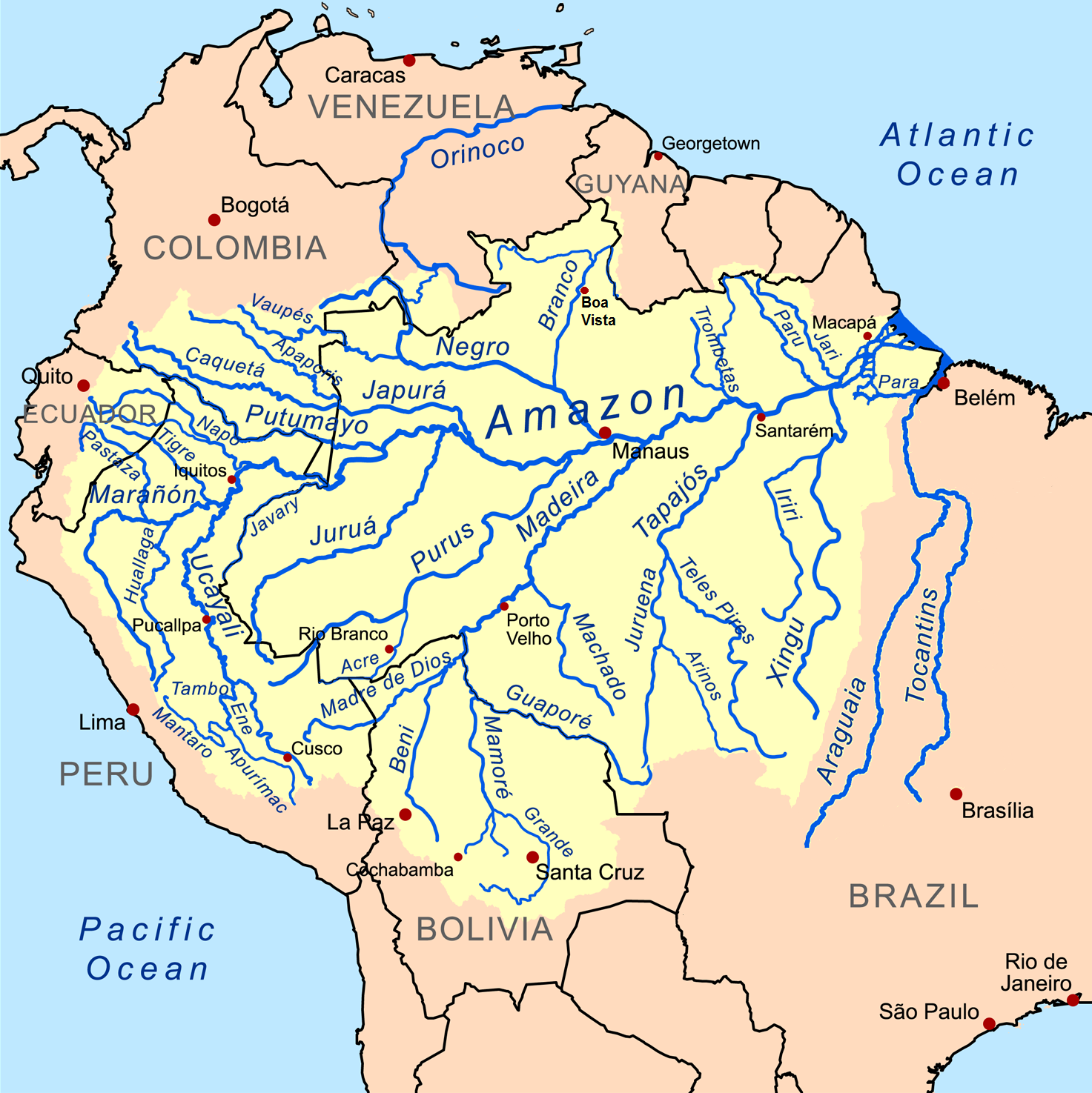
Image by Kmusser, licensed under Creative Commons Attribution-Share Alike 3.0

Do more with AI

Introduction

The Amazon Basin is a huge area in South America, covering about 2.7 million square miles! 🌎This region is drained by the famous Amazon River, which is the second longest river in the world, stretching about 4,345 miles! The Amazon Basin is found in countries like Brazil, Peru, Colombia, Venezuela, Ecuador, Bolivia, Guyana, Suriname, and French Guiana. This magical place is home to the largest rainforest, known as the Amazon Rainforest, filled with fascinating plants and animals. 🌳🌈 Have you ever heard of the Amazon River dolphins? They can be pink! 💖Explore the amazing wonders of the Amazon!

Images of Amazon Basin

The mouth of the Amazon River

The mouth of the Amazon River

Aerial view of the Amazon rainforest, near ManausImage by CIAT, licensed under Creative Commons Attribution-Share Alike 2.0

Aerial view of the Amazon rainforest, near Manaus

Aerial view of part of the Amazon rainforestImage by Jorge.kike.medina, licensed under Creative Commons Attribution 3.0

Aerial view of part of the Amazon rainforest

Jaguar in the area of Miranda near Amazon basinImage by Bart van Dorp, licensed under Creative Commons Attribution 2.0

Jaguar in the area of Miranda near Amazon basin

Red-bellied piranha (Pygocentrus nattereri) is a species of piranha. This species lives in the Amazon River basin, coastal rivers of northeastern Brazil, and the basins of the Paraguay, Paraná and Essequibo Rivers.Image by Gregory Moine from Niantic, USA, licensed under Creative Commons Attribution 2.0

Red-bellied piranha (Pygocentrus nattereri) is a species of piranha. This species lives in the Amazon River basin, coastal rivers of northeastern Brazil, and the basins of the Paraguay, Paraná and Essequibo Rivers.

Amazon rainforest in ColombiaImage by Richard Hardy, licensed under Creative Commons Attribution-Share Alike 4.0

Amazon rainforest in Colombia

A floating village in Iquitos, PeruImage by Sascha Grabow www.saschagrabow.com, licensed under Creative Commons Attribution-Share Alike 3.0

A floating village in Iquitos, Peru

Proposed and approved Indigenous territories in Brazil as of 2008[update]

Proposed and approved Indigenous territories in Brazil as of 2008[update]

Deforestation and increased road-building bring human encroachment upon wild areas, increased resource extraction and threats to biodiversity.Image by Ibama from Brasil, licensed under Creative Commons Attribution 2.0

Deforestation and increased road-building bring human encroachment upon wild areas, increased resource extraction and threats to biodiversity.

The mouth of the Amazon River

The mouth of the Amazon River

Aerial view of the Amazon rainforest, near ManausImage by CIAT, licensed under Creative Commons Attribution-Share Alike 2.0

Aerial view of the Amazon rainforest, near Manaus

Aerial view of part of the Amazon rainforestImage by Jorge.kike.medina, licensed under Creative Commons Attribution 3.0

Aerial view of part of the Amazon rainforest

Jaguar in the area of Miranda near Amazon basinImage by Bart van Dorp, licensed under Creative Commons Attribution 2.0

Jaguar in the area of Miranda near Amazon basin

Red-bellied piranha (Pygocentrus nattereri) is a species of piranha. This species lives in the Amazon River basin, coastal rivers of northeastern Brazil, and the basins of the Paraguay, Paraná and Essequibo Rivers.Image by Gregory Moine from Niantic, USA, licensed under Creative Commons Attribution 2.0

Red-bellied piranha (Pygocentrus nattereri) is a species of piranha. This species lives in the Amazon River basin, coastal rivers of northeastern Brazil, and the basins of the Paraguay, Paraná and Essequibo Rivers.

Amazon rainforest in ColombiaImage by Richard Hardy, licensed under Creative Commons Attribution-Share Alike 4.0

Amazon rainforest in Colombia

A floating village in Iquitos, PeruImage by Sascha Grabow www.saschagrabow.com, licensed under Creative Commons Attribution-Share Alike 3.0

A floating village in Iquitos, Peru

Proposed and approved Indigenous territories in Brazil as of 2008[update]

Proposed and approved Indigenous territories in Brazil as of 2008[update]

Deforestation and increased road-building bring human encroachment upon wild areas, increased resource extraction and threats to biodiversity.Image by Ibama from Brasil, licensed under Creative Commons Attribution 2.0

Deforestation and increased road-building bring human encroachment upon wild areas, increased resource extraction and threats to biodiversity.

Flora And Fauna

The Amazon Basin is home to millions of different plants and animals! 🌺🦜 There are over 40,000 kinds of plants, 2.5 million insect species, and about 2,200 species of birds and mammals. You might find giant trees like the Brazil nut tree, which can grow over 150 feet tall! 🌳Animals like jaguars, sloths, and colorful poison dart frogs call this place home. Did you know? The Amazon Rainforest is also known as the "lungs of the Earth" because it produces 20% of the world's oxygen! 🌍So, every time you take a deep breath, think of the Amazon!

Economic Importance

The Amazon Basin plays a crucial role in the economy of the countries it spans. 🌳Millions of people depend on the resources, such as timber, fish, and precious metals. For example, the Amazon is home to valuable hardwood trees used for building furniture and producing paper. Additionally, the water produces fish like the delicious piranha! 🎣Sustainable tourism, like eco-tours and wildlife spotting, also brings in money and helps protect the forest. 🌍Finding ways to use its resources wisely is important to save the Amazon while providing for local communities!

Biodiversity Hotspot

The Amazon Basin is one of the world's most significant biodiversity hotspots! 🌟Biodiversity means having many different kinds of living things. The Amazon is home to about 10% of all known species on Earth! This area is rich in unique plants and animals, some of which are found nowhere else. Did you know? Scientists discover new species regularly in the Amazon Rainforest! 🌺By protecting their habitats, we can help save the planet's incredible biodiversity and preserve our world's natural treasures! 🌏How exciting is that?

Conservation Efforts

Many organizations are working hard to protect the Amazon Basin and its unique environment. 🌱Efforts include creating protected areas, where no cutting down trees or harmful activities can happen. Some groups also support Indigenous peoples in conserving their land and culture. 🌍Eco-friendly businesses, like sustainable tourism, help promote awareness and appreciation for the Amazon. Educating people about the importance of biodiversity is crucial, making everyone aware of how the Amazon affects our planet! 🌎Together, through teamwork and creativity, we can help save the Amazon for future generations!

Cultural Significance

The Amazon Basin is not only important for nature but also for its cultural significance. 🪕The Indigenous peoples, who have deep connections with the forest, teach us about harmony and respect for nature. Many foods, medicines, and traditions originate from this region. 🌿The rainforest's beauty inspires artists, musicians, and writers worldwide! The Amazon has also been the setting for many stories and legends, capturing the imagination of people. 📖To understand our world better, we must learn about the unique cultures and traditions of the Amazon Basin!

Environmental Challenges

The Amazon Basin faces many environmental challenges. 🌍One major issue is deforestation, caused by logging, agriculture, and urban development. This means cutting down trees and destroying habitats for wildlife. 😢Illegal mining and pollution also threaten the rivers and animals that live there. Climate change is another significant challenge, causing changes in rainfall and temperature, impacting the delicate ecosystem. It’s essential to learn about these problems to understand how we can help save the Amazon and its incredible wildlife! 🌳💔

Hydrology And River System

The Amazon River system is one of the most important on Earth! 🌊The Amazon River itself has around 1,100 tributaries, making it an extensive network of water! This river carries more water than any river in the world—about one-fifth of the planet's freshwater! 💧The river flows through several countries and creates diverse ecosystems along its banks. The natural cycle of flooding and drying creates unique habitats for amazing wildlife. 🌳Knowing about this incredible river system helps us appreciate the power and beauty of nature in the Amazon Basin!

Climate And Weather Patterns

The climate in the Amazon Basin is warm and humid! ☀️ Most areas experience a tropical rainforest climate, which means it rains a lot—around 80 inches every year! Rainy season usually lasts from December to May, while drier months are from June to November. 🌧️ The temperature typically ranges between 77°F and 95°F (25°C to 35°C). With such warm and wet conditions, the Amazon can stay green and lush throughout the year. 🌈This climate supports all those amazing plants and animals, making the Amazon one of the most diverse places on Earth!

Geography Of The Amazon Basin

The Amazon Basin is surrounded by the Andes Mountains to the west and Atlantic Ocean to the east. These mountains help catch rain, feeding the mighty Amazon River and its many tributaries (smaller rivers). 🏞️ Some important tributaries include the Negro River and the Madeira River. The Amazon Basin has various landscapes, from dense rainforests to swampy areas called wetlands. The basin is like a quick-draining sponge that collects lots of water, making it very rich in biodiversity! 🌊Some parts of the basin even experience seasonal floods, creating unique habitats for plants and animals.

Indigenous Peoples Of The Amazon

Many different Indigenous peoples live in the Amazon Basin, each with unique cultures and languages. 🌍Some well-known groups include the Yanomami, Kayapo, and Ticuna. These tribes have lived in harmony with the forest for thousands of years, relying on its resources for food, shelter, and medicine. They use bows and arrows for hunting and gather fruits and nuts for meals. 🍍The Indigenous peoples also have rich traditions, including storytelling, dancing, and crafting beautiful art. Their knowledge helps protect the forest and its incredible wildlife! 🌿Learning about them is like discovering hidden treasures!

Amazon Basin Quiz

Q1
Question 1 of 10

Learn more about Amazon Basin

Ready to create?

Drop Files here
Make

To create a safe space for kid creators worldwide!

Create

Vibe Coding

Kids GPT

All Tools

Kibu

Resources

Worksheets

SafeTube

Blog

FAQ

Account

Pricing

Log-in

Sign-up

Data Deletion

Company

About

Community Guidelines

Privacy Policy

Terms of Service

2025, URSOR LIMITED. All rights reserved. DIY is in no way affiliated with Minecraft™, Mojang, Microsoft, Roblox™ or YouTube. LEGO® is a trademark of the LEGO® Group which does not sponsor, endorse or authorize this website or event. Made with love in San Francisco.