All Articles

Albert Camus

Albert Camus Facts For Kids

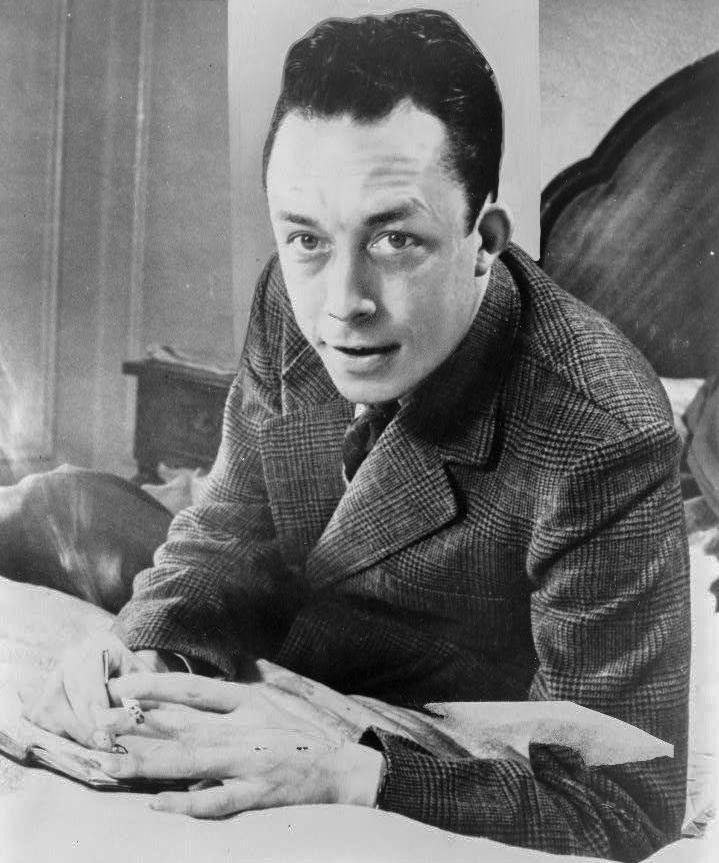
Albert Camus was a French philosopher, author, and journalist known for his ideas on Absurdism and significant literary works that explore the human condition.
🎨 Reading age for 6-8
Background blob
Albert Camus
Albert Camus
Facts for Kids!

Do more with AI

Introduction

Albert Camus was a French thinker born on November 7, 1913, in Mondovi, Algeria 🇩🇿. He became famous for his ideas about life and how we find meaning in it. Camus believed that life can seem strange or silly, and he called this idea "Absurdism." This means that even when things feel confusing, we should still enjoy our time and try to seek happiness! He wrote stories, plays, and essays that inspired people to think deeply. Camus won a Nobel Prize for his amazing writings! 🌍

Images of Albert Camus

A 20th-century postcard of the University of Algiers

A 20th-century postcard of the University of Algiers

Photos of Albert Camus
Albert Camus's gravestone

Albert Camus's gravestone

The bronze plaque on the monument to Camus in the town of Villeblevin, France. It reads: "From the General Council of the Yonne Department, in homage to the writer Albert Camus whose remains lay in vigil at the Villeblevin town hall on the night of 4 to 5 January 1960"

The bronze plaque on the monument to Camus in the town of Villeblevin, France. It reads: "From the General Council of the Yonne Department, in homage to the writer Albert Camus whose remains lay in vigil at the Villeblevin town hall on the night of 4 to 5 January 1960"

The monument to Camus built in Villeblevin, where he died in a car crash on 4 January 1960

The monument to Camus built in Villeblevin, where he died in a car crash on 4 January 1960

Camus crowning Stockholm's Lucia on 13 December 1957, three days after accepting the Nobel Prize in Literature

Camus crowning Stockholm's Lucia on 13 December 1957, three days after accepting the Nobel Prize in Literature

Administrative organization of French Algeria between 1905 and 1955Image by French_Algeria_1934-1955_administrative_map-fr.svg : Sémhur derivative work: Sémhur, licensed under Creative Commons Attribution-Share Alike 4.0

Administrative organization of French Algeria between 1905 and 1955

A stele made in Tipaza in 1961 by the French painter Louis Bénist, on which is engraved an extract from Nuptials: "Here, I understand the concept of glory: the freedom to love boundlessly."

A stele made in Tipaza in 1961 by the French painter Louis Bénist, on which is engraved an extract from Nuptials: "Here, I understand the concept of glory: the freedom to love boundlessly."

Albert Camus street in La Coruña, Galicia, (Spain).Image by Drow male, licensed under Creative Commons Attribution-Share Alike 4.0

Albert Camus street in La Coruña, Galicia, (Spain).

A 20th-century postcard of the University of Algiers

A 20th-century postcard of the University of Algiers

Photos of Albert Camus
Albert Camus's gravestone

Albert Camus's gravestone

The bronze plaque on the monument to Camus in the town of Villeblevin, France. It reads: "From the General Council of the Yonne Department, in homage to the writer Albert Camus whose remains lay in vigil at the Villeblevin town hall on the night of 4 to 5 January 1960"

The bronze plaque on the monument to Camus in the town of Villeblevin, France. It reads: "From the General Council of the Yonne Department, in homage to the writer Albert Camus whose remains lay in vigil at the Villeblevin town hall on the night of 4 to 5 January 1960"

The monument to Camus built in Villeblevin, where he died in a car crash on 4 January 1960

The monument to Camus built in Villeblevin, where he died in a car crash on 4 January 1960

Camus crowning Stockholm's Lucia on 13 December 1957, three days after accepting the Nobel Prize in Literature

Camus crowning Stockholm's Lucia on 13 December 1957, three days after accepting the Nobel Prize in Literature

Administrative organization of French Algeria between 1905 and 1955Image by French_Algeria_1934-1955_administrative_map-fr.svg : Sémhur derivative work: Sémhur, licensed under Creative Commons Attribution-Share Alike 4.0

Administrative organization of French Algeria between 1905 and 1955

A stele made in Tipaza in 1961 by the French painter Louis Bénist, on which is engraved an extract from Nuptials: "Here, I understand the concept of glory: the freedom to love boundlessly."Image by Dalbera / J.P. Dalbéra from Nice, France, licensed under Creative Commons Attribution 2.0

A stele made in Tipaza in 1961 by the French painter Louis Bénist, on which is engraved an extract from Nuptials: "Here, I understand the concept of glory: the freedom to love boundlessly."

Albert Camus street in La Coruña, Galicia, (Spain).Image by Drow male, licensed under Creative Commons Attribution-Share Alike 4.0

Albert Camus street in La Coruña, Galicia, (Spain).

Biography

Albert was born to French parents but grew up in Algeria, a place with beautiful beaches and mountains. He studied at the University of Algiers where he learned about philosophy and literature 📚. He also played soccer, which he loved! During World War II, he joined a group that fought against the Nazis. Camus later moved to France, where he wrote a lot of his famous works. He passed away on January 4, 1960, in a car accident. His life was full of interesting experiences that shaped his thoughts about the world! 🚗💨

Major Works

Some of Camus's most famous books include "The Stranger" and "The Myth of Sisyphus." In "The Stranger" 📖, he tells the story of a man who feels disconnected from the world. "The Myth of Sisyphus" talks about a Greek character cursed to roll a boulder up a hill, only for it to roll back down. Camus uses Sisyphus's struggle to show how we can find joy in our daily tasks, even if they seem silly. He also wrote plays and essays, sharing his thoughts in many different ways! 🎭

Political Views

Camus cared a lot about politics and justice. He believed in fighting for human rights and freedom for everyone. 🌍During World War II, he wrote about the importance of resistance against unfair rulers. He thought that people should work together to create a better world, which makes him a world federalist. Even though he faced many challenges, Camus continued to express his thoughts boldly, leaving a mark on political discussions for the future! ✊

Legacy And Criticism

Even though Camus wrote heartwarming and thoughtful ideas, some people disagreed with him! 😮They argued about his views on life and what he meant by absurdism. However, his legacy continues to live on in schools, libraries, and bookshops all around the world! People still study his work to understand themselves better. His stories and philosophies challenge us to think about our lives, making Camus an important figure in literature and philosophy! 📚🌍

Influence On Literature

Albert Camus had a big influence on other writers and thinkers! Many authors, like Jean-Paul Sartre, were inspired by his ideas about life and meaning. 📚After Camus, more people started exploring themes of absurdity in their own work. His writing encouraged readers to analyze their lives and question the world around them. Camus's influence can still be seen today in books, movies, and art, helping people think about big questions in life! 🌟

Philosophy Of Absurdism

Absurdism is a special idea created by Camus. He believed that life doesn't always make sense, and that's okay! 🌌Sometimes, we search for meaning, but we may not find it. Camus thought it was important to enjoy the little things in life, like a sunny day or a good book. He described this feeling of confusion and wonder in his works. Instead of feeling sad about the absurdities of life, he believed we should embrace them and create our own meaning! This idea remains influential today. 😊✨

Camus In Popular Culture

Albert Camus's ideas have made their way into movies, music, and art! 🎥🎶 Many films explore themes similar to Camus's philosophy, such as the search for meaning in life. Some musicians even mention his works in their songs. His thoughts can also be found in video games and graphic novels, making him a part of today's culture! This shows that even long after his passing, Camus still touches the hearts of many people. 🌈

Nobel Prize In Literature

Albert Camus received the Nobel Prize in Literature in 1957. 🏆This honor was awarded to him for his wonderful writings that moved and inspired many people worldwide. The Nobel Prize is one of the highest recognitions for writers, and only a few receive it each year! Camus was praised for his ability to explore deep questions about life and humanity. Winning this award showed that his ideas were important and cherished by people everywhere! 🎉

Existentialism Vs. Absurdism

Existentialism and absurdism are two similar ideas, but they are not quite the same! 🤔Existentialists, like Jean-Paul Sartre, focus on creating meaning in life. In contrast, Camus's absurdism says that life may not have true meaning, and that's alright. While both philosophies encourage people to think deeply about their existence, existentialism leans more on finding personal significance. Camus believed that even in the absence of meaning, we can still find joy in life’s experiences! ✨

Albert Camus Quiz

Q1
Question 1 of 10

Learn more about Albert Camus

Ready to create?

Drop Files here
Make

To create a safe space for kid creators worldwide!

Create

Vibe Coding

Kids GPT

All Tools

Kibu

Resources

Worksheets

SafeTube

Blog

FAQ

Account

Pricing

Log-in

Sign-up

Data Deletion

Company

About

Community Guidelines

Privacy Policy

Terms of Service

2025, URSOR LIMITED. All rights reserved. DIY is in no way affiliated with Minecraft™, Mojang, Microsoft, Roblox™ or YouTube. LEGO® is a trademark of the LEGO® Group which does not sponsor, endorse or authorize this website or event. Made with love in San Francisco.