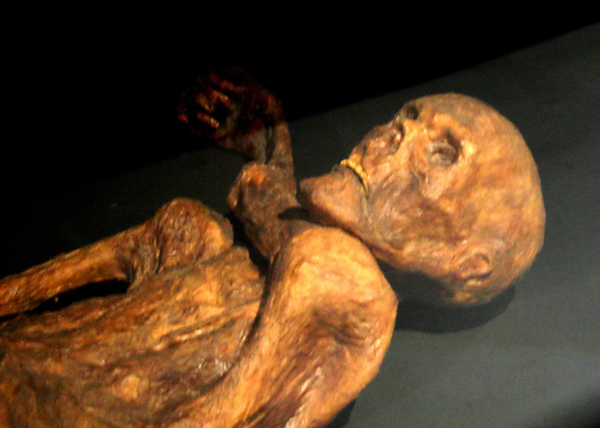
Ötzi, commonly referred to as The Iceman, is the remarkably preserved natural mummy of a man who lived between 3350 and 3105 BC, providing invaluable insights into prehistoric life.
Set reading age
View for Kids
Easy to read and understand
View for Students
Clear, detailed explanations
View for Scholars
Deep dives and big ideas
Ötzi, also known as The Iceman, is a super cool mummy found in the Alps! 🏔️ He lived over 5,000 years ago, between 3350 and 3105 BC. That's a long, long time! Ötzi was discovered in 1991 by two hikers in Italy. His body was preserved in ice, allowing scientists to learn a lot about ancient life. Can you imagine finding someone who lived so long ago? 🤔Ötzi helps us understand how people lived, what they wore, and even what they ate. He’s one of the oldest preserved human bodies ever found!
Ötzi was dressed like a mountain warrior! 🏹He wore a jacket made of animal hides and had a grass-filled hat to keep his head warm. His shoes were made with plant fibers, leather, and hay, perfect for walking on cold ground! ❄️ Besides clothes, Ötzi had some amazing tools with him. He carried a copper axe, a bow, and arrows made of wood with stone tips. These tools show that he was a skilled hunter and had some knowledge about making things! Each item tells a story about how people survived long ago.
The discovery of Ötzi was like finding a treasure! 💎In September 1991, two hikers named Helmut and Erika Simon stumbled upon his frozen body while hiking near the border of Italy and Austria. They thought it was a cave man at first! Once scientists got involved, they realized he was much older than expected. Ötzi was hidden in a glacier for thousands of years! The spot where he was found is called the Ötztal Alps, named after him. 🏞️ It's a popular place for tourists to visit and learn more about this amazing discovery!
Learning about Ötzi helps us understand ancient cultures! 🌍Back then, people used tools made from stones and animal parts. They had strong connections with nature! Ötzi's clothes and tools tell us how they lived and survived in the wild. He can also teach us about teamwork since people likely worked together to hunt and gather food. One day, we might even tell stories to our friends about the cool things we learned from Ötzi—the Iceman who traveled time! 🕰️ His legacy inspires curiosity about our ancestors!
Ötzi changed the world of archaeology forever! 🕵️♂️ When he was found, many researchers wanted to learn more about life in ancient times. His discovery opened doors to new studies in human history and ancient cultures. ⭐Archaeologists and scientists use Ötzi as a way to explain how ancient people lived, what they ate, and their health problems. This has led to exciting digs and finds across Europe! People have learned to preserve ancient finds better, too. Thanks to Ötzi, many mysteries of the past are being explored!
Ötzi’s mummy shows how nature can create a mummy without human help! 🌬️ While mummies are often made by people, Ötzi was preserved by frost and ice in the Alps. This natural mummification is rare! People used to mummify their loved ones with special oils and wrapping to preserve them, but Ötzi had no such treatments. His body dried out in the cold, which stopped it from decaying. Fun fact: The word "mummy" comes from the Arabic word "mumiya," meaning "bitumen" or "preserved." 🪄 Ötzi is a unique case in the world of mummies!
Ötzi’s last meals give scientists clues about his diet! 🍴Some scientists found remnants of grains and meat inside his stomach. He likely ate a type of grass called einkorn wheat and some deer meat. His diet was full of natural foods. Researchers also found traces of plants he used for medicine, like mushrooms! 🍄Can you imagine what kids back then ate for lunch? Eating healthy might have helped him stay strong, even when he faced tough mountain weather! It shows us what ancient life was like!
Many myths surround Ötzi! Some people believe he was cursed or had magical powers. ✨But he was just a man who lived during tough times like anyone else. Another misconception is that he was a "caveman"—he actually lived in a much more progressive time, using tools and knowledge from farming! 🏹So, when we hear stories about Ötzi, we should remember that he was a real person facing real challenges! Learning the facts helps us separate myths from history and understand more about our ancestors! 🔍
Mummifying Ötzi helped scientists discover many secrets of the past! 🧪Researchers have studied his body and tools for over 30 years to learn more. For example, they used special X-rays to see inside his body and found he had a blood type called O! ☠️ They even analyzed his DNA to learn about his ancestors! Scientists think Ötzi may have been part of a group that traveled to different areas for hunting. They are still discovering new facts about him, showing how exciting science can be in understanding our history!
Ötzi lived during the late Neolithic period, a time when humans were just starting to farm! 🌾People began to settle in one place instead of moving around all the time. This was about 5,300 years ago. Millennia ago, the land was different—with lots of forests and wild animals. 🦌Ötzi's time was when people created pottery and built homes. The invention of agriculture helped people grow food, leading to bigger communities. His discovery gives us a peek into a fascinating period where humans learned new ways to live!
Ötzi's body is really special because he is so well-preserved! 🧊When he was found, he still had skin, hair, and even some of his organs! Scientists believe that the cold, icy environment helped keep him safe for all those years. He was about 5 feet 5 inches tall and weighed around 110 pounds. That’s like a big kid today! 💪Ötzi had some health problems too, like bad teeth and arthritis in his knees, which shows that life was tough for people back then. Discovering his condition has taught us a lot about ancient humans!


DIY is a creative community where kids draw, build, explore ideas, and share.
No credit card required