Games That are Not Blocked
Games that are not blocked are games kids can reach and enjoy on devices or networks where game sites are open and available. This page explains the idea in a simple way and shows how kids can use Vibe Coding to make, test, and improve their own game ideas with guided support.
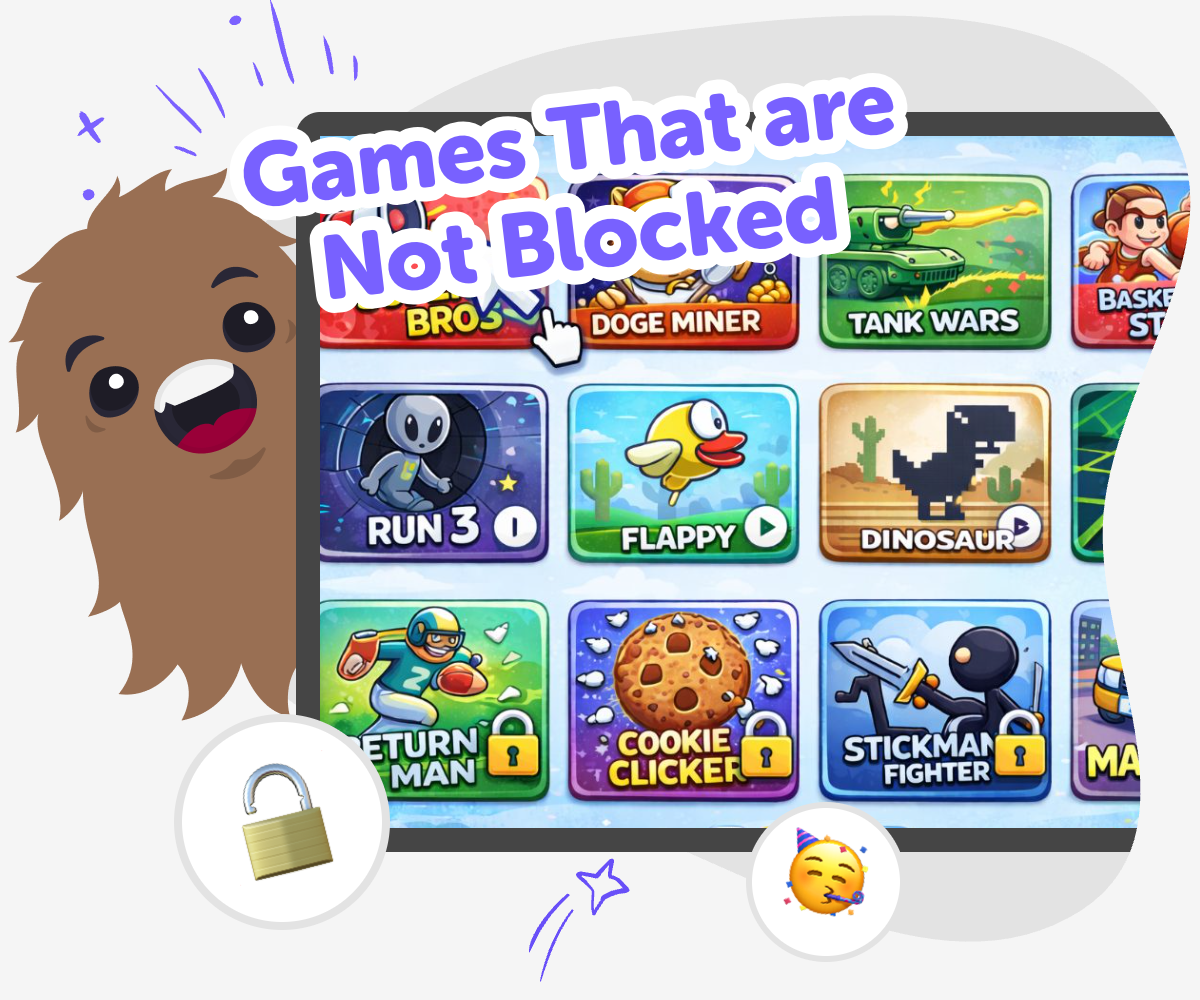
Games That Stay Open
Games that are not blocked are games kids can open and enjoy in places where access is allowed. The idea matters because it helps kids find safe, simple ways to play, learn, and create without running into a page that will not load. It also matters because easy access can make play feel less frustrating and more welcoming. When kids understand what makes a game reachable, they can make better choices about where to play and how to build their own ideas.
Vibe Coding gives kids a guided way to explore games that are not blocked by helping them make a game idea step by step. Kids can describe what they want, build a first version, test how it plays, and improve it with clear support. That makes the topic active instead of just something to search for. It also keeps the focus on creativity, safety, and confidence, so kids learn by doing while staying in a calm, kid-friendly space.
What does games that are not blocked mean?
Games that are not blocked usually means games or interactive pages that a kid can open without a school filter, network rule, or device setting stopping them. For kids, the phrase often points to easy access, but it also connects to choice and learning. A game that loads well and is allowed in the place you are using it can feel less frustrating, which makes it easier to relax and focus on play. It also matters for creators, because when kids understand how games work and what makes them accessible, they can think more carefully about the experiences they build for others. That is one reason making your own simple game can be so powerful: you learn what makes play easy to start, clear to follow, and fun to return to.
Why do kids look for games like this?
Kids often look for games that are not blocked because they want something fun to do right away, especially in places where they have a little free time. But there is more to it than just passing time. A game that opens quickly and makes sense fast can help kids practice reading, pattern-finding, timing, memory, and problem-solving without feeling like homework. It can also be a calm way to explore technology. When kids move from only playing to also making, they start asking better questions: What makes a game easy to understand? What keeps someone interested? What should happen when a player wins or loses? Those questions help kids become more thoughtful makers, not just players.
How can kids stay safe while exploring?
Safety matters when kids are exploring games online. A good rule is to use trusted devices, ask an adult about site rules, and stay on kid-friendly pages that match your age and setting. It is also smart to avoid sharing private information, like a full name, school, home address, or passwords. If a page feels confusing, too loud, or asks for something personal, it is okay to stop and get help. Making your own project can be a safer way to learn because you control the idea, the words, and the audience. With guided tools like Vibe Coding, kids can build in a calm, supervised way and practice making choices instead of rushing through random pages.
Why is making your own game a good next step?
Making your own game helps turn curiosity into skill. Instead of only searching for something fun to play, kids get to imagine what they want, test it, and improve it. That builds coding confidence because every small change teaches something real. If a button does not work the way you wanted, you can fix it. If the game feels too easy, you can make it trickier. If it is hard to understand, you can rewrite the instructions. This kind of practice teaches experimentation and patience, which are important in both technology and everyday problem-solving. It also helps kids see that great projects are usually made in steps, not in one perfect moment.
Try it in Vibe Coding
Pick a game idea
Choose a simple game idea you would like to make, such as a maze, quiz, clicker, or race. Keep it small so you can focus on building and testing it clearly.
Describe how it should work
Tell Vibe Coding what players should do, what happens when they win, and what makes the game fun. Clear ideas help turn your thought into something you can actually try.
Build and test
Add the first version, then play it to see what works and what feels confusing. Change one part at a time so you can notice how each change improves the game.
Make the most of replaying
Try a new challenge Play your game again with a different goal or rule so you can see what stays fun and what needs more work. Small changes can make the experience feel fresh while still keeping the same idea. Improve one detail Adjust one thing at a time, like the score, speed, or instructions, so the game becomes easier to understand. Careful edits help you learn how small updates change the whole project. Share with care Show your project to a parent, teacher, or friend and ask what they notice first. Friendly feedback can help you make the game clearer, safer, and more enjoyable for other kids. Keep growing Save your favorite version, then come back later to try a new level, new character, or new rule. Replaying and improving helps build confidence because every version teaches you something new.
Frequently asked questions
What are games that are not blocked?
They are games or interactive pages that can load in places where access is allowed. The phrase usually means a game is reachable on a device or network, not that it is automatically safe or good for every kid, so it is still important to check the site and the setting.
Why do some games get blocked?
Games can be blocked by school filters, family settings, network rules, or device controls. These limits are often there to keep browsing safer, reduce distractions, or follow rules about what kids can use in a certain place.
Are all open games okay for kids?
No. A game being open or easy to reach does not always mean it is age-appropriate. Kids should still use trusted sites, follow family or school rules, and ask an adult if something feels confusing or unsafe.
How can I find a game that is allowed where I am?
Start by checking the rules on the device, network, or classroom you are using. Then look for kid-friendly pages that fit those rules. If you are not sure, ask a parent, teacher, or caregiver before opening a new site.
Can kids make their own version of this idea?
Yes. Kids can build simple interactive projects inspired by the kind of games they enjoy, such as quizzes, clickers, mazes, or stories with choices. A guided tool like Vibe Coding can help them build, test, and improve each part step by step.
What makes a game easy to play right away?
Clear instructions, simple controls, and quick feedback usually help. If players can understand the goal fast and see what happens when they click, tap, or move, the game feels easier to enjoy.
How do I know if a game is safe to open?
Look for trusted sources, age-appropriate content, and a page that does not ask for personal information. If a game wants a download, a login, or details you do not want to share, stop and check with an adult first.
What can I build if I want to practice this skill?
You can build a small game, a quiz, a story with choices, or a simple tool with buttons and scores. Starting small helps you learn how ideas become real projects and makes it easier to keep improving as you go.
More tools
Create a Princess Character
Create a princess character by imagining her look, personality, and world, then shaping those ideas into something original and fun. This kid-friendly page helps children explore character design and storytelling through hands-on making with Vibe Coding.
Create a Random Shape Generator
Create a random shape generator to explore how shapes, patterns, and simple rules can make art feel surprising and fun. Kids can use creative coding to build, test, and change their own shape-making project while learning how randomness can spark new ideas.
Create a Roblox Avatar
Create a Roblox avatar by choosing clothes, colors, faces, and accessories that show off your style. This kids-first page explains what an avatar is, why it matters in play, and how creative tools can help kids explore ideas with confidence.
Create a Spacebarclicker
Create a spacebarclicker by designing a simple click game that reacts when you press the spacebar. Kids can plan the rules, choose what happens on each click, and build a playful project that helps them practice coding, testing, and improving ideas step by step.
Ready to start creating?
Join hundreds of thousands of kids already building cool stuff on DIY.ORG.
Your first game is on us.
Describe a game below - no sign-up needed to try.
Powered by AstroSafe
Make real games - not just chat