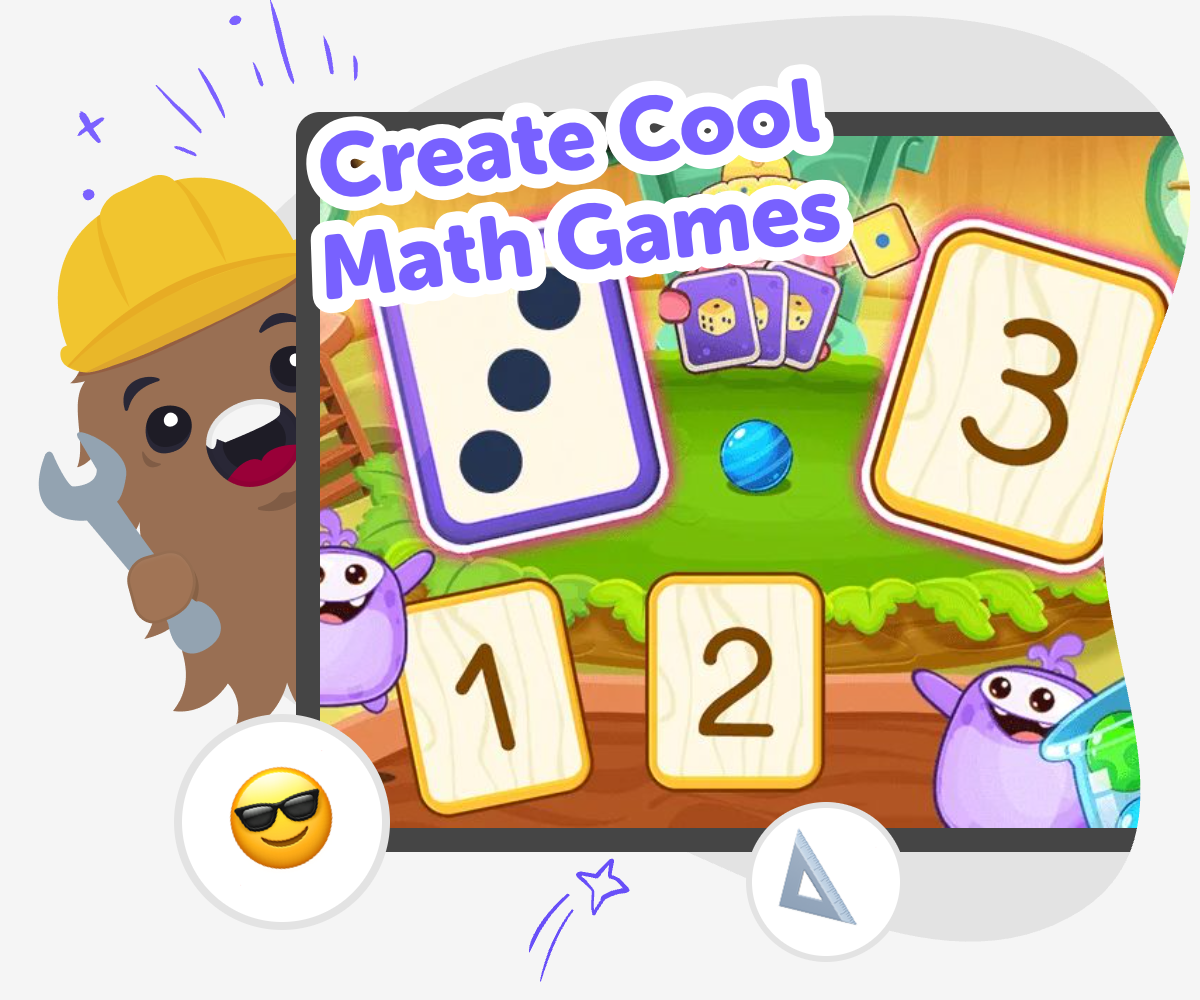
Create Cool Math Games
Create cool math games by turning ideas into playful challenges that use counting, patterns, logic, and problem-solving. Kids can explore how games work, then build, test, and improve their own interactive ideas with guided support.
About this tutorial
Create cool math games by mixing numbers, patterns, and play. A good math game helps kids practice thinking in a way that feels active, creative, and easy to try again.
It can turn counting, logic, and problem-solving into something hands-on, so kids learn by making, testing, and improving their own ideas.
Vibe Coding gives kids a guided place to shape a math game idea, build it step by step, and try it out safely. Kids can explore what makes a challenge clear, fair, and fun without needing to know everything at once.
As they make and test each version, they can adjust the rules, change the pace, and improve the experience in a calm, creative way. That helps the topic stay centered on math games while the tool supports the making process.
Step by step
- 1
Pick a math idea
Choose a simple game idea, like number matching, a quiz, a timer challenge, or a pattern puzzle. Keep the first version small so it is easy to understand and fun to finish.
- 2
Add the rules
Decide how players win, lose, or score points. Write the rules in short, clear language so the game feels fair and easy to play.
- 3
Build and test
Create the first version in Vibe Coding, then play through it to see what works. Notice where the game feels too hard, too slow, or confusing, and change it one part at a time.
- 4
Make the most of replaying
Try a remix Change one number, rule, or challenge so the game feels fresh while still staying easy to follow.
Check what players notice See whether the directions, answers, and score changes make sense the first time someone plays.
Improve the flow Smooth out parts that feel slow or confusing so the game moves in a clear, fun order.
Save your best version Keep testing new ideas, but hold on to the version that feels most playful, fair, and ready to share.
Why do math games help kids learn?
Math games help kids practice skills without feeling like they are only doing worksheet work. When children make a game, they have to think about numbers, patterns, timing, and rules at the same time. That kind of thinking builds confidence because the math is connected to something active and creative. A game also gives kids a reason to try again. If a puzzle is tricky, they can adjust it and see what changes. That process teaches more than memorizing an answer. It teaches how to solve problems, test ideas, and notice patterns. The game becomes both the challenge and the practice, which makes learning feel more like play and less like pressure.
What makes a math game fun to play?
A fun math game is usually easy to start, clear to follow, and interesting to try again. Kids do not need to build something huge. Often the best games use one simple idea, like counting fast, choosing the right answer, or spotting a pattern before time runs out. Clear rules matter because players should know what to do right away. A little surprise helps too, such as different levels, score points, or a new challenge each round. When kids create their own game, they can decide what feels exciting. They can make the game silly, fast, calm, or competitive. That freedom helps them understand that design choices change how a game feels.
How does making a game build confidence?
Making a game helps kids see that they can turn an idea into something real. At first, a project may feel unfinished or messy, but each small change makes it better. That is an important learning moment. Kids start to notice that mistakes are not the end of the project. They are part of the process. If a question is too hard, the game can be adjusted. If a rule is unclear, it can be rewritten. This kind of practice builds confidence because children get used to testing their ideas and improving them. They learn that creative technology is not only for experts. It is also for curious makers who are willing to try, learn, and keep going.
How can kids make math games safely online?
Safe creation starts with simple, age-appropriate ideas and a guided space where kids can focus on making. A good math game does not need private information, chat with strangers, or complicated setup. It should be about the project itself: the rules, the questions, the score, and the player experience. With a tool like Vibe Coding, kids can explore their idea through guided building instead of trying to figure everything out alone. That makes the process easier to understand and better for experimentation. Parents and educators can also look for clear prompts, step-by-step making, and projects that stay focused on learning. The best safe projects help kids create with confidence while keeping the experience practical and calm.
Need help?
What is a cool math game?
A cool math game is a game that uses numbers, logic, patterns, or problem-solving in a fun way. It can be a quiz, a puzzle, a timer challenge, or a counting game. The best ones are clear, playful, and easy to try again.
What kind of math game can kids make first?
Kids can start with something small, like matching numbers, solving simple questions, or spotting patterns. A first game should be easy to understand so the maker can focus on testing one idea at a time.
Do math games have to be hard to be good?
No. A good math game is often simple enough for players to understand quickly, but interesting enough to keep playing. Clear rules and a fun challenge matter more than making it complicated.
How do I make my math game more fun?
Try adding a score, a timer, a new round, or a silly theme. You can also change the questions so they feel like a puzzle or a race. Small changes can make the game feel very different.
Can kids build math games without being coding experts?
Yes. Kids can begin with a simple idea and improve it step by step. Guided tools like Vibe Coding help turn a math game idea into a real project without needing expert skills first.
What do kids learn by making math games?
Kids practice counting, logic, problem-solving, and creative thinking. They also learn to test ideas, notice what is confusing, and improve their work, which builds coding confidence and persistence.
Is it okay if the first version is not perfect?
Yes. Most good projects start with a first version that needs changes. Testing and improving are part of making, and each update helps the game become clearer and more fun.
How can parents support a child making a math game?
Parents can help by asking what the game is trying to do, whether the rules are clear, and what could make it easier to play. Encouragement and simple feedback help kids keep improving without losing their own ideas.