Create a Minecraft Survival Game
Create a Minecraft Survival Game is a kid-friendly way to explore game ideas, survival challenges, and creative problem-solving. Kids can imagine a simple world, think about goals and rules, and use Vibe Coding to build and improve an interactive project step by step.
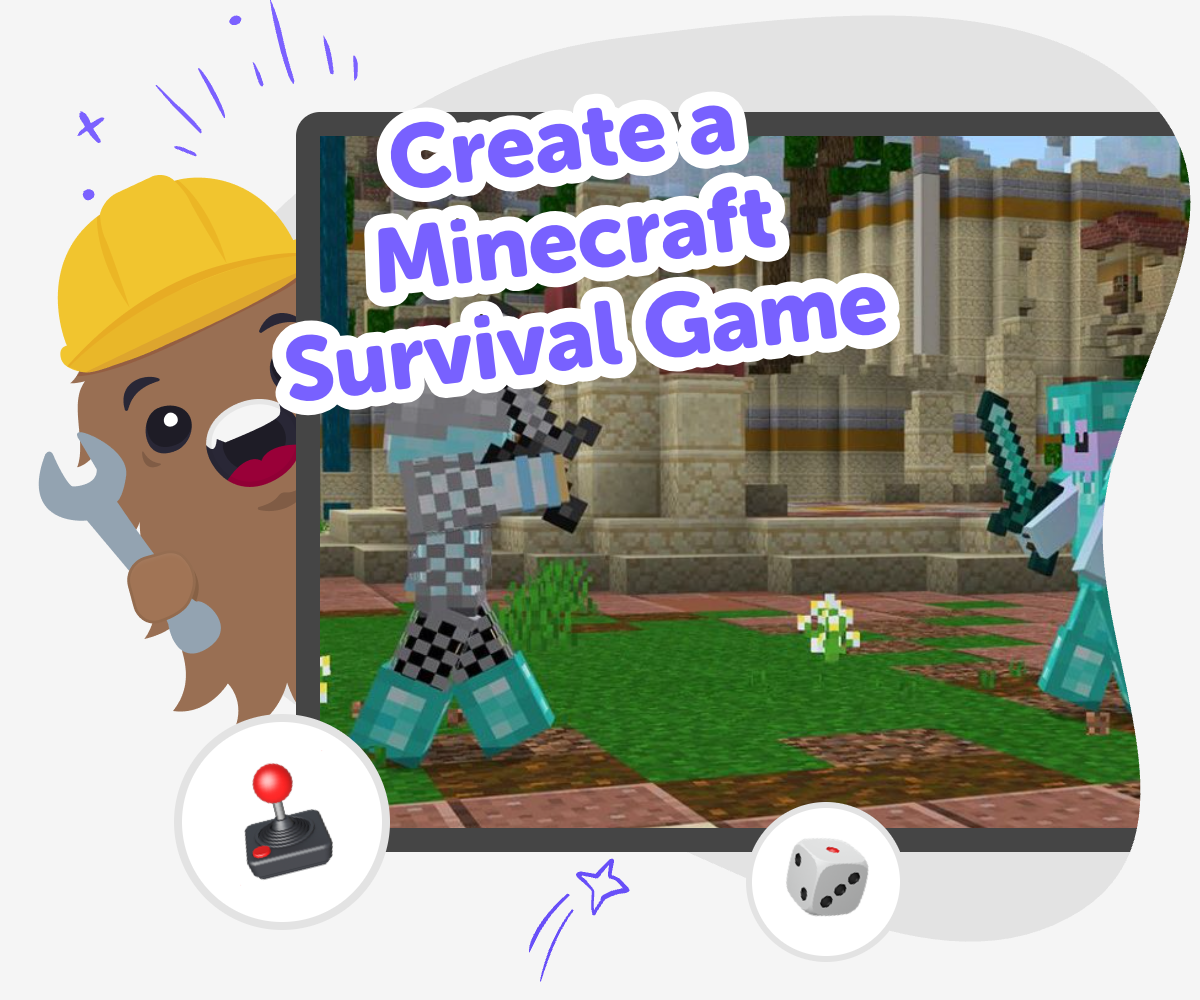
About this tutorial
If you want to create a minecraft survival game, think about what the player needs to do to stay safe, gather supplies, and reach a goal. This topic helps kids turn a game idea into a real project, while learning how rules, challenges, and choices shape the experience.
A survival game can be simple, creative, and fun to repeat. Kids can start small, test one idea at a time, and learn how game design changes the way players think and play.
Vibe Coding gives kids a guided way to explore this topic by helping them build, test, and improve their own game step by step. They can describe the world they want, make a first version, and then adjust it as they notice what works better.
That keeps the project hands-on and safe for young makers. It also helps kids practice creativity and confidence while they learn that game ideas grow through testing, not by getting everything perfect at once.
Step by step
- 1
Choose the world
Pick a simple Minecraft-style setting for your game, like a forest, cave, desert, or island, and decide what danger or challenge the player will face first.
- 2
Set the survival goal
Choose one clear goal, such as finding food, building a shelter, or lasting through the night, so the game has a focus kids can understand right away.
- 3
Build the first version
Use Vibe Coding to turn your idea into a playable project with basic actions, a clear challenge, and a simple way to tell if the player is doing well.
- 4
Make the most of testing
Try the game Play through the first version and notice where the player gets stuck, confused, or bored. Small tests help you see what the game already does well.
Improve one thing Change only one rule, action, or goal at a time so you can tell what made the game better. This keeps the project easy to understand and easier to fix.
Try a new challenge Add a fresh twist, like a new resource, a timer, or a safer place to rest. New ideas can make the game feel more exciting without making it too hard.
Keep your best version Save the version you like most, then remix it later if you want a different world or challenge. Testing again and again helps your game grow in a thoughtful way.
What makes a survival game fun?
A good survival game gives players a clear challenge and a reason to keep going. The fun usually comes from making smart choices, like collecting the right items, finding shelter, or deciding when to take a risk. In a Minecraft-style survival game, players often begin with very little and must figure out how to stay safe while exploring a world that can change around them. That mix of planning, problem-solving, and surprise helps the game feel exciting. For kids, this is also a chance to learn how game rules shape feelings. If the challenge is too easy, the game can feel flat. If it is too hard, it can feel frustrating. Balancing the challenge helps a survival game feel fair, creative, and rewarding.
Why do game rules matter?
Game rules are the part that turns a cool idea into a real game. They tell players what they can do, what they need to collect, and what happens when something goes wrong. In a survival game, rules can control how long the player has to find food, whether night is dangerous, or how they win. Strong rules make the game easier to understand and more fun to repeat. They also help kids think like designers, because every rule changes how the game plays. When kids build their own version, they can test one rule at a time and notice what happens. That makes game-making feel like an experiment, where each change teaches something new about fairness, challenge, and player choice.
How can kids stay safe while making games?
Kids can stay safe by keeping game ideas age-appropriate, sharing projects carefully, and using a guided tool that supports learning instead of rushing to a finished answer. A survival game can include adventure without needing anything scary or harmful. It can focus on gathering, building, exploring, and solving problems in a friendly way. Adults can help younger kids choose themes that feel comfortable and positive. It is also smart to test the game with simple goals first, so the project stays easy to understand and easier to improve. When kids make games this way, they practice safe creativity: they try ideas, check what works, and learn how to improve without pressure.
How does Vibe Coding help kids learn?
Vibe Coding supports kids by turning a big game idea into small steps they can handle. Instead of trying to build everything at once, kids can describe their survival game, then keep shaping it with guided help as they test and improve it. That process builds coding confidence because kids see that making a game is something they can learn, not something only experts can do. It also strengthens problem-solving, since kids have to notice what is missing, what feels confusing, and what could work better. Each round of building and testing helps them practice creative technology skills in a playful way. Over time, kids learn that good projects grow through effort, revision, and curiosity.
Need help?
What is a Minecraft survival game?
A Minecraft survival game is a game where the player has to stay safe, gather resources, and keep going while facing challenges. The player might need to find food, build shelter, or avoid danger. Kids can use that idea to create their own version with simple rules and goals.
What makes survival games exciting for kids?
Survival games are exciting because kids get to make choices and see what happens next. They can plan, explore, solve problems, and try again when something does not work. That mix of challenge and creativity makes the game feel active and rewarding.
Can kids make their own survival game ideas?
Yes. Kids can make their own survival game ideas by choosing a setting, a goal, and a few rules. They do not need to start big. A small game with one challenge can be a strong first project, especially when they build and improve it step by step.
Do survival games have to be scary?
No. A survival game can be tense without being scary. Kids can make it about collecting supplies, building a shelter, or reaching a safe place. The challenge can stay friendly and adventurous, which is often a better fit for younger makers.
How do game rules change the challenge?
Game rules decide how hard or easy the game feels. If food is hard to find, the game becomes trickier. If the player gets extra help, the game becomes easier. Changing just one rule can make the whole game feel different.
What should a first version include?
A first version should include a simple world, one main challenge, and a clear goal. That might mean finding shelter before night, collecting a few items, or surviving for a set amount of time. A small start makes it easier to test and improve.
How does Vibe Coding help with game building?
Vibe Coding helps kids build their survival game by giving guided support as they create, test, and change their project. Kids can keep improving their game idea instead of stopping after one try. That makes the process feel manageable and fun.
Can kids keep improving the same game?
Yes. Kids can keep changing their game after they test it. They might adjust the rules, add a new challenge, or make the goal clearer. Improving the same project helps kids learn that great games are often built through many small changes.