Build a Tower Defense Game

Build a tower defense game by planning a path, placing defenders, and testing how each wave changes the challenge. Kids can learn game design, problem-solving, and creative coding by making a game that is fun to play and easy to improve.
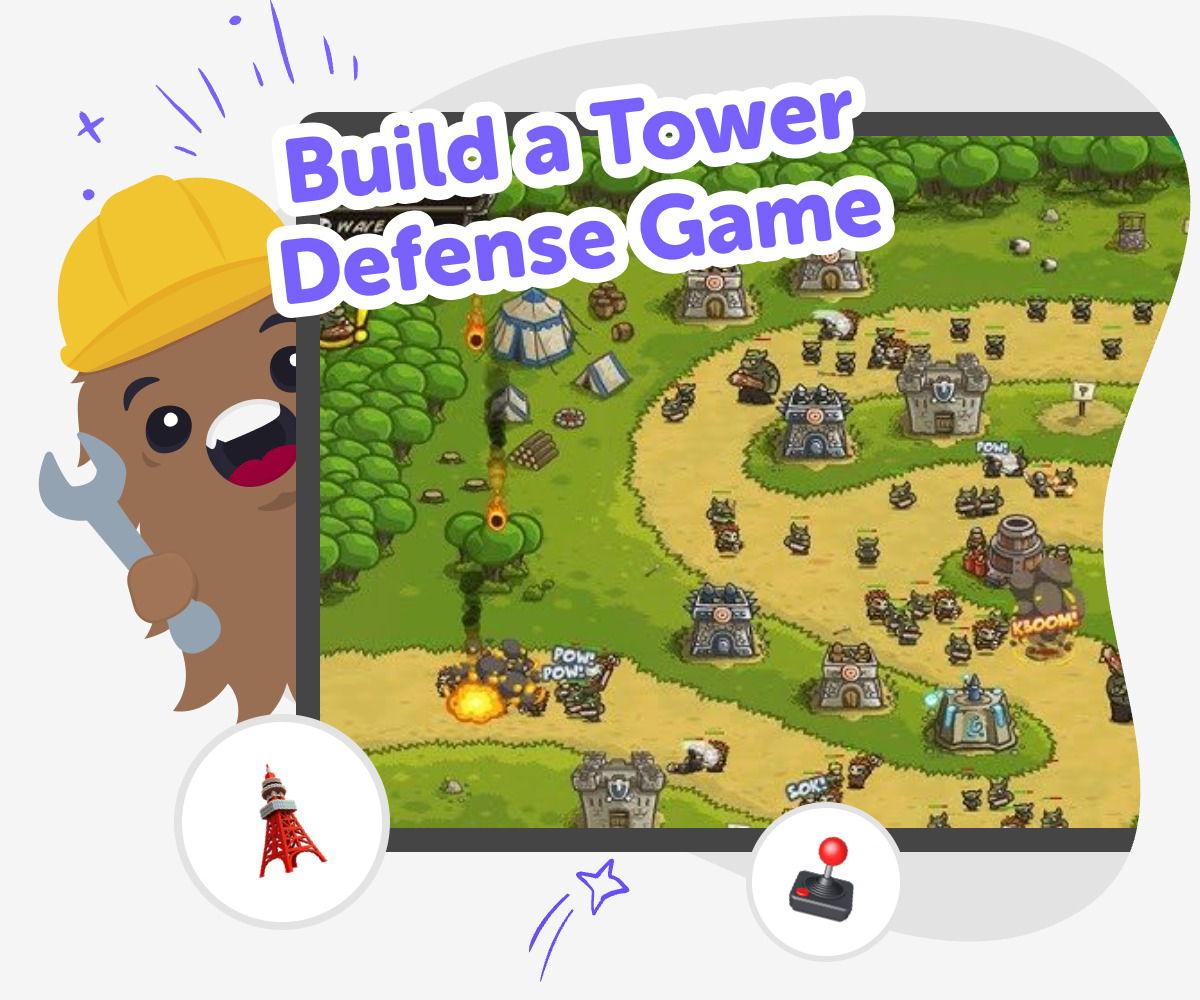
Build a Tower Defense Game hero

Tower Defense Game Basics

A tower defense game is a game where players protect a path, base, or goal by placing defenders in smart spots. When you build a tower defense game, you get to think like a game designer: where should enemies move, which towers should slow them down, and what makes each round feel fair and fun? That mix of planning and testing helps kids practice strategy, patience, and creative problem-solving. It also shows how small design choices change the whole game. A longer path, stronger enemies, or a new tower can make the same idea feel completely different.

Vibe Coding gives kids a guided way to explore this topic by building, testing, and improving their own game step by step. Kids can describe the kind of defenders, enemies, and paths they imagine, then shape the project with support as they try ideas, notice what works, and make changes. That makes the process feel safe and hands-on, while keeping the focus on learning, confidence, and creative technology skills rather than just getting a finished result fast.

How to build it

Step 1 - Choose the map

Pick a simple path, goal, and play area for the enemies to follow. A clear map helps the game feel easy to understand and gives you space to plan where towers should go.

Step 2 - Add towers

Place a few towers with different jobs, like slowing, attacking, or reaching farther across the path. This lets you test how each tower changes the challenge for the player.

Step 3 - Test the waves

Run a round and watch what happens when enemies move toward the goal. Notice which spots feel too easy, too hard, or just right, then change the layout and try again.

Step 4 - Make the most of replaying

Try a new path Change the route so enemies take a different turn and see how that affects where towers work best. Mix up tower powers Swap one tower ability for another and compare which version feels more fun, balanced, or surprising. Watch for tricky spots Check where enemies get stuck, move too fast, or slip through, then adjust the game so it stays clear and fair. Save your favourite version Keep improving the design, try new rounds, and build a version you want to play again and share with care.

What makes a tower defense game fun?

A tower defense game is fun when the player has to make smart choices, not just click quickly. Kids can enjoy watching enemies move along a path while they decide where each tower should go. The fun comes from planning ahead, trying an idea, and then seeing whether it works during a wave. If a tower is placed in the right spot, it can protect the goal in a satisfying way. If it is in the wrong spot, the player learns something and can try a better plan next time. That makes the game feel active, thoughtful, and full of small wins. It also gives kids a chance to practice strategy in a playful way, which can build confidence as they keep improving the design.

Why does balance matter?

Balance is what helps a tower defense game feel fair. If the enemies are too weak, the game can feel too easy. If they are too strong, players may feel stuck and stop having fun. When kids build a tower defense game, they get to experiment with balance by changing enemy speed, tower power, path length, and wave size. Each change teaches something about how games work. Balance is not about making everything the same. It is about making the challenge match the player’s skills so the game feels exciting but possible. This is a useful game design skill because it shows how small changes can make a big difference. Kids also learn that it is normal to test, adjust, and try again before a game feels ready.

What can kids learn while making one?

When kids build a tower defense game, they practice more than coding. They also learn how to solve problems, test ideas, and improve something little by little. If a tower does not reach far enough, they can move it. If enemies are escaping, they can change the path or add a stronger defender. This kind of thinking helps kids understand that mistakes are part of making. It encourages patience because the game gets better through revision, not perfection on the first try. Kids also build confidence when they see their own decisions affecting the game. Over time, they learn to explain what they want, look at what is happening, and make a plan for the next version. Those are strong creative technology skills they can use in many projects.

How can kids keep it safe and creative?

A tower defense game can stay safe and creative when the focus stays on imagination, clear rules, and age-appropriate play. Kids can invent friendly robots, shields, slime towers, or space gadgets instead of copying anything they have seen elsewhere. They can also keep the game simple at first so it is easy to understand and easy to improve. A gentle start helps younger makers feel successful, while older kids can add extra challenge, new waves, or special effects later. Creative tools like Vibe Coding support this process by helping kids build one step at a time, test their ideas, and change what they are making without turning the project into something confusing. The result is a game that feels personal, playful, and built with care.

Frequently Asked Questions

What is a tower defense game?

How do I start making one?

What makes the game feel fair?

Can younger kids make this kind of game?

What should I include in my first version?

How can I make it more interesting?

Is it okay if my game changes a lot while I build it?

Can I build one with guided help?

Why 500,000 families trust DIY

User Avatar

Martin

Dad to 2 DIYers

My son loves DIY! He always finds fun projects to do, and we enjoy making things together. It’s a great way to learn, create, and have fun at the same time!

User Avatar

Pearl

DIYer from USA

DIY is such a great app with really sweet people and moderators who always make sure this app is super safe. You can learn to create things or learn drawing techniques - honestly there is so much to do.

User Avatar

Elaine W.

Middle school teacher

I love logging onto DIY every day - not just for projects but to also look at the comments my kids share about each other's work. It's a brilliant way to foster healthy support systems!

User Avatar

Jenn L.

Mom to 3 DIYers

We absolutely love the DIY platform and its endless river of creative adventures and projects! We always have the best time together participating, learning and creating!

Ready to create?

Make

To create a safe space for kid creators worldwide!

Create

Vibe Coding

Kids GPT

All Tools

Kibu

Resources

Worksheets

SafeTube

Blog

FAQ

Account

Pricing

Log-in

Sign-up

Data Deletion

Company

About

Community Guidelines

Privacy Policy

Terms of Service

2025, URSOR LIMITED. All rights reserved. DIY is in no way affiliated with Minecraft™, Mojang, Microsoft, Roblox™ or YouTube. LEGO® is a trademark of the LEGO® Group which does not sponsor, endorse or authorize this website or event. Made with love in San Francisco.