Build a Temple Run Game

Build a Temple Run Game with a kid-friendly creative coding studio that helps kids turn a fast, exciting game idea into something they can test, change, and improve. Learn how endless runners work, try out obstacles and controls, and build confidence through hands-on making.
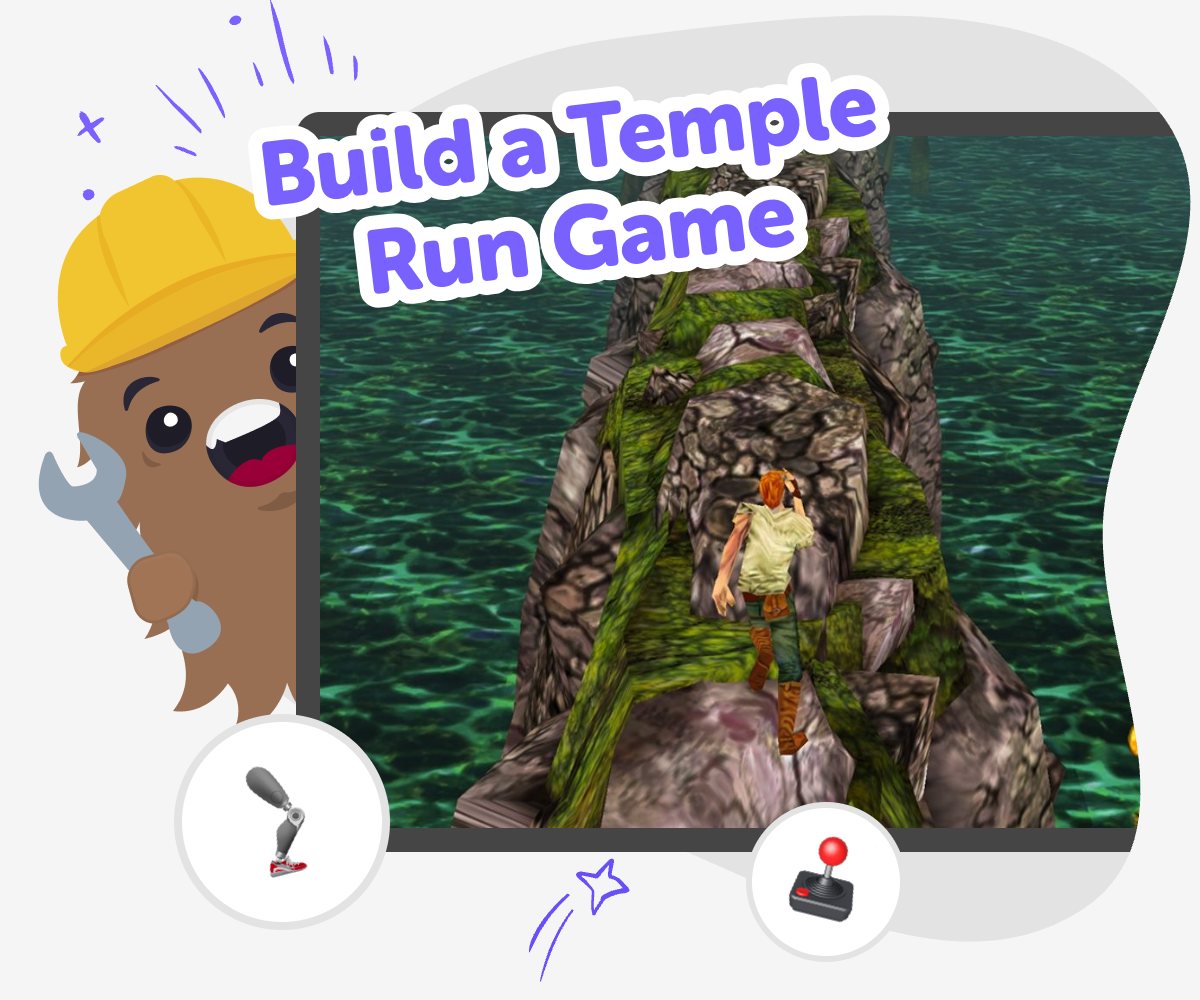
Build a Temple Run Game hero

Build a Temple Run Game

To build a temple run game, kids design a fast runner where a character moves through a path, avoids obstacles, and keeps going as long as they can. This kind of game is exciting because it helps kids think about timing, movement, challenge, and simple game rules in a way that is easy to play and fun to improve. Making a game like this gives kids a chance to turn an idea into something interactive. They learn that games are built from small parts, such as controls, hazards, and score systems, and that each part can be tested and changed until the game feels right.

Vibe Coding gives kids a guided place to shape the game one step at a time. They can describe their runner, try out mechanics, test what happens, and keep adjusting the project with support that makes coding feel playful, safe, and creative. Instead of guessing alone, kids get help while they experiment, compare versions, and build confidence as creators. That makes the process feel less like memorizing code and more like making something real through practice.

How to build it

Step 1 - Plan the runner

Choose the hero, the path, and the goal of the game. Decide what the player must dodge, collect, or reach to keep the run exciting.

Step 2 - Add movement

Set up the character so it can move forward and react to taps or keys. Keep the controls simple so the game feels quick and easy to learn.

Step 3 - Create obstacles

Place barriers, gaps, or other challenges along the path. Test how often they appear so the game feels fair, fast, and fun.

Step 4 - Make the most of testing

Try a new route Play the game several times and notice where the action feels too easy or too hard. Change the path, speed, or obstacle spacing so the run feels smooth and exciting. Improve the controls Check whether the character responds the way you expect. If something feels slow or confusing, adjust it until the game is easier to play and understand. Add replay value Try different scores, rewards, or level patterns so each round feels fresh. Small changes can make kids want to return and try again. Share and refine Save a version you like, then keep experimenting with new ideas. A good game grows over time, and each test helps make it better.

What makes a temple run game exciting?

A temple run game is exciting because it keeps the player moving and reacting. The fun comes from trying to stay safe while the path changes, obstacles appear, and the speed makes every choice feel important. Kids often enjoy this kind of game because it is simple to understand at first, but it still leaves room for practice and improvement. Each round is a chance to do a little better, get a higher score, or last a little longer. That mix of quick action and repeat play is what makes endless runner games feel so lively. When kids build one themselves, they also see how game design uses timing, challenge, and clear rules to keep players interested.

Why do kids learn from making one?

When kids build a temple run game, they are not just making something fun. They are also learning how a game is put together piece by piece. They practice problem-solving when they decide how the player moves, where obstacles should go, and what happens after a mistake. They also learn iteration, which means making a version, testing it, and then improving it. That is an important maker skill because real projects usually need changes before they feel right. A game like this also helps kids build coding confidence. They get to see that creative technology is something they can shape, not just use. That feeling can make bigger coding ideas seem less scary and more possible.

How can a game stay safe and kid-friendly?

A kid-friendly game works best when the design is clear, age-appropriate, and easy to control. For a temple run style project, that means using simple movement, readable screens, and challenges that feel exciting without being overwhelming. Kids should be able to understand the goal quickly and know what happens when they hit an obstacle or earn points. Safety also means building in a way that supports learning instead of rushing. Guided tools like Vibe Coding help kids explore ideas step by step, so they can make choices, test them, and improve the game with support. That keeps the project focused on creativity and practice, while still leaving plenty of room for imagination and play.

What can kids add after the first version?

After the first version works, kids can make the game more personal and interesting. They might change the setting, add new collectibles, adjust the speed, or create special effects for jumping, dodging, or scoring. They can also try different themes, like a jungle path, a space tunnel, or a treasure chase, while keeping the same basic runner structure. These changes help kids understand that game building is a creative process, not a one-time task. Each update can make the project smoother, clearer, or more fun to play. That is why making a game is such a good way to practice creative technology skills. It teaches kids to look at what they built, think about what could be better, and try again with confidence.

Frequently Asked Questions

What is a temple run game?

Can kids make their own runner game?

What do you need to build a game like this?

Is building a runner game good for beginners?

How do kids make the game more fun?

Can this kind of game teach coding skills?

Is it okay to remix the idea?

How does Vibe Coding help with the project?

Why 500,000 families trust DIY

User Avatar

Martin

Dad to 2 DIYers

My son loves DIY! He always finds fun projects to do, and we enjoy making things together. It’s a great way to learn, create, and have fun at the same time!

User Avatar

Pearl

DIYer from USA

DIY is such a great app with really sweet people and moderators who always make sure this app is super safe. You can learn to create things or learn drawing techniques - honestly there is so much to do.

User Avatar

Elaine W.

Middle school teacher

I love logging onto DIY every day - not just for projects but to also look at the comments my kids share about each other's work. It's a brilliant way to foster healthy support systems!

User Avatar

Jenn L.

Mom to 3 DIYers

We absolutely love the DIY platform and its endless river of creative adventures and projects! We always have the best time together participating, learning and creating!

Ready to create?

Make

To create a safe space for kid creators worldwide!

Create

Vibe Coding

Kids GPT

All Tools

Kibu

Resources

Worksheets

SafeTube

Blog

FAQ

Account

Pricing

Log-in

Sign-up

Data Deletion

Company

About

Community Guidelines

Privacy Policy

Terms of Service

2025, URSOR LIMITED. All rights reserved. DIY is in no way affiliated with Minecraft™, Mojang, Microsoft, Roblox™ or YouTube. LEGO® is a trademark of the LEGO® Group which does not sponsor, endorse or authorize this website or event. Made with love in San Francisco.