Build a Spaceball Clicker Game
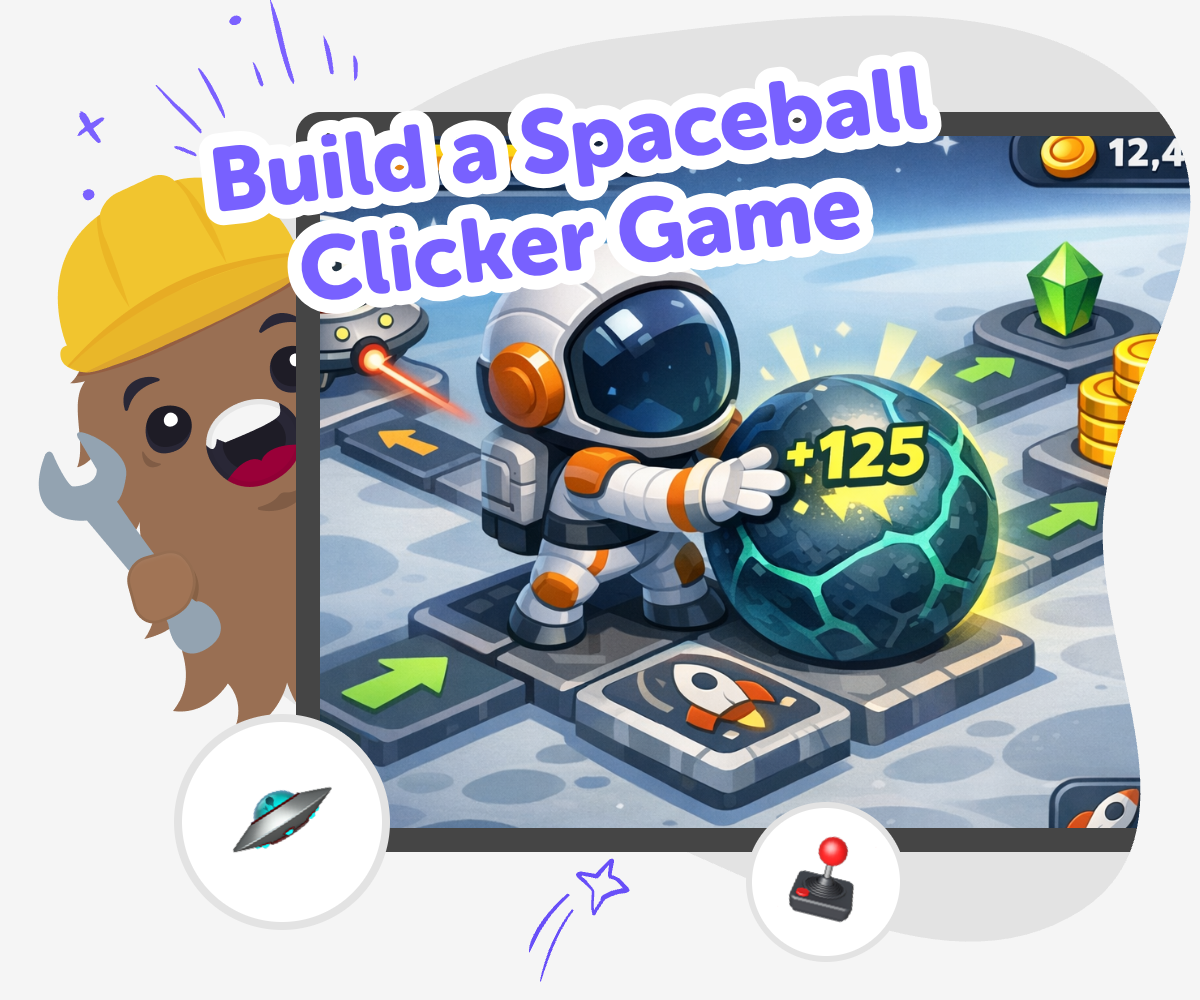
Build a spaceball clicker game with a kid-friendly creative coding studio that helps kids make, test, and improve an interactive game idea step by step. It is a playful way to explore coding confidence, problem-solving, and creative technology skills while turning a space-themed idea into something they can actually play.
About this tutorial
If you want to build a spaceball clicker game, you are making a simple game where players tap, click, or press to score points, unlock changes, and keep the action going. This kind of game matters because it helps kids practice coding confidence, timing, and clear game design while turning a space idea into something interactive and fun to play.
A good clicker game is easy to understand, quick to try, and satisfying to improve. Kids can experiment with scores, sounds, rewards, and space-themed surprises to make the game feel like their own.
Vibe Coding gives kids a guided place to shape the game idea, test what happens, and adjust the project as they go. It supports hands-on making without pretending everything is finished at once, so kids can learn by building, changing, and trying again.
That makes the topic feel creative and safe for young makers, while still leaving room for real choices, playful experimentation, and steady progress.
Step by step
- 1
Pick your spaceball idea
Choose the part of your game that players will click, such as a ball, planet, or rocket. Decide what should happen first so the game has a clear start.
- 2
Add the click action
Set one tap or click to make the score change, the ball move, or a fun effect appear. Keep the first action simple so it is easy to test.
- 3
Shape the space style
Add colors, sounds, or space details that match your game idea. Try a few small changes until the game feels playful and easy to follow.
- 4
Make the most of testing
Check the score Play your game and see whether each click changes the score in a way that is easy to notice. If the number is hard to read, make it bigger or brighter so players can follow it quickly.
Watch the flow Try a full round from start to finish and notice whether the game feels smooth, slow, or confusing. Change one small part at a time so you can see what helps most.
Try a remix Swap one sound, colour, or reward so the game feels fresh while still matching your space theme. A small remix can help you learn what players enjoy most.
Keep improving Save your favorite version, test it again, and keep adjusting until the game feels clear, fun, and ready to play more than once.
What is a spaceball clicker game?
A spaceball clicker game is a simple game where players click or tap to make something happen again and again. The action is usually easy to learn, but the fun comes from how the game changes over time, like earning points, unlocking effects, or watching a spaceball grow, bounce, or launch farther.
This kind of game is a great fit for kids because it keeps the rules clear and leaves room for imagination. A space theme can make the game feel silly, futuristic, or adventurous, even when the core idea is just one repeated action. Kids can focus on making the game satisfying to play, which is a helpful first step in learning how game design works.
Why do kids like clicker games?
Kids often enjoy clicker games because the goal is easy to understand and every tap gives instant feedback. That makes the game feel active right away, which can be encouraging for new makers who are still learning how games are built. A clicker game can also be changed in many small ways, so kids can keep experimenting without starting over.
The best part is that a clicker game lets kids make creative choices. They can pick the theme, decide what the button does, and adjust the pace so the game feels exciting instead of confusing. This helps kids practice problem-solving and creative thinking while they build something they can play and improve.
How does making one help with coding?
Building a clicker game teaches coding ideas in a simple, friendly way. Kids practice cause and effect by making one click lead to one result, then they can add more pieces like points, animations, or new reactions. This helps them see how small parts of a project work together.
It also teaches iteration, which means improving something little by little. If a game feels too fast, too slow, or too hard to understand, kids can change it and try again. That process builds confidence because they learn that coding is not only about getting things perfect the first time. It is about testing, noticing what happens, and making the game better step by step.
How can kids make it safe and age-appropriate?
A good kids-first game stays simple, friendly, and clear. For a spaceball clicker game, that means keeping the goal easy to follow, using fun space imagery, and avoiding anything scary, rude, or overly complicated. Kids should be able to understand what to do quickly and feel comfortable playing it again.
When kids build with Vibe Coding, they can work through guided steps and make changes at their own pace. That makes it easier to test ideas safely, stay focused on the creative part, and learn without needing advanced skills first. The result is a game that feels playful, approachable, and built for real young makers.
Need help?
What is a spaceball clicker game?
It is a simple game where players tap or click to score points or trigger fun changes in a space-themed world. The game usually has an easy rule, a clear goal, and room for small upgrades or surprises.
How do kids start building one?
Kids can begin with one clear idea: what the click does, what the player sees, and how the score changes. Starting small makes it easier to test the game and add more pieces later.
Do I need advanced coding skills?
No. A clicker game is a good beginner project because the core action is simple. Kids can learn by making one part at a time and improving it as they go.
Can I make the game about planets or aliens?
Yes. A spaceball clicker game can use planets, rockets, aliens, stars, or anything else from space. The theme is part of the fun, so kids can choose what matches their idea best.
What should the game do when I click?
The game can add points, make a sound, change the image, or show a fun reaction. The best click action is one that feels clear and rewarding for players.
How can I make it more fun to replay?
Kids can try small changes like faster scoring, new effects, or different rewards. Testing these changes helps them find what makes the game feel exciting again and again.
Is building a clicker game safe for younger kids?
Yes, when it stays simple, friendly, and age-appropriate. A spaceball clicker game should be easy to understand and free from scary or confusing content.
Can I improve my game after the first version?
Absolutely. In fact, that is one of the best parts of making a game. Kids can play it, notice what works, and keep adjusting it until it feels just right.