Build a Sonic Soundboard
Build a sonic soundboard by making a playful sound project that lets kids explore rhythm, timing, and creative audio effects. With guided support from Vibe Coding, kids can turn ideas into an interactive soundboard, test different sounds, and improve how it feels to use.
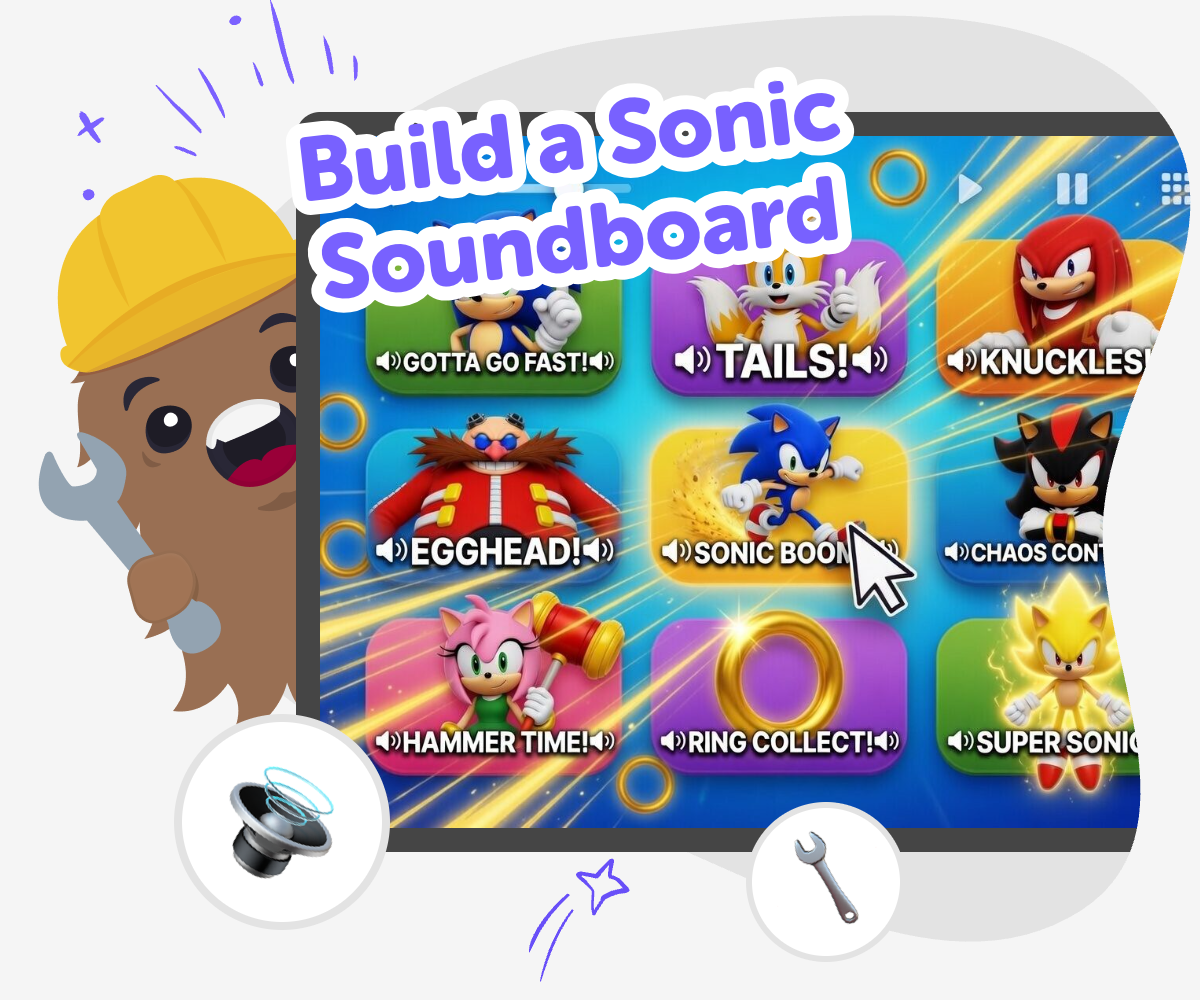
Make a Soundboard
Build a sonic soundboard to explore how sound, timing, and simple interactions can work together in a fun project. A soundboard can help kids understand how creative technology turns taps, buttons, and choices into something playful, personal, and easy to share. It also gives kids a safe way to test ideas, hear what changes, and improve one part at a time. That hands-on process builds confidence because every small tweak can be listened to right away.
Vibe Coding gives kids a guided place to shape their soundboard step by step. They can describe the kind of sound project they want, then build, test, and improve it as they learn, which keeps the process active and creative. The tool supports experimentation without pretending the first try has to be perfect. Kids can adjust sounds, compare versions, and keep making the board clearer, friendlier, and more fun to use.
What is a sonic soundboard?
A sonic soundboard is a simple interactive project where each button or tap plays a sound. Kids can think of it like a tiny sound mixer, but one that is built for play and learning. The fun part is that the board does not just make noise; it helps kids connect action and result. When you press something, a sound happens right away, so you can hear timing, rhythm, and cause and effect. That makes a soundboard a great first project for creative technology because it is easy to understand, easy to test, and easy to change. Kids can make a soundboard for jokes, games, stories, animals, instruments, or favourite moods, which keeps the idea open and creative.
Why do kids learn from making one?
Making a sonic soundboard builds more than a cool project. It helps kids practice problem-solving because they have to decide what each sound should do and how the board should be organized. It also builds coding confidence, because each small choice can be tested right away. If a sound feels too fast, too slow, or too similar to another one, kids can adjust it and try again. That kind of practice teaches iteration, which means improving something step by step. Soundboards are especially helpful for beginners because the results are easy to hear. Kids do not have to guess whether their idea is working; they can listen, compare, and make changes. That makes learning feel active, practical, and encouraging.
How can a soundboard stay kid-friendly?
A good soundboard should be easy to use, easy to hear, and comfortable for the people around it. Kids can keep the layout simple by using clear labels and just enough sounds to make the project fun without making it confusing. It also helps to choose sounds that match the project’s age group and setting, especially if the board might be shared at home or in a classroom. Kids can test the volume, check whether the buttons make sense, and make sure the sounds fit the purpose of the project. This kind of careful building teaches creators to think about other users, not just themselves. That is an important maker skill because good projects are playful and thoughtful at the same time.
How does Vibe Coding help here?
Vibe Coding gives kids a guided place to build a sonic soundboard without needing to know everything at once. They can describe the kind of sound project they want, then shape it step by step, test it, and make changes as they go. That makes the process feel like making, not guessing. The tool supports experimentation, which is important because kids learn a lot when they try an idea, notice what happens, and improve it. It also helps them stay confident by breaking a big idea into smaller actions. Instead of trying to create a perfect project right away, kids can build something real, listen to it, and keep developing it until it feels right. That is a strong way to learn creative coding.
How to make it
Choose your sound theme
Pick a theme for the soundboard, like animals, space, games, or silly effects. Think about the mood you want people to hear when they tap each sound.
Plan the buttons
Decide how many sounds you want and what each button will do. Give each sound a clear job so the board is easy to understand and fun to try.
Add and test sounds
Build the first version, then tap every sound to check if it plays at the right time. Change anything that feels too loud, too quiet, or hard to tell apart.
Make the most of remixing
Try a remix Swap one sound or colour so the project feels fresh and playful while still matching the mood you want people to hear. Check the flow Tap every button in order and rename anything confusing so the board stays quick, readable, and easy for younger users to follow. Share kindly Keep the sounds age-appropriate and friendly so the board feels fun instead of annoying, confusing, or too loud for the people using it. Keep improving Save your favourite version, test a new layout, and keep adjusting timing until the soundboard feels smoother, easier to use, and more fun to play again.
Frequently asked questions
What is the main idea behind a sonic soundboard?
The main idea is to make a project where taps or buttons trigger different sounds. Kids can use that to explore rhythm, timing, and how interactive projects respond to actions.
Is a soundboard a good first coding project?
Yes. It is a friendly first project because the results are easy to hear and test. Kids can make small changes, listen again, and learn by improving one part at a time.
What kinds of sounds can kids use?
Kids can use animal sounds, music notes, voice clips, game effects, nature sounds, or silly noises. The best choice is one that matches the theme and is easy to tell apart from the other sounds.
How many sound buttons should a beginner make?
Starting with three to five sounds is often enough. That gives kids enough variety to be creative without making the project hard to manage.
Can kids make a soundboard about a story or game?
Yes. A soundboard can fit almost any theme, including a story, a pretend game, a joke machine, or a mood board. A clear theme helps the sounds feel connected.
How do kids make sure the soundboard is easy to use?
They can use clear labels, keep the layout simple, and test each button more than once. It also helps to check that the sounds are not too similar or too loud.
Is it okay if the first version is rough?
Absolutely. First versions are meant for testing. Kids learn by noticing what works, what feels confusing, and what should change next.
How does Vibe Coding fit into the process?
Vibe Coding helps kids turn an idea into a real interactive project with guided support. Kids still build, test, and improve the soundboard themselves, which keeps the learning hands-on and creative.
More tools
Build a Copter Royale Game
Build a copter royale game with guided creative coding that helps kids imagine the action, make the rules, test the play, and improve the game step by step. This kids-first page explains the idea, why it is fun to create, and how Vibe Coding supports safe, hands-on experimentation.
Build a Cow Clicker Game
Build a cow clicker game by turning a simple farm idea into a playful interactive project. Kids can make a game where every click adds cows, upgrades the herd, and changes what happens next while learning to test ideas, solve problems, and improve their own design.
Build a Creeper
Build a creeper with a kid-friendly creative coding studio that helps you turn an idea into something interactive, test it, and keep improving it step by step.
Build a Crossy Road Game
Build a crossy road game by designing lanes, obstacles, and movement rules that make a playful crossing challenge kids can test, change, and improve. With guided support from Vibe Coding, kids can turn a simple game idea into an interactive project while building coding confidence and problem-solving skills.
Ready to start creating?
Join hundreds of thousands of kids already building cool stuff on DIY.ORG.
Your first game is on us.
Describe a game below - no sign-up needed to try.
Powered by AstroSafe
Make real games - not just chat