Build a Snowball IO Game
Build a snowball io game and explore how a simple winter idea can turn into an interactive project. Kids can imagine how players move, aim, collect points, and keep the game fair and fun while practicing creativity and problem-solving.
About this tutorial
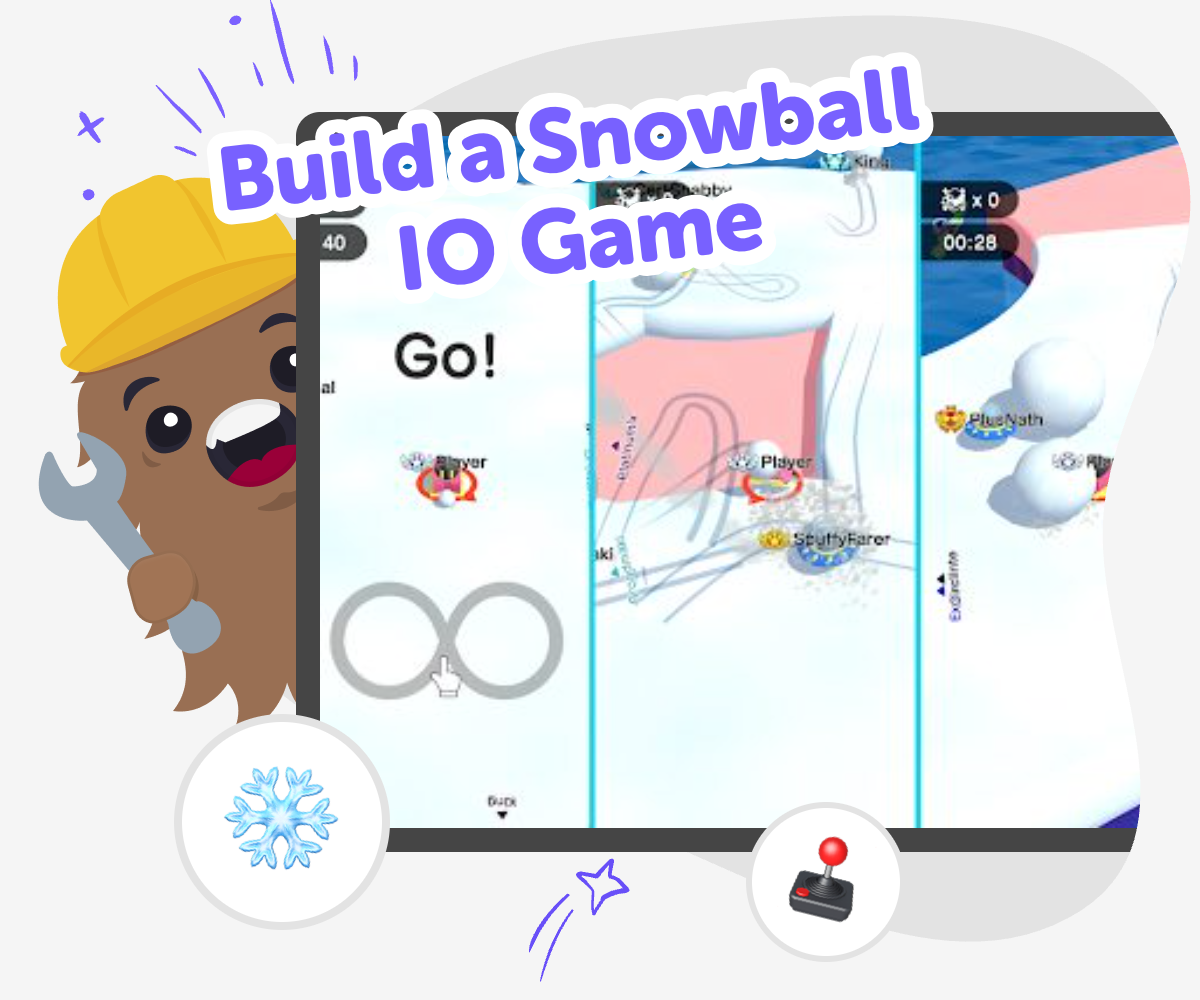
Build a snowball io game to learn how a simple idea can become a playful interactive project. Kids can imagine movement, collecting snow, scoring points, and fair rules while they see how game design turns a winter theme into something people can play.
This kind of project matters because it helps kids practice creativity, problem-solving, and confidence. They learn that games are built by testing ideas, noticing what works, and improving one step at a time.
Vibe Coding gives kids a guided place to shape that idea step by step. They can describe the game they want, try it, and improve it as they go, which keeps the process hands-on, safe, and creative without making it feel instant or automatic.
As kids experiment, they learn that small changes can make a game feel smoother, clearer, and more fun. That steady practice helps them build coding confidence while staying focused on making and learning by doing.
Step by step
- 1
Choose your snowy idea
Start by deciding what kind of snowball game you want to make. Think about who the player is, what they collect, and how they win.
- 2
Plan the game parts
List the main pieces your game needs, like movement, snowball throwing, points, and a way to restart. Keep the rules short and clear.
- 3
Build and test
Use guided coding help to turn your idea into a playable game. Try it, notice what feels confusing, and fix one part at a time.
- 4
Make the most of testing
Try a remix Change one rule, speed, or score idea to see how the game feels when it is a little easier or harder.
Watch what players do Notice where the game is fun, slow, or confusing so you know what to improve next.
Improve the play Tweak the movement, timing, or points so the game feels smoother and more exciting.
Share a safe version Save the version you like best and share it with a trusted grown-up or friend for more ideas.
What makes a snowball IO game work?
A snowball IO game usually works because it has a clear goal, simple controls, and fast action. Players often move around a space, gather something useful, and try to outscore or outlast others. The game feels exciting when the rules are easy to understand but still leave room for smart choices. Kids can think about what makes a game fair, too, like whether everyone starts with the same amount of snow or the same speed. That helps them see that good games are not only fun to play, but also fun to understand. When kids build this kind of game, they practice turning a winter idea into a system with rules, movement, and a challenge that players want to try again.
Why does making your own version matter?
Making your own version matters because it helps kids move from playing games to understanding how games are built. A snowball game is a great first project because it is familiar, playful, and easy to imagine in different ways. One child might want fast action, while another might want a collecting challenge or a team game. Those choices teach that creative technology is flexible. Kids also learn that their ideas do not have to be perfect the first time. They can test one version, notice what happens, and make it better. That kind of practice builds confidence because it shows that mistakes are part of making, not a reason to stop. The result is a game that feels personal and earned.
How can kids stay safe while creating games?
Safety matters when kids create games online, especially when they are learning something new. A good project space should be guided, age-appropriate, and focused on building rather than wandering into confusing tools. Kids do best when they can experiment in a simple environment with clear choices and helpful feedback. It also helps to keep sharing private or limited to trusted people, especially when the project includes text, sounds, or player names. Parents and educators can look for tools that support moderation, kindness, and learning by doing. In a snowball game project, that means kids can stay focused on the creative part: planning the game, testing the rules, and improving the play. Safe creativity gives kids room to explore without pressure.
What do kids learn while building one?
When kids build a snowball game, they learn more than how to make something fun. They practice coding confidence by making choices and seeing what happens on screen. They also learn problem-solving when they adjust a rule, fix a control, or make the game easier to understand. Iteration is a big part of the lesson, because each test gives them a new idea for what to improve. Kids also build creative technology skills by turning an idea into an interactive project that other people can play. Even small decisions, like how a snowball moves or how points are counted, help kids think like makers. That mindset is useful in coding, art, design, and many other creative projects.
Need help?
What is a snowball IO game?
It is a game where players usually move around, collect or throw snowballs, and try to score, survive, or win against other players. The fun comes from quick play, simple rules, and smart choices.
Can kids make their own snowball game?
Yes. Kids can make a simple version with help, especially if they start with movement, one game goal, and a clear way to score. Guided tools can make the first steps easier to understand.
What should a beginner add first?
Start with the player moving around the screen. After that, add one main action, like throwing snowballs, and one goal, like collecting points or hitting targets.
How do you make the game fun?
Keep the rules easy to follow and test small changes often. Kids can try faster movement, different point values, or special power-ups to see what feels best.
Is building a snow game safe for younger kids?
It can be, if the project is age-appropriate and guided. Kids should use a safe space that supports learning, keeps sharing controlled, and helps them focus on creating.
What if the first version feels boring?
That is normal. Kids can change one thing at a time, like speed, score, or how snowballs behave, and test again until the game feels more exciting.
Can a snowball game have different themes?
Yes. A kid might make a winter battle, a snow-collecting race, or a silly obstacle game. Changing the theme is a good way to make the project feel personal.
How does Vibe Coding help with this project?
Vibe Coding gives kids a guided place to describe the game, build it step by step, test it, and improve it. It supports creative making without pretending the whole game is finished instantly.