Build a Minion Soundboard
Build a minion soundboard by turning a funny idea into a playful interactive project kids can make, test, and improve. With Vibe Coding, kids explore sound, timing, and creativity while building confidence through hands-on coding.
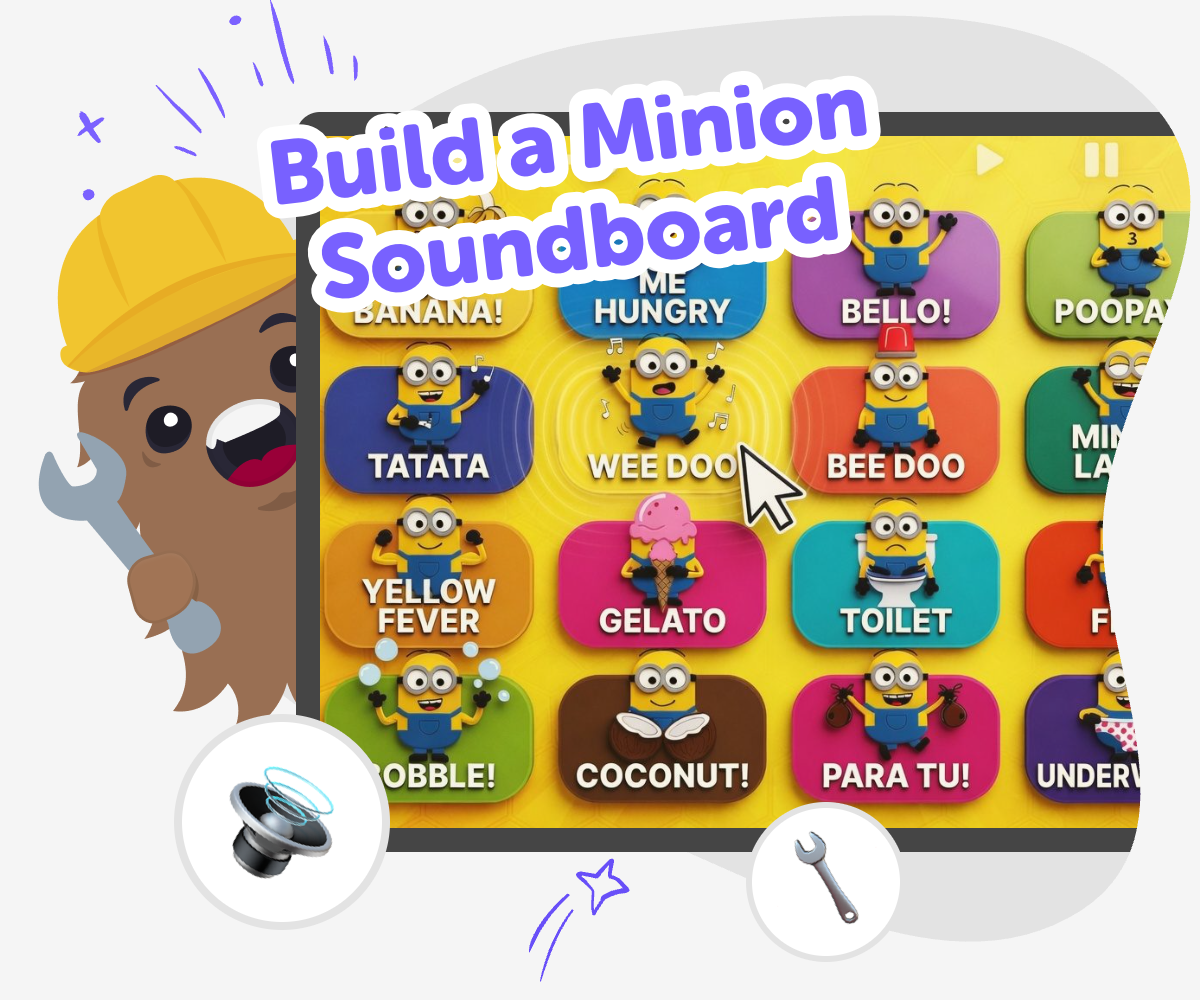
Soundboard ideas for kids
A build a minion soundboard project is a fun way for kids to explore how sounds, buttons, and timing can work together in one playful creation. It helps children think like makers: choosing what each button should do, how the sounds should feel, and how to make the result easy for other people to use. This kind of project matters because it turns a joke or character idea into a real interactive experience. Kids practice creativity, problem-solving, and confidence as they try ideas, notice what works, and make changes that improve the soundboard.
Vibe Coding supports this kind of making by giving kids a guided place to build and revise their project step by step. Kids can shape the soundboard, test it, and adjust it as they go, so the process stays playful, safe, and easy to understand. That makes the topic feel active, not passive. Kids are not just listening to sounds; they are designing the experience, experimenting with choices, and learning how creative technology grows through practice.
What makes a soundboard fun?
A good soundboard is fun because it gives each button a clear job and makes every press feel satisfying. Kids can think about rhythm, surprise, and timing, which are all parts of good interactive design. A soundboard is not just a collection of noises; it is a small experience that someone else can play with right away. When kids build one, they learn how to match sound choices to a theme, keep the layout simple, and make the board easy to understand. That mix of creativity and structure is what helps the project feel playful instead of random. It also gives children a safe way to practice making decisions, testing results, and changing their ideas when something does not feel quite right.
Why do kids learn from making one?
Making a soundboard helps kids learn by doing, which is one of the best ways to build confidence. They practice planning what they want, checking whether it works, and improving it after each test. Those steps teach problem-solving in a very natural way. If a button is hard to understand, a sound is too long, or the board feels crowded, kids can fix it and try again. That kind of iteration helps them see that mistakes are useful, not scary. A project like this can also support early coding thinking because children connect actions and results: press this, hear that, change this, test again. The result is a creative project that feels fun first, while quietly building useful skills underneath.
How can it stay kid-friendly?
A kid-friendly soundboard should be easy to use, easy to read, and made with sounds that are appropriate for the age group. That means keeping labels clear, avoiding confusing layouts, and choosing jokes that stay light and friendly. For younger children, big buttons and a small number of choices can make the project easier to enjoy. For older kids, there is room to add more sounds, clever timing, or a more detailed layout. Safety matters too, especially when kids share their work with others. A well-made soundboard should feel fun without being mean, too loud, or hard to control. When kids learn to design with care, they build both creative skill and good judgment.
What does Vibe Coding add?
Vibe Coding gives kids a guided place to turn an idea into a real interactive project without needing to know everything at the start. Kids can describe the soundboard they imagine, then shape it step by step, test it, and improve it with support. That makes the process feel approachable, even for beginners. The tool does not do the thinking for them; it helps them keep making choices and seeing the results of those choices. This is important because children learn best when they stay active in the process. They get to explore creativity, practice problem-solving, and build confidence as they refine their work. The result is a maker experience that feels playful, safe, and rewarding to finish.
How to build it
Choose your sounds
Pick the minion-style sounds, voice lines, or silly effects you want on your board. Start with a small set so the project stays easy to test and fun to use.
Map each button
Decide what every button should play and give each one a clear label. This helps the soundboard feel organized and makes it simple for younger users to follow.
Test the reactions
Press each button and listen for timing, volume, and funny combinations. If something feels confusing or too quiet, change it and try again.
Make the most of remixing
Try a remix Change one sound, label, or button color so the board feels new while still keeping the joke clear. Check the flow Tap through the whole soundboard in order and make sure every choice is easy to find and easy to understand. Share safely Keep the sounds friendly, age-appropriate, and okay to use with others so the project stays fun for kids and families. Keep improving Save your favorite version, test a new layout, and keep adjusting until the soundboard feels smooth, playful, and ready to use again.
Frequently asked questions
What is a minion soundboard?
A minion soundboard is a playful set of buttons that each play a different funny sound or line. Kids can use it like a mini interactive toy, pressing buttons to hear reactions, jokes, or silly effects. The idea is to make something that feels easy to explore and fun to share.
What do kids need to start one?
Kids usually only need a clear idea, a few sound choices, and a simple layout to begin. Starting small is helpful because it keeps the project easy to understand and improve. As kids test their board, they can add more sounds or change the design later.
How many buttons should it have?
There is no perfect number, but a small soundboard often works best for kids. Three to six buttons is a good starting point because it is easy to remember and test. If the project grows later, kids can add more buttons once the first version feels clear.
Can younger kids make one too?
Yes, younger kids can make one with adult support and a simple setup. The key is to keep the project short, use clear labels, and choose sounds that are easy to recognize. With the right guidance, younger children can enjoy the creative parts without feeling overwhelmed.
How does it help with learning?
Building a soundboard helps kids practice planning, testing, and solving problems. They learn how a small change can affect the whole experience, which is a big idea in coding and design. It also strengthens confidence because kids get to make something real and improve it themselves.
What if the sounds do not feel right?
That is a normal part of making. Kids can test the board, notice what feels off, and then change the timing, labels, or sound choices. Learning to improve a project is part of the creative process, and it often leads to a better result than the first idea.
Can kids make it funny without making it mean?
Yes, and that is usually the best choice. Funny soundboards work well when the jokes are light, playful, and easy for other people to enjoy. Kids can focus on silly timing, surprising sounds, or character-style reactions instead of teasing or rude humor.
How can Vibe Coding help with the project?
Vibe Coding gives kids guided support while they build, test, and improve their soundboard. It helps them turn an idea into something interactive step by step, which is great for beginners and growing makers. The tool keeps the project hands-on, creative, and easy to keep improving.
More tools
Build a Yoshi Game
Build a Yoshi Game is a kid-friendly way to imagine, make, and improve an interactive project inspired by a favourite character. Kids can design the game idea, try out simple choices, test how it plays, and keep changing it until it feels fun and clear. With guided support from Vibe Coding, children can turn a playful idea into a real project while building confidence, problem-solving skills, and creative technology habits.
Build a Zombie Games Game
Build a zombie games game with kid-friendly creative coding, where you can imagine the rules, shape the gameplay, and make a spooky project that feels fun and safe to play.
Build Alex from Minecraft
Build Alex from Minecraft is a creative way for kids to explore a familiar character by making something of their own. It turns a simple idea into a hands-on project that supports imagination, problem-solving, and confidence as kids design, test, and improve what they create.
Build an Akinator Game
Build an akinator game by making a kid-friendly guessing game where players answer questions and try to find the right character, creature, or object. This page explains the idea, why it is fun to make, and how kids can explore it through guided, hands-on creation with Vibe Coding.
Ready to start creating?
Join hundreds of thousands of kids already building cool stuff on DIY.ORG.
Your first game is on us.
Describe a game below - no sign-up needed to try.
Powered by AstroSafe
Make real games - not just chat