Your Sixth Speech
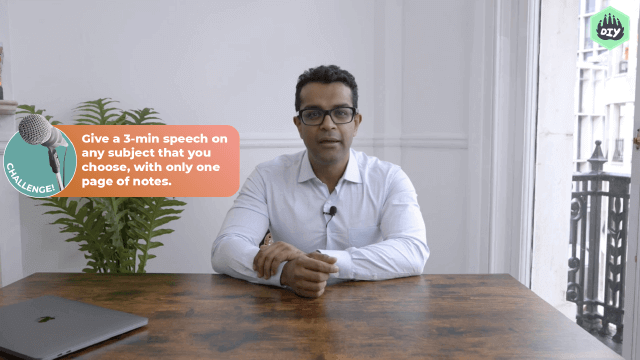
Prepare and deliver your sixth short speech on a chosen topic, practice voice and gestures, record or present to family for friendly feedback.
About this activity
Prepare and deliver your sixth short speech on a chosen topic, practice voice and gestures, record or present to family for friendly feedback.
What you need
Step by step
- 1
Step 1
Pick one topic you care about.
- 2
Step 2
Write the topic name at the top of your page.
- 3
Step 3
Decide if your speech will inform persuade or entertain.
- 4
Step 4
Write your speech goal under the title.
- 5
Step 5
Write one short attention-getting opening sentence.
- 6
Step 6
Write three main points as short sentences and number them.
- 7
Step 7
Write one clear closing sentence that reminds listeners of your main idea.
- 8
Step 8
Next to each main point write one simple gesture you'll use.
- 9
Step 9
Mark two places in your notes where you'll change your voice volume or speed.
- 10
Step 10
Get a stopwatch or note the time on a clock.
- 11
Step 11
Read your whole speech aloud while timing yourself.
- 12
Step 12
Practice the speech aloud two more times using your gestures and voice changes.
- 13
Step 13
Present the speech to a family member or record it for friendly feedback.
- 14
Step 14
Share your finished speech on DIY.org.
Fun facts
How do I prepare and deliver my sixth short speech on a chosen topic?
To prepare and deliver your sixth short speech, pick a clear, familiar topic and write a one-paragraph outline with an opening, two main points, and a short conclusion. Practice aloud, focusing on slow pace, clear articulation, and natural gestures. Use a mirror or record video to check posture and facial expressions. Time the speech, rehearse until comfortable, then present to family or classmates and collect friendly feedback to polish content and delivery.
What materials do I need to practice voice and gestures and record the speech?
You'll need simple materials: index cards or paper for notes, a pen, and a timer or stopwatch. Use a smartphone or tablet to record video and a mirror for practice. Optional props or slides can support your topic. Prepare a short feedback sheet for family to note strengths and tips. Pick a quiet, well-lit space and a glass of water. That's enough to practice voice, pacing, and gestures effectively.
What ages is this speech activity suitable for?
This activity suits children roughly ages 6 and up, with adjustments. Young children (6–8) do 30–60 second speeches with picture prompts and adult coaching. Older children (9–12) can aim for 1–2 minutes and work on expression and gestures. Teens can expand topics, use multimedia, and practice persuasive techniques. Tailor length, complexity, and feedback to each child's attention span and confidence level.
What are the benefits and safety tips for delivering and recording short speeches?
Giving a sixth short speech builds confidence, language skills, organization, and nonverbal communication. Practicing voice and gestures improves clarity and stage presence; recording helps self-evaluation. For safe, positive practice, keep sessions short, offer encouraging, specific feedback, and avoid harsh criticism. Supervise recordings and teach privacy settings if posted. Variations include themed prompts, partner speeches, or simple props to make practice engaging and fun.
Watch & Learn
Need help?
I don't have a stopwatch or can't access DIY.org—what can I use instead?
Use a phone's timer or a kitchen timer for the step 'Read your whole speech aloud while timing yourself' and save or upload your recorded presentation to a free video service or a private folder instead of sharing on DIY.org.
I'm forgetting my gestures or losing track of time during the presentation—how can I fix that?
Write the simple gesture next to each numbered main point and mark the two voice-change spots, then use your timer and practice the speech aloud two more times to build muscle memory and pacing.
How can I adapt this speech activity for younger children or older kids?
For younger kids, choose a very simple topic, write one or two short main points and use big, obvious gestures next to each point, while older kids can pick a more complex topic, keep three full main points, mark two voice changes, time a longer read-through and record for critique.
What are quick ways to extend or personalize the speech once it's written?
Add a small prop or a homemade poster by your title, film the presentation to review the gestures and marked voice changes, request specific feedback from the family member on your speech goal, and then share the polished recording on DIY.org if you want wider comments.