Write a haiku
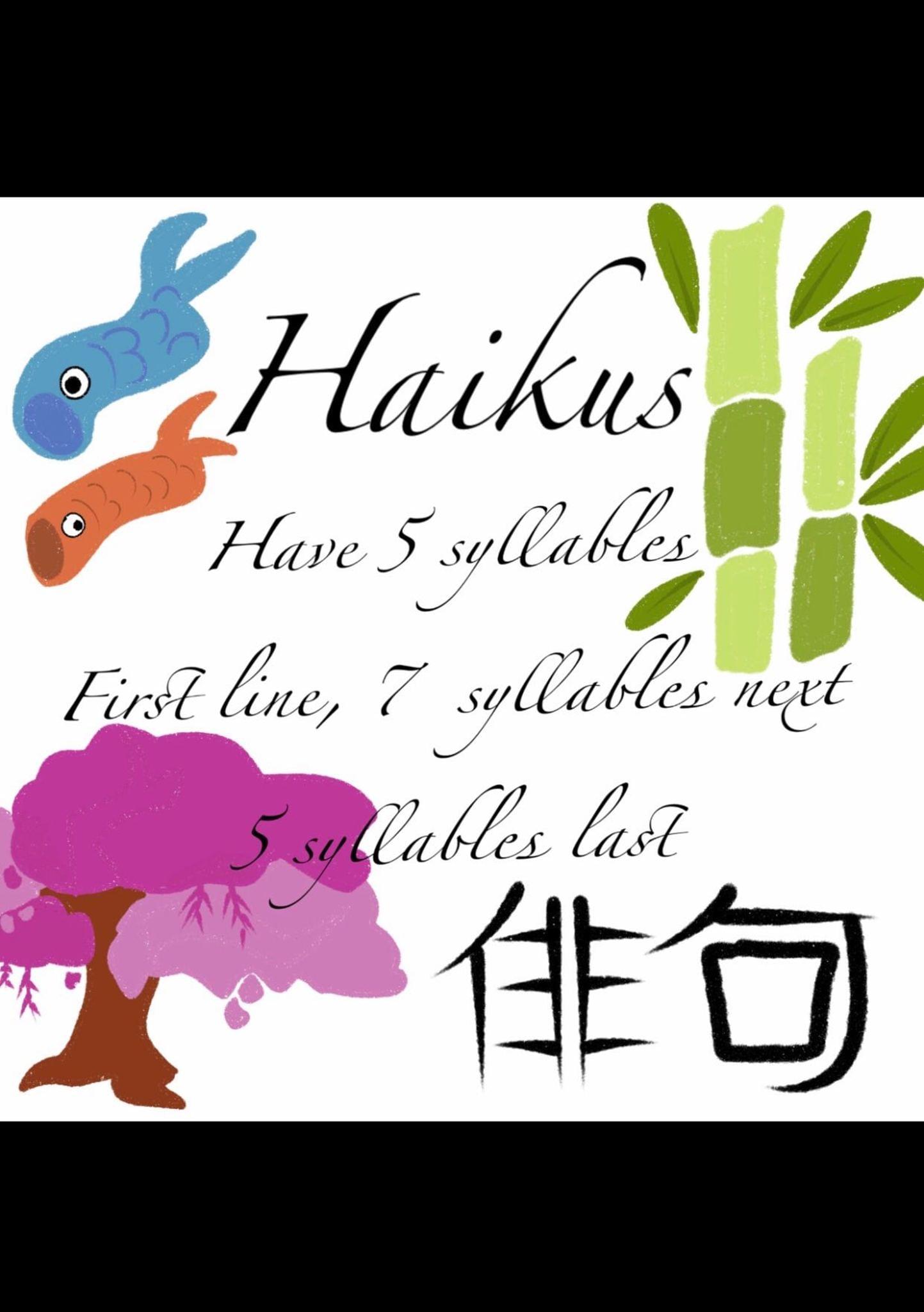
Write a three-line haiku poem practicing the 5-7-5 syllable pattern, exploring nature imagery and concise expression while learning rhythm and descriptive words.
About this activity
Write a three-line haiku poem practicing the 5-7-5 syllable pattern, exploring nature imagery and concise expression while learning rhythm and descriptive words.
What you need
Step by step
- 1
Step 1
Find a quiet spot where you can look at nature.
- 2
Step 2
Look around and pick one natural thing to write about.
- 3
Step 3
Spend two minutes noticing details about that thing using your eyes ears and touch.
- 4
Step 4
Write five descriptive words or short phrases about that thing on your paper.
- 5
Step 5
Choose three of those words that feel the strongest.
- 6
Step 6
Circle the three chosen words on your paper.
- 7
Step 7
Practice counting syllables by clapping or saying a few words slowly.
- 8
Step 8
Write a first line that has exactly five syllables.
- 9
Step 9
Write a second line that has exactly seven syllables.
- 10
Step 10
Write a third line that has exactly five syllables.
- 11
Step 11
Read your haiku out loud to check its rhythm and flow.
- 12
Step 12
Make small word changes to sharpen the image or fix any syllable counts.
- 13
Step 13
Share your finished haiku on DIY.org.
Fun facts
How do I teach my child to write a 5-7-5 haiku about nature?
Start by choosing a nature image (a leaf, bird, or rain). Brainstorm descriptive words and short phrases, then count syllables by clapping or saying words slowly. Arrange three lines with 5 syllables, 7 syllables, and 5 syllables, focusing on a single clear image and sensory detail. Encourage reading aloud to check rhythm, revising words to fit syllable counts, and keeping the poem simple and observant rather than rhyming.
What materials do I need to write a haiku with my child?
You only need simple supplies: paper or a notebook, pencils and erasers, and optional colored pencils or markers for decorating. A smartphone or small dictionary can help count syllables, and a clipboard makes outdoor writing easier. Bring a nature prompt list or go outside to observe. A timer or short walk helps spark ideas, but no special materials are required—curiosity and a quiet spot are the most important tools.
What ages is writing haiku suitable for children?
Haiku works well for many ages: preschoolers (4–6) can try very short, sensory lines with adult help; early-elementary kids (6–8) can practice 5-7-5 with guidance; older children (9+) can explore imagery and subtle word choice independently. Adapt expectations: younger kids focus on observation and sound, while older kids concentrate on syllable counting and concise expression. Always offer examples and gentle support.
What are the benefits of writing haiku for kids?
Writing haiku boosts observation skills, vocabulary, and phonological awareness by practicing syllable counts. It teaches concise expression and sensory description while encouraging mindfulness and patience. Haiku connects language arts with nature study, improves editing and rhythm awareness, and can build confidence as children create short, complete poems. The activity is low-pressure and adaptable for group sharing or individual reflection.
Need help?
What can we use if we don't have paper or a pen to write the five descriptive words and circle the three chosen words?
If you don't have paper or a pen to write the five descriptive words and circle the three chosen words, use a phone or tablet notes app (or take a photo of the object and draw circles on the image) or jot the words on a napkin or leaf.
I'm having trouble counting syllables during the 'practice counting syllables by clapping' step — what should we try so our 5-7-5 lines work?
During the 'practice counting syllables by clapping' step, break words into vowel sounds as you clap and say each line slowly to hear beats, then swap words for synonyms or check an online syllable counter when you need to make the small word changes to fix counts.
How can we adapt this haiku activity for different ages while keeping steps like the two-minute noticing and circling three words?
For ages 4–6, shorten the noticing to one minute and use three simple descriptive words with an adult writing and circling the three strongest, for ages 7–9 keep the two-minute noticing and 5-7-5 with guided prompts, and for 10+ encourage independent circling, more precise sensory words, revision, and sharing on DIY.org.
What are simple ways to extend or personalize the haiku after reading it aloud and making small word changes?
After reading your haiku aloud and making small word changes, illustrate the natural thing on the same paper, record a short video reciting the haiku, or photograph the subject and post the haiku plus image to DIY.org to build a nature-haiku series.