Try this Pigeon Pose Variation
Try a gentle pigeon pose variation to stretch hips and practice steady breathing, using cushions for support and moving slowly with adult supervision.
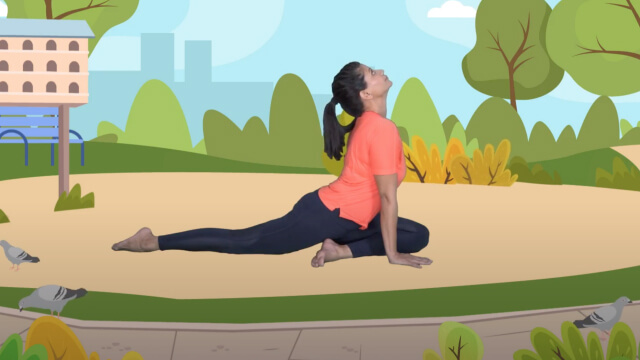
About this activity
Try a gentle pigeon pose variation to stretch hips and practice steady breathing, using cushions for support and moving slowly with adult supervision.
What you need
Step by step
- 1
Step 1
Unroll your yoga mat or lay a towel on the floor in a clear space
- 2
Step 2
Place one cushion or folded blanket near the top center of your mat
- 3
Step 3
Place a second cushion or folded blanket to the side of your mat for forearm support
- 4
Step 4
Put on comfortable clothes that let you move easily
- 5
Step 5
Sit cross-legged on the mat facing the top of the mat
- 6
Step 6
Take three slow deep breaths through your nose to relax your body
- 7
Step 7
Slide your right knee forward so your right ankle sits near your left wrist
- 8
Step 8
Extend your left leg straight back and tuck the top of your left foot down
- 9
Step 9
Gently lower your hips onto the first cushion so your right hip feels supported
- 10
Step 10
Rest your forearms on the side cushion or on the mat
- 11
Step 11
Breathe slowly counting to four on the inhale and six on the exhale for five breaths
- 12
Step 12
Press your hands into the mat
- 13
Step 13
Slowly come back to a seated position
- 14
Step 14
Repeat Steps 7 to 13 with the left knee forward so both hips get the same stretch
- 15
Step 15
Share your finished pigeon-pose practice and how it felt by posting on DIY.org
Fun facts
How do you guide a child through a gentle pigeon pose variation with cushions?
Start on a soft mat. Have the child bring one knee forward and angle the shin so the front leg rests comfortably, keeping the back leg extended straight. Place a cushion or folded blanket under the front hip and another under the chest or forehead for extra support. Encourage slow, steady breathing and gentle movements—no forcing. Hold for 20–40 seconds, switch sides, and keep close adult supervision throughout to adjust alignment and comfort.
What materials do I need for a child's pigeon pose variation?
You'll need a non-slip yoga mat, a soft cushion or bolster, folded blankets or towels to support hips and chest, and optional yoga blocks or a rolled towel for extra height. Dress the child in comfortable stretch clothing and have water nearby. A timer or quiet music can help with pacing. All items should be clean, stable, and sized appropriately for the child's height to keep the pose gentle and safe.
What ages is this pigeon pose variation suitable for?
This gentle pigeon pose variation is usually suitable for children aged about 3 to 12, with modifications for older or younger kids. Toddlers need very close guidance and simplified movements; school-age children can follow more structured instructions. Always base participation on the child's mobility, attention span, and comfort. If a child has hip, knee, or back issues, consult a pediatrician or physical therapist before practicing.
What are the benefits and safety tips for this pigeon pose variation?
Benefits include gentle hip stretching, improved breathing awareness, and calming focus. To keep it safe, never force the hips—use cushions to reduce pressure and stop if the child feels sharp pain. Limit each hold to what feels comfortable, encourage relaxed breathing, and watch for signs of discomfort. Supervise closely, avoid if there’s a recent injury, and seek professional advice for persistent pain or known joint conditions.
Watch & Learn
Need help?
What can we use if we don't have a yoga mat, cushions, or a side cushion?
If you don't have a yoga mat or towel, use a carpet or rug for a non‑slip surface and replace the cushion/folded blanket in steps 2–3 with a firm pillow, rolled bath towel, or a stack of towels for hip and forearm support.
I'm feeling pain in my front knee or my hip won't lower—what should I do?
If your front knee hurts or your hip won't lower during steps 7–9, slide the front foot less forward, support the hip higher with an extra folded blanket under the cushion, and rest fully on the side cushion for forearms in step 10 to reduce pressure.
How can I adapt this pose for a 3‑year‑old and for a 12‑year‑old?
For younger kids (around 3), keep them seated cross‑legged or with knees bent and use extra cushions for support and shorter holds, while older kids (around 12) can follow the full sequence including the 4‑in/6‑out breath pattern in step 11 and hold a few extra breath cycles.
How can we make the activity more fun or personalize it before posting on DIY.org?
Make it more fun by letting the child decorate the cushion or mat, play calming music during the 5 breath cycles in step 11, and take a photo or short note about how the hips felt to include when you share on DIY.org as instructed.