Tend a fruit tree
Learn to plant and tend a young fruit tree: water, mulch, prune lightly, check for pests, and harvest small fruits while keeping it healthy.
About this activity
Learn to plant and tend a young fruit tree: water, mulch, prune lightly, check for pests, and harvest small fruits while keeping it healthy.
What you need
Step by step
- 1
Step 1
Choose a sunny spot with good drainage where your tree will get at least 6 hours of sun.
- 2
Step 2
Put on your gardening gloves to protect your hands.
- 3
Step 3
Dig a hole about twice as wide as the root ball and the same depth as the pot.
- 4
Step 4
Gently take the sapling out of its pot without pulling on the trunk.
- 5
Step 5
Place the sapling in the hole so the top of the root ball is level with the soil surface.
- 6
Step 6
Fill the hole with soil and press it down gently to remove big air pockets.
- 7
Step 7
Water the newly planted tree slowly until the soil is evenly moist but not flooded.
- 8
Step 8
Spread a ring of mulch 2 to 3 inches thick around the base and leave a few inches of space away from the trunk.
- 9
Step 9
Write today's date and a watering plan in your notebook so you remember when to water.
- 10
Step 10
Every week check leaves and branches for pests spots or unusual changes.
- 11
Step 11
Write any problems or changes you see in your notebook so you can track them.
- 12
Step 12
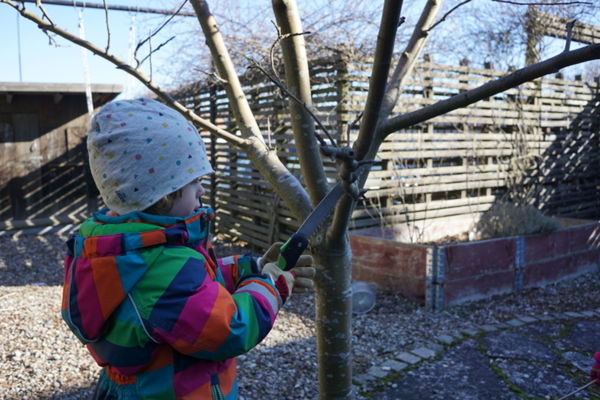
Prune small dead or crossing branches carefully with kid-safe shears while an adult watches.
- 13
Step 13
Pick ripe fruit gently by twisting and placing each one into your basket.
- 14
Step 14
Count the fruit you harvested and write the number and how they tasted in your notebook.
- 15
Step 15
Share a photo and the story of your finished tree care project on DIY.org.
Fun facts
How do I teach my child to plant and tend a young fruit tree?
Start by choosing a healthy young tree and a sunny, well-drained spot. Show your child how to dig a hole twice as wide as the root ball, set the tree at the same depth, backfill with soil, and firm gently. Teach regular watering, a ring of mulch to retain moisture, light pruning of crossing branches, weekly pest checks, and harvesting small fruits when ripe. Supervise pruning and tool use, and celebrate progress to keep kids engaged.
What materials and tools do I need to tend a young fruit tree with my child?
You’ll need a young fruit tree (container or bare-root), shovel, kid-sized trowel, quality compost or planting mix, mulch (wood chips or straw), a watering can or hose with gentle spray, pruning shears (adult locked; child-safe scissors for helpers), gloves for both adult and child, stakes and soft ties, a small harvest basket, and a simple pest ID guide. Optional: soil test kit and slow-release fertilizer as recommended.
What ages is learning to plant and care for a fruit tree suitable for?
This activity suits many ages: toddlers (2–4) can pour water, pick up dropped fruit, and watch; preschoolers (4–6) can help mulch, gently pat soil, and learn names; early elementary (6–9) can measure watering, assist pruning with supervision, and inspect for pests; older children (10+) can lead routine care, prune under guidance, and help harvest and maintain records. Always supervise tools and teach safe handling; adapt tasks to the child’s attention and motor skills.
What are the benefits of involving my child in tending a fruit tree?
Tending a fruit tree teaches responsibility, patience, and observation as children monitor growth and seasonal changes. It builds fine motor skills through planting, pruning, and harvesting, and encourages healthy eating by connecting kids to real food. Gardening supports science learning—life cycles, ecology, and pest management—while offering outdoor exercise and stress relief. Sharing harvests fosters pride and family bonding. Start small, celebrate milestones, and use age-appropriate tasks t
Watch & Learn
Need help?
If I can't find specific materials, what can I substitute for gardening gloves, mulch, or kid-safe shears?
Use sturdy household gloves or old work gloves instead of gardening gloves, shredded leaves or straw in place of bagged mulch, and have an adult use regular pruning shears while you hold branches or use blunt-tip safety scissors under supervision instead of kid-safe shears.
What should I do if the tree sinks in the hole or the soil stays soggy after planting?
If the tree sinks, lift and replant so the top of the root ball is level with the soil surface and press soil down to remove big air pockets, and if the soil remains soggy choose a sunnier spot with better drainage or water more slowly until the soil is evenly moist.
How can I adapt the steps of this activity for different age groups?
For toddlers let them wear gloves and help spread mulch or pour a small cup of water while an adult digs and records the planting date; for elementary kids let them dig the hole twice the root ball width, remove the sapling from its pot, press the soil, and write a watering plan in the notebook; for older kids and teens let them lead weekly pest checks, prune small dead branches with kid-safe shears while an adult watches, count and record harvests, and prepare the DIY.org story and photos.
How can we extend or personalize this tree-tending project once the basic steps are done?
Turn it into a longer project by keeping a dated growth chart and fruit-count log in your notebook, adding a painted stake with the planting date, installing a simple drip line or rain gauge to improve watering, mixing compost into the soil before backfilling, and taking weekly photos to compile the DIY.org story.