Take the Camel Pose Challenge
Practice the Camel Pose safely by learning proper alignment, breathing techniques, and simple warm-ups; hold with supervision to build flexibility and strength.
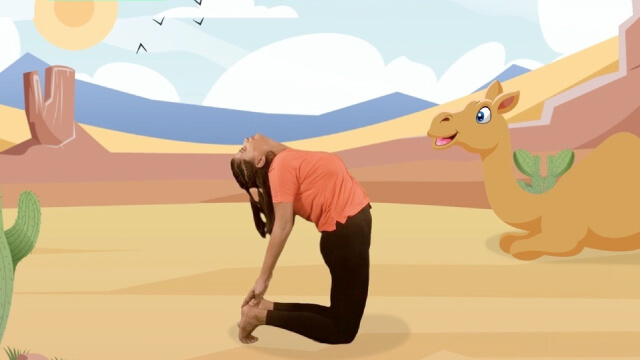
About this activity
Practice the Camel Pose safely by learning proper alignment, breathing techniques, and simple warm-ups; hold with supervision to build flexibility and strength.
What you need
Step by step
- 1
Step 1
Ask an adult to stand nearby to supervise before you begin.
- 2
Step 2
Put your mat or folded towel on the floor in a clear space.
- 3
Step 3
Kneel on the mat with your knees hip-width apart and the tops of your feet flat on the mat.
- 4
Step 4
Do five slow shoulder rolls backward to loosen your shoulders.
- 5
Step 5
Do three gentle cat-cow stretches to warm up your spine.
- 6
Step 6
Tuck your toes under so the tops of your feet press into the mat.
- 7
Step 7
Place your hands on the small of your back with your fingers pointing down.
- 8
Step 8
Squeeze your shoulder blades together to open your chest.
- 9
Step 9
Inhale and lift your chest upward.
- 10
Step 10
Press your hips forward so they stay above your knees.
- 11
Step 11
Lean your torso back slowly while keeping your hips above your knees.
- 12
Step 12
If it feels comfortable, reach one hand at a time toward your heels and rest them there.
- 13
Step 13
Hold the pose for three slow breaths while breathing evenly and stop if you feel any pain.
- 14
Step 14
Tuck your chin to your chest and slowly bring your hands back to your lower back then press your hips forward to lift your torso upright and sit back on your heels to rest.
- 15
Step 15
Share your Camel Pose Challenge on DIY.org.
Fun facts
How do you safely do the Camel Pose Challenge with a child?
Start with 5–10 minutes of gentle warm-ups (cat–cow, child’s pose, shoulder rolls). Have the child kneel with knees hip-width on a soft mat and tuck toes or place tops of feet flat. Hands go to the lower back, lift chest while keeping hips over knees, and only reach for heels if comfortable. Keep neck neutral, breathe deeply, hold 2–5 breaths, and come up slowly with hands on hips. Always supervise and stop for pain.
What materials do I need for the Camel Pose Challenge?
You need a non-slip yoga mat, a soft cushion or folded blanket for knee support, and yoga blocks or a sturdy chair for hands or heel support. Comfortable, stretchy clothing and a small towel or water bottle nearby are helpful. A timer can track short holds. Always have an adult present to spot the child and remove hard objects nearby for a safe practice space.
What ages is the Camel Pose Challenge suitable for?
The challenge is generally suitable for children about 6 years and older with adult supervision, since they usually have enough coordination and body awareness. Younger children can try gentle backbends and heart-opening stretches instead. Adjust depth and hold times to each child’s comfort, and consult a pediatrician if there are spine, neck, or joint concerns. Emphasize play, not perfection.
What safety tips should I follow for the Camel Pose Challenge?
Warm up thoroughly and keep holds short (a few breaths). Use cushions or blocks to reduce strain and maintain hips over knees to avoid lower-back compression. Watch for sharp pain or dizziness and avoid forcing the neck back. Spot the child when they lean back and guide them up slowly. Skip deep backbends after recent injuries or if a healthcare provider advises against them.
Watch & Learn
Need help?
What can I use if I don't have a yoga mat or folded towel?
If you don't have a yoga mat or folded towel, use a non-slip bath towel, a soft blanket folded thickly, or a carpet square in the clear space to protect your knees and the tops of your feet.
I can't reach my heels or my lower back hurts when I lean back—what should I do?
If you can't reach your heels or feel pain while leaning back, keep your hands on the small of your back, press your hips forward so they stay above your knees, and only lean back slightly while holding for fewer breaths until the chest opens without pain.
How can I adapt the Camel Pose Challenge for younger or older kids?
For younger children, leave toes untucked and do gentle chest lifts with hands on the lower back for two breaths with an adult supervising, while older kids can try reaching one hand at a time to their heels and hold for the full three slow breaths while squeezing shoulder blades.
How can we extend or personalize this Camel Pose activity?
To extend or personalize the challenge, place a yoga block or folded blanket under each heel before reaching, increase the hold to five slow breaths after completing the three cat-cow warm-ups, and share a photo or video of your version on DIY.org.