Sing a song
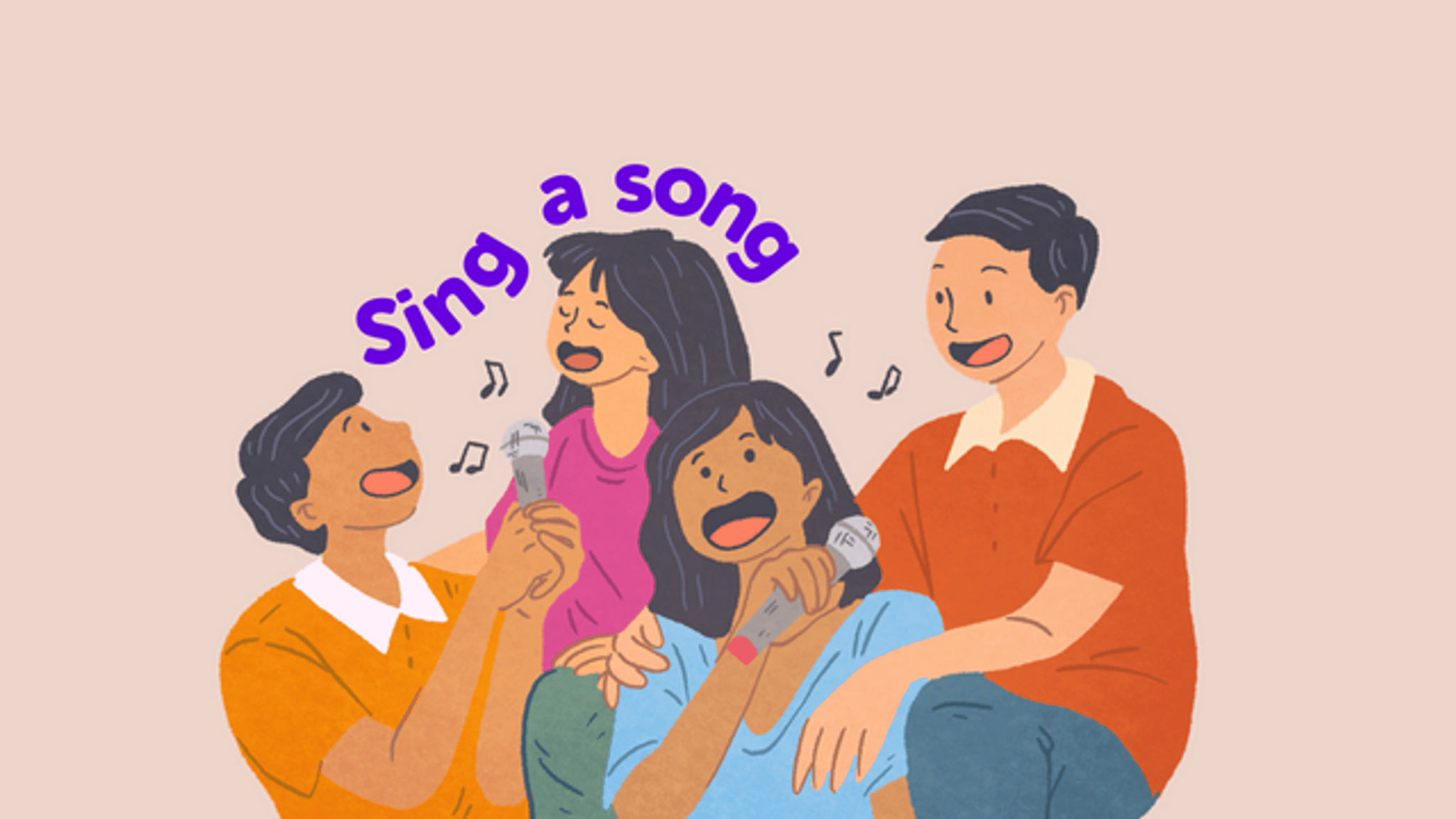
Learn and practice singing a short song, add simple actions and rhythm, then perform it confidently for family or friends.
About this activity
Learn and practice singing a short song, add simple actions and rhythm, then perform it confidently for family or friends.
What you need
Step by step
- 1
Step 1
Pick a short song to learn or write a tiny 4-line song on your paper.
- 2
Step 2
Read the words aloud slowly so you know how each line sounds.
- 3
Step 3
Tap a steady beat with your hand or your percussion item for each line.
- 4
Step 4
Choose one simple movement for each line like clap jump or point.
- 5
Step 5
Practice singing the first line while doing its movement slowly.
- 6
Step 6
Add your percussion beat while singing the second line and do its movement.
- 7
Step 7
Sing the whole song with all movements and the beat very slowly once.
- 8
Step 8
Sing the whole song at a normal performance speed three times to build confidence.
- 9
Step 9
Perform your song confidently for a family member or a friend.
- 10
Step 10
Share your finished performance on DIY.org
Fun facts
How do I teach my child to learn and practice a short song with actions and rhythm?
Start by choosing a short, catchy song and learn the melody yourself. Break the song into small phrases and teach each line slowly, repeating until comfortable. Add a simple action for each phrase (clap, stomp, point) and practice with steady rhythm—use a metronome or clap pattern. Run through the whole song several times in short daily sessions, then rehearse performing it with expression and eye contact for family.
What materials do I need to help my child learn and perform a short song with simple actions?
You don't need much: the chosen song (audio or lyrics), a device to play recordings, and a simple percussion instrument like a tambourine or shaker to keep rhythm. Optional helpful items: visual cue cards for lines, costume pieces or props for performance, a small mirror, and a phone to record practice. Make sure there's a clear, safe space to move and a water bottle for vocal breaks.
What ages is singing a short song with actions and rhythm suitable for?
This activity works for many ages. Toddlers (2–3) enjoy short songs with very simple gestures and lots of repetition. Preschoolers (3–5) can follow brief melodies and coordinated actions. School-age children (6–10) can learn rhythm variations, harmonies, and more expressive performance skills. Adapt complexity, session length, and supervision to the child’s attention span and vocal development—always encourage fun and avoid pushing strained singing.
What are the benefits of teaching my child to sing and perform a short song, and are there safety tips?
Benefits include improved language, memory, listening skills, coordination, confidence, and stage presence. Singing with actions strengthens breath control and motor planning while boosting social skills when performed for others. Safety tips: keep sessions short to avoid vocal strain, offer water breaks, supervise props and movement to prevent trips, and stop if the child shows discomfort. For variation, change tempo, add new actions, or try call-and-response sections.
Watch & Learn
Need help?
What can we use if we don't have a percussion item or paper for the song?
If you don't have a percussion item, use clapping, a wooden spoon on a table, a pot, or a homemade shaker, and if you don't have paper write your 4-line song in a phone note while you follow step 3's 'tap a steady beat'.
I'm having trouble keeping the beat while singing — how can we fix that?
Slow everything down and follow steps 5–7: practice the first line with its movement (step 5), add the percussion on the second line (step 6), then sing the whole song very slowly once (step 7) while counting the beat aloud or using a phone metronome to build coordination.
How can we adapt the activity for different ages?
For preschoolers use a 2-line song and only simple gestures in step 4 with extra slow practice in step 5, while older kids can create more complex movements, add layered percussion in step 6, and run the three normal-speed performances in step 8 to refine their routine.
How can we enhance or personalize our performance before sharing it?
Personalize by writing unique lyrics on your paper, adding simple costumes or a prop that matches each movement from step 4, recording and lightly editing the performance, and then sharing the polished result on DIY.org as directed in the final step.