Practice a handstand
Learn safe handstand technique through warm-ups, wall drills, and partner spotting. Practice balance, strength, and gradual progressions with adult supervision.
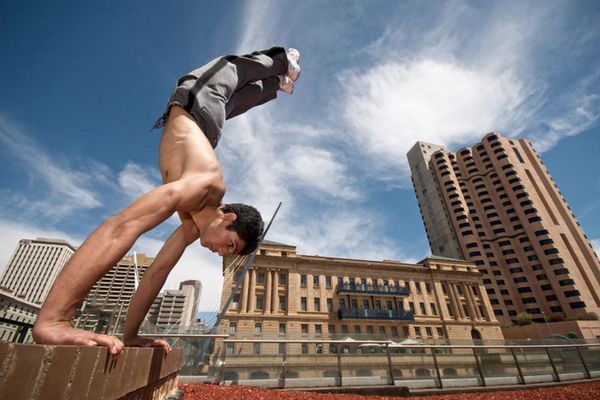
About this activity
Learn safe handstand technique through warm-ups, wall drills, and partner spotting. Practice balance, strength, and gradual progressions with adult supervision.
What you need
Step by step
- 1
Step 1
Clear a space at least two arm spans wide and place the soft mat against the wall.
- 2
Step 2
Put on comfortable clothes that let you move easily.
- 3
Step 3
Warm up your wrists by making slow wrist circles 10 times each direction.
- 4
Step 4
Wake up your shoulders by doing 10 big arm circles to loosen them.
- 5
Step 5
Lie on your back and hold a hollow body position for 15 seconds to activate your core.
- 6
Step 6
Practice a tuck or frog balance on the floor and hold for 10 seconds to feel balancing on your hands.
- 7
Step 7
From a plank position, walk your feet up the wall until your hips are over your shoulders and hold for 10 seconds.
- 8
Step 8
From a lunge facing away from the wall, place your hands down and kick one leg up so both feet touch the wall; repeat this kick-up practice five times.
- 9
Step 9
Face the wall, walk your hands close to it, and kick up into a chest-to-wall handstand for 10–20 seconds for three attempts.
- 10
Step 10
Ask your partner to spot you by standing near your hips and holding your waist as you kick up; do five assisted reps.
- 11
Step 11
Try small freestanding kick-ups with your spotter ready to catch you and focus on tight arms and steady legs for five attempts.
- 12
Step 12
Gently stretch your wrists and shoulders and take three deep breaths to cool down.
- 13
Step 13
Share a photo or video of your handstand practice on DIY.org.
Fun facts
How do I teach my child to practice a safe handstand step-by-step?
Start with a 5–10 minute warm-up: wrist circles, shoulder taps, cat-cow and core activation. Teach a tucked forward roll and donkey kicks to build confidence. Progress to wall drills: face away from the wall and practice kicking up gently with one foot touching the wall, then try face-the-wall handstands for alignment. Use partner spotting at the hips and shoulders. Keep attempts short, encourage breathing, rest between reps, and always supervise closely for gradual, safe progress.
What materials and setup do I need to practice handstands at home?
You need a clear, smooth wall and a non-slip soft surface like a gymnastics mat or carpet. Wear comfortable, fitted clothing that won’t ride up. Have an adult spotter and a phone or camera to review form optionally. Remove furniture and hard objects nearby and use tape to mark a foot line if helpful. Optional items: a small yoga block for shoulder drills and chalk or grip socks if hands slip. Prioritize a clutter-free area for safety.
What ages is handstand practice suitable for and when should a child start?
Handstand practice is often suitable for children around ages 5–7 and up, depending on coordination and strength. Younger kids can do basic balance games, wrist mobility, and strength-building play. Always adapt progressions to the child’s abilities and keep adult supervision. For very young children or those with medical concerns, consult a pediatrician or trained coach before starting structured handstand drills. Emphasize fun, short sessions rather than intensive training.
What are the benefits and safety tips for kids learning handstands?
Handstand practice develops shoulder and core strength, balance, body awareness, and confidence. It supports motor planning and coordination while being fun. Safety tips: always warm up, use a soft surface and wall drills, have an adult spotter, limit repetitions to avoid fatigue, and stop if the child feels pain. Teach proper wrist alignment and gradual progressions. Consider a coach for technique and avoid attempting handstands near hard furniture or stairs.
Watch & Learn
Need help?
What can we use instead of the soft mat if we don't have one?
If you don't have a soft mat, place a folded yoga mat, thick blanket, or couch cushions against the wall to provide the same padding and support during the wall-assisted plank walks and kick-ups.
I'm falling out of my kick-ups or can't get my hips over my shoulders — what should I try?
If your kick-ups fail or you can't get hips over shoulders, hold the hollow body longer, repeat the plank-to-wall walk exercise, and have your partner spot and hold your waist during the lunge kick-up and five assisted reps while you focus on tight arms.
How can this activity be adapted for younger children or older kids?
For younger children, shorten practice to the tuck/frog balance and plank walks with extra spotting during the five assisted reps, while older kids can aim for longer 20-second chest-to-wall holds and more freestanding kick-up attempts.
How can we extend or personalize the handstand practice to make faster progress?
Create a weekly progression tracking longer hollow holds, extra freestanding kick-ups, add extra wrist and shoulder mobility from the warm-up/cool-down, and share photos or videos of each session on DIY.org to monitor improvement.