Photograph and label the golden ratio
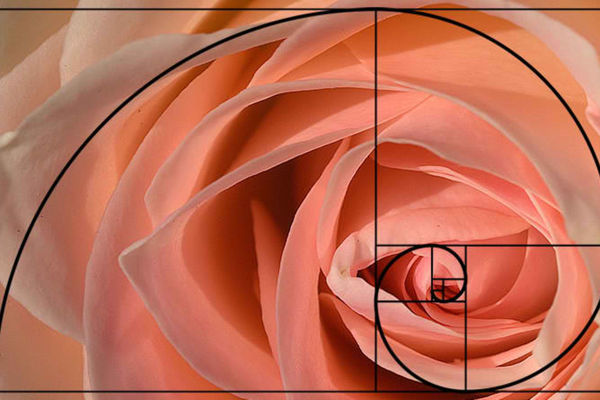
Find and photograph objects that show the golden ratio, measure or draw dividing lines, then label and explain the ratio in your photos.
About this activity
Find and photograph objects that show the golden ratio, measure or draw dividing lines, then label and explain the ratio in your photos.
What you need
Step by step
- 1
Step 1
Learn that the golden ratio means the longer part divided by the shorter part is about 1.618
- 2
Step 2
Walk around your home or yard and pick five objects that look like rectangles or spirals that might show the golden ratio
- 3
Step 3
Take a clear photo of each chosen object
- 4
Step 4
Choose one photo to analyze more closely
- 5
Step 5
Decide if you will draw directly on the photo or draw your lines on paper beside the photo
- 6
Step 6
Use your pencil to draw a line that splits the object into a longer part and a shorter part
- 7
Step 7
Measure the length of the longer part with your ruler and write that number on a sticky note
- 8
Step 8
Measure the length of the shorter part with your ruler and write that number on a sticky note
- 9
Step 9
Divide the longer measurement by the shorter measurement and write the result
- 10
Step 10
Compare your result to 1.618 and write whether the numbers are close to each other
- 11
Step 11
Use sticky notes or your coloring materials to label the two parts the measurements and your calculated ratio on the photo and write one sentence explaining what you found
- 12
Step 12
Share your finished photo labels and explanation on DIY.org
Fun facts
How do I do the 'Photograph and label the golden ratio' activity with my child?
Start by explaining the golden ratio (about 1.618). Walk nearby areas to spot spirals, shells, leaves, staircases or architecture that suggest similar proportions. Photograph each object, then print or open the photo in an editing app. Draw dividing lines or a golden rectangle to show longer and shorter segments, measure them with a ruler or pixel tool, calculate the ratio, and add brief labels and one-sentence explanations on each photo.
What materials do we need to find and label the golden ratio in photos?
You’ll need a camera or smartphone, a ruler or measuring tape, and a calculator or phone calculator to compute ratios. Optional helpful items are a free photo-editing app to draw lines and text, graph paper or printouts for sketches, pencil and notebook for notes, and a pixel-measurement tool for digital images. For field outings bring adult supervision, water, and permission if photographing private property or people.
What ages is this golden ratio photography activity suitable for?
This activity suits children roughly 8–14. Ages 8–10 enjoy finding and photographing examples with adult help for measuring and calculations. Preteens (11–14) can measure, compute ratios, and label photos more independently. For kids under 8, simplify by focusing on spotting spirals and pleasing compositions rather than precise measurements, using larger printouts or digital tools to assist with annotation.
What are the benefits of doing a golden ratio photo and labeling activity with my child?
This project strengthens observation, spatial reasoning, and basic measurement skills while linking math to art and nature. Photography practice improves composition and digital literacy; explaining ratios builds vocabulary and communication. It’s a low-cost STEAM activity encouraging curiosity, pattern recognition, and outdoor exploration. Finish with a short reflection asking what surprised your child about where the ratio appears to deepen learning.
Watch & Learn
Need help?
What can we use instead of sticky notes, a ruler, or a camera if we don't have them?
If you don't have sticky notes use small pieces of paper or masking tape to write measurements, if you lack a ruler use a printable ruler, a credit card, or a string measured against a known length, and if you don't have a camera use a phone, tablet, or draw the object by hand to follow the photo-and-label steps.
My line splitting the object looks wrong or my ratio is way off from 1.618—what should I do?
Retake a clearer photo or print it, use your pencil to redraw the dividing line so the longer and shorter parts follow the object's edges, re-measure with your ruler or measured string, and recalculate longer ÷ shorter before writing the numbers on your sticky notes.
How can I change this activity for younger kids or make it more challenging for older kids?
For younger children simplify by having them choose obvious rectangles or spirals, draw a clear split with a pencil and place labeled sticky notes for 'long' and 'short', while older kids can draw exact lines on the photo, measure in decimals, calculate longer ÷ shorter precisely, and compare percent difference to 1.618 for all five objects.
What are good ways to extend or personalize the photo-and-label golden ratio project?
Analyze all five photos and record each longer and shorter measurement and calculated ratio on sticky notes, create a collage or chart showing which items are closest to 1.618, overlay a printed golden spiral on the chosen photo, add color-coded labels, and then share your labeled photos and one-sentence findings on DIY.org.