Perform your first monologue
Write and perform your first short monologue aloud, practice voice expression and simple gestures, then record or present it to family or classmates.
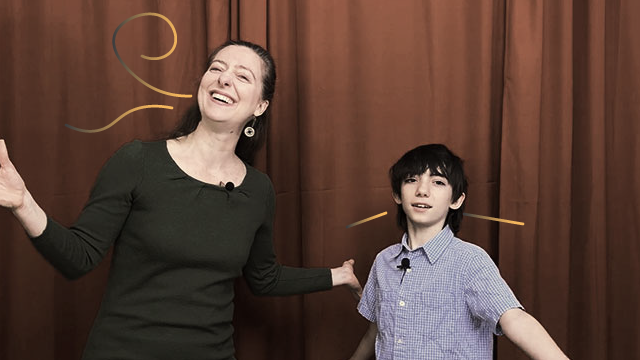
About this activity
Write and perform your first short monologue aloud, practice voice expression and simple gestures, then record or present it to family or classmates.
What you need
Step by step
- 1
Step 1
Pick one simple idea for your monologue like a favorite toy a silly secret or a small adventure.
- 2
Step 2
Choose how long your monologue will be about 30 to 60 seconds.
- 3
Step 3
Write one strong opening sentence that grabs attention.
- 4
Step 4
Write two to four sentences that show what happened or how you feel about the idea.
- 5
Step 5
Write one clear ending sentence that wraps up your story or feeling.
- 6
Step 6
Next to each line mark one emotion word and one simple gesture to match it.
- 7
Step 7
Stand in front of a mirror and read one line aloud slowly while watching your face.
- 8
Step 8
Practice the whole monologue aloud using the gestures and voice changes you marked.
- 9
Step 9
Time your performance and shorten or add words so it fits your chosen length.
- 10
Step 10
Perform the monologue live for a family member or a classmate.
- 11
Step 11
Ask someone to record your monologue or record it yourself if you want to save it.
- 12
Step 12
Share your finished monologue on DIY.org
Fun facts
How do I help my child write and perform their first short monologue?
Start by picking a simple topic and writing a short monologue (30–90 seconds). Use a clear opening, a few lines that show a feeling or idea, and a closing line. Break the text into small chunks, practice aloud focusing on voice, pace, and expression. Add simple gestures that match your words. Warm up your voice, rehearse in front of a mirror or family, then record on a phone or perform live. Keep it fun and supportive.
What materials do I need to perform a first monologue with my child?
You'll need paper and a pen or a tablet/computer to write the monologue, plus a timer to keep it short. Use a quiet space, a mirror for practicing expression, and a phone or recorder to capture the performance. Optional props or a simple costume help imagination. Comfortable clothes and a caregiver nearby for younger children make the experience safe and encouraging.
What ages is performing a short monologue suitable for?
Suitable for ages 4–16 with adjustments: preschoolers (4–6) can deliver very short lines or a single feeling; elementary kids (6–10) can write and perform 30–60 second monologues; tweens and teens (11–16+) can craft longer, character-driven pieces. Tailor complexity, language, and performance time to the child’s attention span and reading level. Supervision and encouragement are important for younger children.
What are the benefits of writing and performing a first monologue?
Performing a first monologue builds confidence, speaking skills, memory, and emotional awareness. It strengthens voice control, pacing, and basic stage presence while encouraging creativity and storytelling. For safety and comfort, choose age-appropriate content, avoid pressure, and encourage practice breaks to reduce anxiety. Sharing with family or classmates also boosts social connection and positive feedback.
Watch & Learn
Need help?
If we don't have a mirror or a camera, what can we use instead to follow the 'Stand in front of a mirror' and 'Ask someone to record' steps?
Use the front-facing camera on a smartphone or tablet as a mirror for the 'Stand in front of a mirror' step and use that same device or a parent's phone to 'Ask someone to record your monologue' and to time your performance.
What should we do if the child keeps rushing, forgets gestures, or goes over the 30–60 second length?
Put the emotion word and simple gesture on sticky notes next to each line as instructed in 'Next to each line mark one emotion word and one simple gesture', practice each line slowly in front of the mirror while timing it, and then 'Time your performance and shorten or add words' to fit the chosen length.
How can this monologue activity be adapted for younger or older kids?
For younger children make the monologue 15–30 seconds with one strong opening and two very short lines delivered to a stuffed animal audience, and for older kids extend to 60–90 seconds with three to five detail sentences, stronger voice changes when you 'Practice the whole monologue aloud', and a recorded version to share.
How can we extend or personalize the monologue beyond the basic instructions?
Add a small prop or costume that matches your chosen idea, create simple background sounds or music while you 'Practice the whole monologue aloud', record multiple takes to pick the best one, and then 'Share your finished monologue on DIY.org' to show your improvement.