Organize objects
Sort everyday objects by size, color, and use into labeled boxes. Count and record each group, then compare patterns and explain findings.


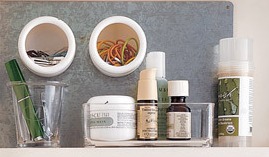
Step-by-step guide to sort everyday objects by size, color, and use
How To Sort Objects for Kids | Sorting & Matching Games for Children | Kids Academy
Step 1
Gather all Materials Needed and put them on a clear table or floor space.
Step 2
Choose the first attribute to sort by such as size color or use.
Step 3
Make three labels on sticky notes or paper that match the chosen attribute for your boxes.
Step 4
Put all the small everyday objects into one mixed pile in the center of your workspace.
Step 5
Sort the objects from the pile into the three labeled boxes according to the chosen attribute.
Step 6
Count the items in each box and write the three numbers on your paper.
Step 7
Empty all boxes and put every object back into one mixed pile.
Step 8
Change your labels to the next attribute you want to test such as color.
Step 9
Sort the pile into the three boxes by the new attribute.
Step 10
Count the items in each box and write the three numbers on a new line on your paper.
Step 11
Empty all boxes again and change the labels to the last attribute such as use.
Step 12
Sort the pile into the three boxes by this last attribute.
Step 13
Count the items in each box and write the three numbers on your paper in another new line.
Step 14
Compare the three sets of numbers and write one short sentence that explains a pattern you notice.
Step 15
Take a photo or note of your sorted boxes and counts and share your finished creation on DIY.org.
Help!?
What can we use if we don't have sticky notes, three boxes, or a lot of small everyday objects?
Use plain paper taped to containers instead of sticky notes, shoe boxes, bowls, or cardboard dividers for the three boxes, and substitute coins, buttons, or dried pasta for the 'small everyday objects' pile described in the instructions.
What should we do if items keep getting mixed up while the child sorts into the labeled boxes?
If items get mixed while you 'Sort the objects into the three labeled boxes', demonstrate with one item first, use picture stickers or colored labels to make categories clearer, and reduce the pile size so the child sorts fewer items at a time before counting.
How can I adapt the activity for different ages like 2, 5, and 8-year-olds?
For a 2‑year‑old, use only two boxes with big picture labels and guide them to 'Put' items in each box; for a 5‑year‑old follow the three-label process and help them 'Count the items' aloud; and for an 8‑year‑old add extra attributes, require they 'write the three numbers' neatly and compose the comparison sentence independently.
How can we extend or personalize the sorting activity after completing the three attribute rounds?
Extend the activity by decorating the boxes, creating a bar graph from the 'three sets of numbers' when you compare them, timing each sort to make a game, and taking the final photo and caption to share on DIY.org as suggested.
Watch videos on how to sort everyday objects by size, color, and use
Sorting Objects for Kids | Sort Objects into Three Groups | Kids Academy
4 Videos
Sorting Objects for Kids | Sort Objects into Three Groups | Kids Academy

Objects and Groups. Lesson 8. Sorting and grouping objects. Educational video for children.
4 Ways To Get Organized
Sorting One Group in Different Ways | Sorting & Matching Games for Kids | Kids Academy
Facts about sorting and classification
🧩 Sorting games help kids practice categorizing and pattern-spotting, skills that support early math and science learning.
🎨 Humans can distinguish roughly 10 million different colors, so color-sorting activities can feel delightfully detailed!
📦 Maria Montessori used hands-on sorting and matching activities to teach independence and foundational math concepts.
🔢 Young children can often 'subitize' (recognize without counting) up to 3 or 4 items, and sorting helps them practice counting larger groups.
🧠 Grouping objects by more than one feature (size, color, and use) builds flexible thinking and problem-solving abilities.
How do I lead an activity where my child sorts everyday objects by size, color, and use into labeled boxes, then counts and compares patterns?
What materials do I need to sort everyday objects by size, color, and use into labeled boxes and record counts?
What ages are suitable for sorting everyday objects by size, color, and use into labeled boxes and doing counting/analysis?
What are the benefits of having children sort objects by size, color, and use, count groups, and explain patterns?
