Market Economy Examples
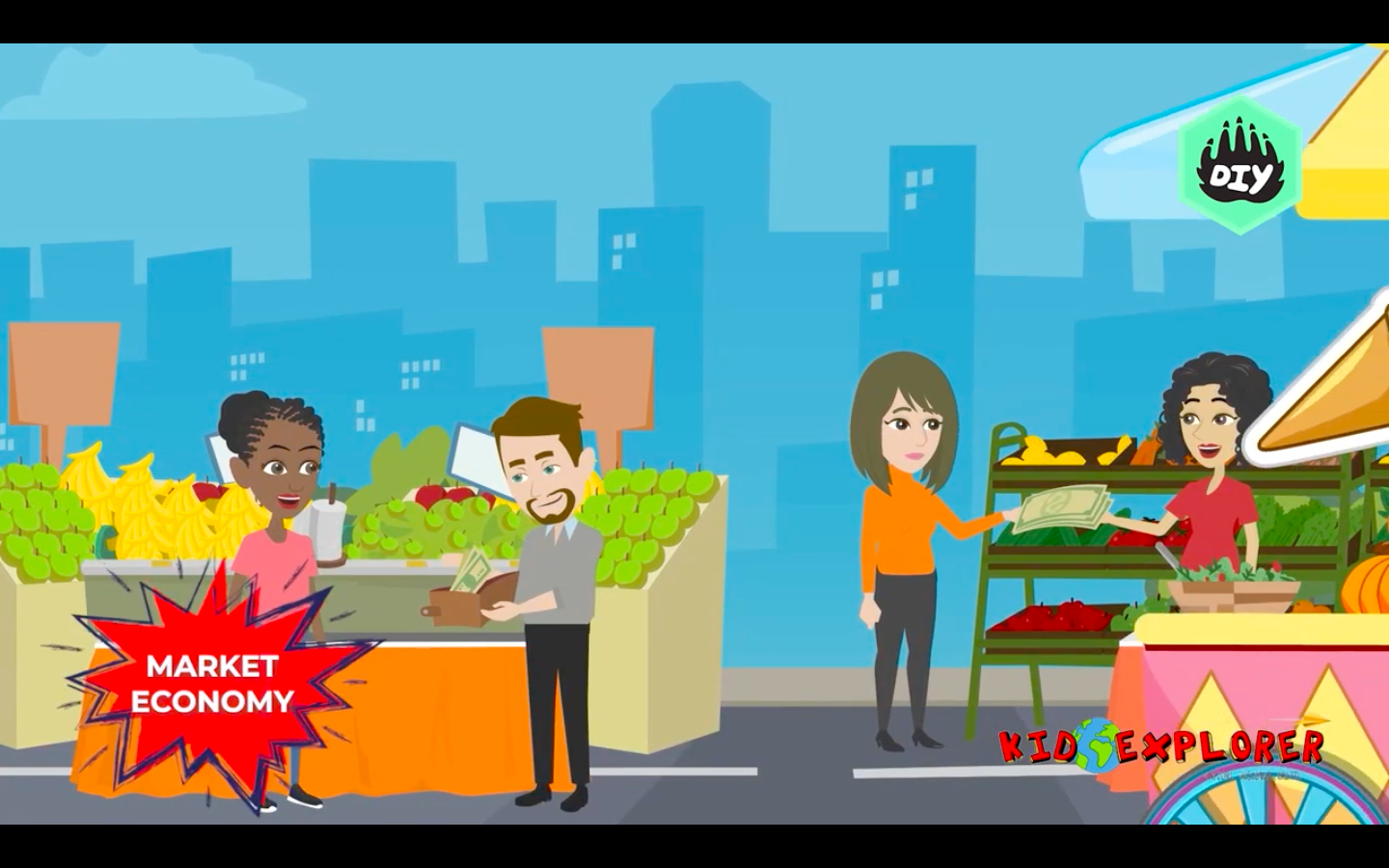
Set up a mini market to role-play buyers and sellers, price products, trade goods, and observe how choices shape supply and demand.
About this activity
Set up a mini market to role-play buyers and sellers, price products, trade goods, and observe how choices shape supply and demand.
What you need
Step by step
- 1
Step 1
Gather all the Materials Needed and bring them to your play area.
- 2
Step 2
Decide who will be sellers and who will be buyers by assigning roles to each player.
- 3
Step 3
Choose stall spots and set up a box or basket for each seller on the table or floor.
- 4
Step 4
Make a name sign for each stall and attach it so everyone can see which seller it is.
- 5
Step 5
Sellers pick a few items to sell and place them neatly inside their stall.
- 6
Step 6
Write a price on a sticky note or index card for each item using your markers.
- 7
Step 7
Attach the price tags to the matching items in the stall.
- 8
Step 8
Make play money by folding paper bills and drawing numbers or gather your play money set.
- 9
Step 9
Give each buyer a set budget of play money to use while shopping.
- 10
Step 10
Sellers write the starting inventory numbers for each item in the notebook.
- 11
Step 11
Let buyers use their play money to buy items from the stalls.
- 12
Step 12
Sellers record each sale and update the remaining inventory in the notebook after every purchase.
- 13
Step 13
Sellers change at least one price based on what sold quickly or slowly.
- 14
Step 14
Write down which items were most popular and which items were not wanted in the notebook.
- 15
Step 15
Share your mini market and what you learned about supply and demand on DIY.org.
Fun facts
How do you set up a mini market for kids to role-play buyers and sellers?
Start by designating stalls using small tables, boxes, or taped floor areas and give each child a role (seller, buyer, cashier). Have sellers arrange goods with price tags and buyers receive play money or tokens. Run several short rounds where kids set prices, negotiate, buy, and restock. After each round pause to discuss why prices changed, what sold out, and how choices affected supply and demand. Rotate roles so everyone practices different skills.
What materials do I need to create a kid-friendly market economy activity?
Gather simple supplies: play money or tokens, price tags, toy goods or household items, small tables or boxes for stalls, baskets, labels, notepads and pens for recording sales, and a calculator or phone for older kids. Optional: signage, a cash box, timers, and stickers for rewards. Most materials can be household items; durable, non-toxic goods and clear labels make play smoother and safer for younger children.
What ages is a mini market economy role-play suitable for?
This activity suits a wide range: 4–6 year olds enjoy basic buying and selling with simple prices and pretend money, 7–9 year olds can practice setting prices, making change, and basic negotiation, and 10–14 year olds can handle supply, demand scenarios, budgeting, and record-keeping. Adjust complexity, supervision, and math expectations to match the child’s development. Always provide guidance for younger children and encourage older kids to design rules and challenges.
What are the benefits of having children role-play a market economy, and are there safe variations?
Role-playing a market builds math skills, decision-making, communication, and empathy by putting kids in buyer and seller roles. It teaches budgeting, price sensitivity, and consequences of scarcity or oversupply. Safety-wise, use non-toxic items, supervise money exchanges, and set clear boundaries for handling goods. Variations include themed markets (farmers’ market, toy swap), timed sales rounds, or a classroom auction to explore competition and price discovery in a controlled way.
Watch & Learn
Need help?
What can we use instead of sticky notes, index cards, boxes, or play money if we don't have them?
If you don't have sticky notes or index cards, cut price tags from scrap paper and tape them to items, use shoeboxes or cereal-box pieces instead of baskets for stalls, and make play money by folding plain paper bills and drawing numbers as described in the 'Make play money' step.
What should we do if sellers forget to update inventory or get confused during busy sales?
If sellers forget to update the notebook after each sale, have buyers hand a sale token or a used play bill to the seller at checkout so sellers can quickly count tokens and then update the remaining inventory in the notebook after every purchase.
How can we adapt the market game for much younger or older children?
For younger kids (ages 3–5) limit each seller to three large items with pre-written prices on sticky notes and small budgets to practice counting, while for older kids (8–12+) require sellers to write starting inventory numbers, change at least one price during the game, and calculate simple profits in the notebook to deepen the supply-and-demand lesson.
How can we extend or personalize the activity to make it more fun or educational?
To extend the activity, let sellers design colorful name signs for their stalls, introduce coupons or bundle deals that force sellers to change prices mid-game, photograph or video your stalls and then share your mini market and what you learned about supply and demand on DIY.org while noting which items were most popular in the notebook.