Make a crudite terrarium
Assemble an edible crudite terrarium by layering hummus (soil), vegetables, herbs, and olives in a jar, practicing safe cutting with adult supervision.
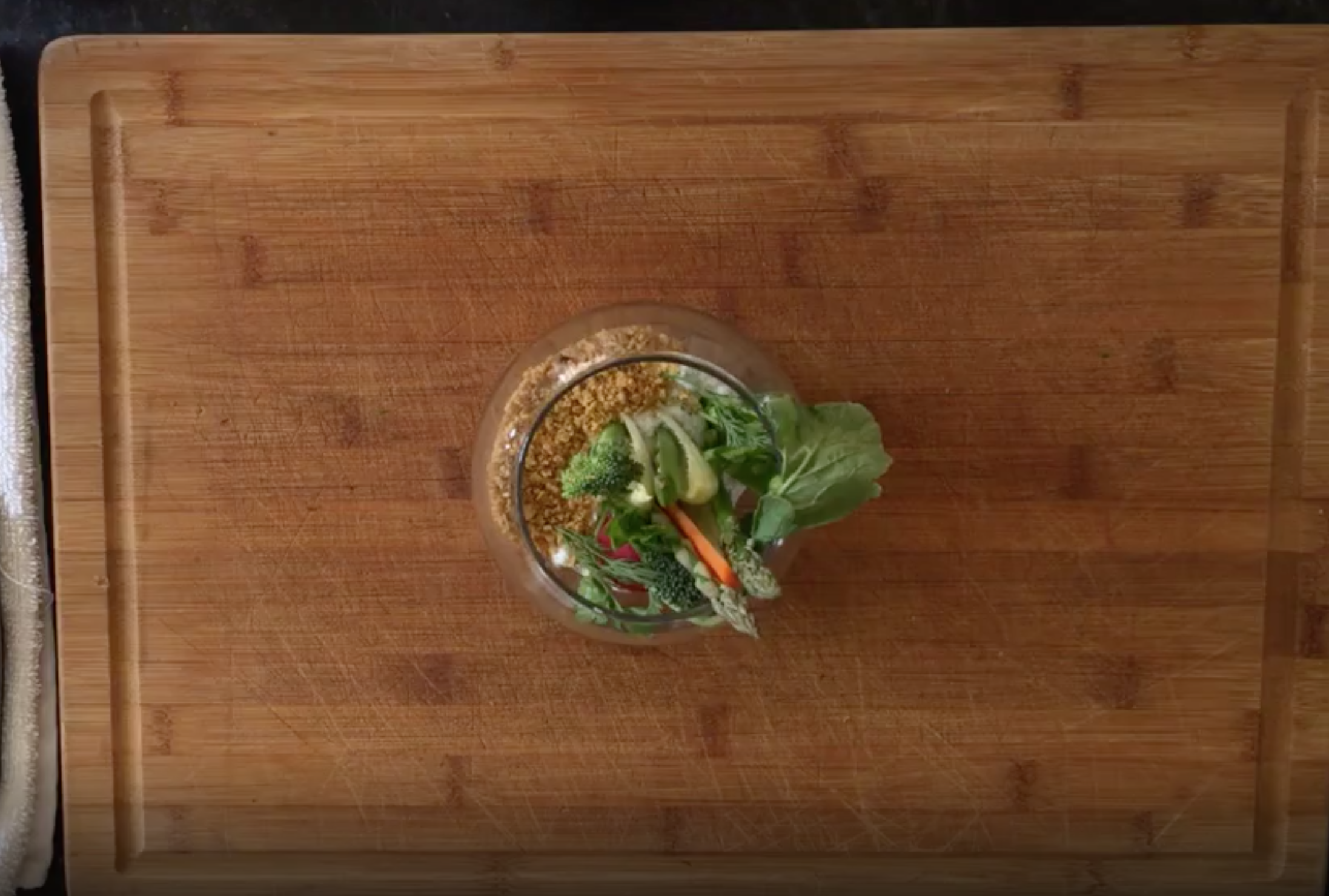
About this activity
Assemble an edible crudite terrarium by layering hummus (soil), vegetables, herbs, and olives in a jar, practicing safe cutting with adult supervision.
What you need
Step by step
- 1
Step 1
Wash your hands with soap and water until they are clean and dry them with a paper towel.
- 2
Step 2
Arrange all the materials on your workspace where you can reach them easily.
- 3
Step 3
Rinse the vegetables and herbs under cool running water to clean them.
- 4
Step 4
Pat the vegetables and herbs dry with a paper towel.
- 5
Step 5
Ask an adult to cut the carrots cucumber and bell pepper into sticks or small pieces while you watch for safe cutting tips.
- 6
Step 6
Open the jar and spoon a thick layer of hummus into the bottom to make the "soil."
- 7
Step 7
Use the back of the spoon or spatula to smooth and flatten the hummus layer.
- 8
Step 8
Gently press small herb sprigs into the hummus so they stand up like tiny plants.
- 9
Step 9
Press sliced cucumber or bell pepper pieces against the inside glass to make a decorative ring.
- 10
Step 10
Arrange olives and cherry tomatoes on top of the hummus for "rocks" and "flowers."
- 11
Step 11
Use toothpicks to add tiny veggie sculptures or secure small pieces if you like.
- 12
Step 12
Put the lid on the jar to keep your terrarium fresh.
- 13
Step 13
Place the jar in the refrigerator until you're ready to eat it.
- 14
Step 14
Take a photo and share your finished edible crudite terrarium on DIY.org
Fun facts
How do you make a crudite terrarium?
To make a crudite terrarium, start by washing all produce and choosing a clear jar. Spread a thick hummus layer as the “soil,” then add colorful vegetable layers—carrot sticks, cucumber rounds, bell pepper strips, and halved cherry tomatoes—pressing gently to pack. Add herbs and sliced olives as “plants” on top. Let a child assemble with spoons and tweezers; adult supervision is required for any cutting. Serve immediately or chill briefly before enjoying.
What materials do I need for a crudite terrarium?
You’ll need a clear glass or food-safe plastic jar with a lid, prepared hummus, a variety of vegetables (carrots, cucumbers, bell peppers, cherry tomatoes), fresh herbs (parsley or basil), olives, small spoons or spreaders, a cutting board, and a child-safe knife plus an adult knife. Paper towels, bowls for organizing pieces, and optional toothpicks or small tongs help with assembly and presentation.
What ages is this activity suitable for?
This activity suits preschoolers to preteens with age-appropriate roles: toddlers (3–5) can assemble pre-cut pieces and practice fine motor play; primary school kids (6–9) can help slice soft veggies with a child-safe knife and under close supervision; older children (10+) can actively prepare and layer ingredients with safety guidance. Always supervise cutting and watch for choking hazards for younger children.
What safety tips and benefits come with building a crudite terrarium?
Safety: wash produce, avoid cross-contamination, use age-appropriate knives, and supervise all cutting. Beware of choking risks from whole olives or cherry tomatoes for young children and note allergies (hummus contains sesame). Benefits: this activity teaches food prep, encourages vegetable sampling, builds fine motor skills, and boosts creativity. Store assembled jars in the fridge and eat within 24 hours for best freshness and safety.
Watch & Learn
Need help?
What can we use if we don't have a jar or hummus?
If you don't have a jar for the 'soil' layer you can use a clear plastic cup or small bowl, and instead of hummus spoon in thick Greek yogurt, cream cheese, or a thick bean dip as the base.
My herb sprigs keep falling over or the hummus is too runny — how can I fix that?
If herbs fall over after you 'spoon a thick layer of hummus' and 'smooth and flatten' it, pat the herbs and veggies dry, chill or drain the hummus to thicken it, press the sprigs deeper into the hummus, or secure them with toothpicks.
How can we adapt the activity for younger or older kids?
For younger children have an adult complete the 'ask an adult to cut the carrots, cucumber and bell pepper' step and let them do the rinsing, patting, pressing herbs, and arranging slices, while older kids can design complex patterns, use small cookie cutters, and build toothpick sculptures before putting the lid on.
How can we extend or personalize our crudite terrarium?
Personalize it by layering different hummus flavors or purees for colored 'soil,' pressing cucumber or bell pepper slices against the glass for decorative rings, arranging olives and cherry tomatoes into scenes or 'flowers,' adding sesame seeds or chopped nuts for texture, labeling the lid, and then put the lid on and take a photo to share.