Make a cardboard building
Build a cardboard model building using recycled boxes, scissors, tape, and markers. Plan floors, cut windows and doors with adult help, and decorate your structure.


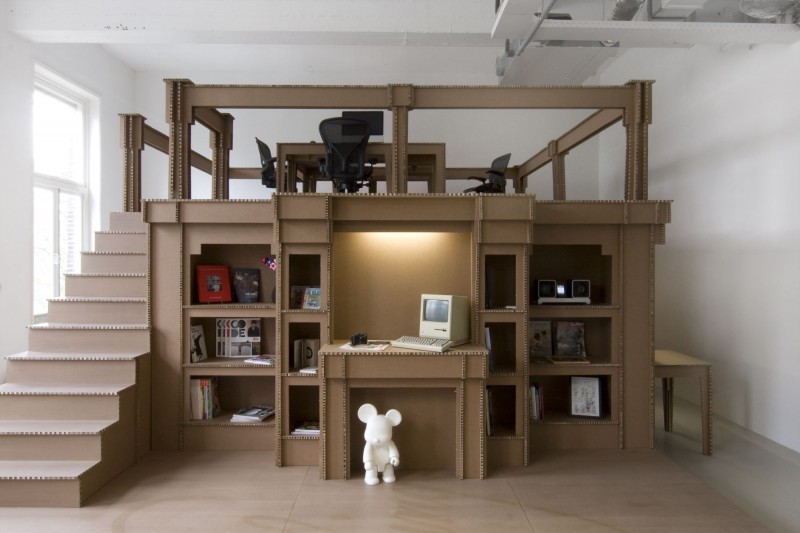

Step-by-step guide to make a cardboard building
Simple yet beautiful cardboard house making - DIY school project for students
Step 1
Gather all your materials and set them on a clear table or floor space.
Step 2
Pick what kind of building you want to make and decide how many floors it will have.
Step 3
Use your ruler and marker to draw outlines on the boxes for each wall floor and roof.
Step 4
Cut the boxes along your drawn lines with adult help.
Step 5
Fold or score the edges where the walls will meet to make nice corners.
Step 6
Tape two folded walls together to make a room shape.
Step 7
Stack and tape more rooms on top of each other to build extra floors.
Step 8
With adult help cut out windows and a door where you marked them.
Step 9
Reinforce the window and door edges with tape so they stay strong.
Step 10
Decorate the outside and inside with markers stickers and scrap paper.
Step 11
Add small cardboard details like balconies stairs or furniture and tape them in place.
Step 12
Share your finished cardboard building on DIY.org
Help!?
What can we use if we don't have large cardboard boxes or a ruler?
If you don't have large boxes use cereal, shoeboxes, or tape smaller pieces together and use a straight edge like a book and a pencil instead of a ruler to draw your outlines.
My building keeps collapsing when I stack floors—what should we try?
Reinforce the corners and seams by scoring and folding the edges, overlapping flaps, and adding strong packing tape where you tape two folded walls together and between stacked rooms to stabilize each floor.
How can I adapt this project for a 3-year-old versus a 10-year-old?
For a 3-year-old have an adult pre-cut and score the pieces and let them decorate with stickers and markers, while a 10-year-old can measure with the ruler, cut windows with supervision, and build multiple stacked floors and detailed balconies.
How can we make the cardboard building more exciting or realistic?
Personalize and extend it by painting the inside and outside, taping LED tea lights behind cut-out windows, and adding movable features like a paper elevator or removable cardboard furniture as suggested in the 'Add small cardboard details' step.
Watch videos on how to make a cardboard building
Making a House With Cardboard For School project |How To Make Cardboard Modal House.
4 Videos
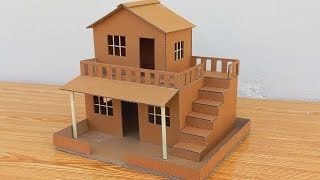
Making a House With Cardboard For School project |How To Make Cardboard Modal House.
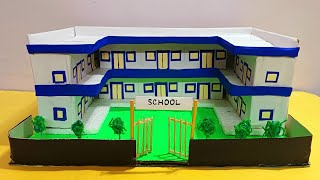
school building model making using cardboard | Cardboard School Model | DIY school model
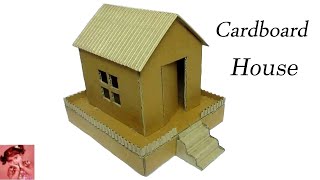
Cardboard House with Dimensions | School Project Ideas for Kids | DIY Cardboard House Model
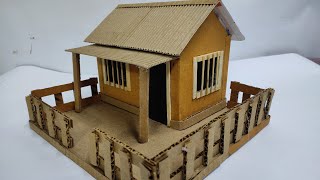
How To Make Cardboard House For School Project
Facts about recycled cardboard crafts
📦 Corrugated cardboard was first used commercially in the 19th century and became the go-to packaging material by the early 1900s.
🏗️ Architects often build small-scale models at ratios like 1:50 or 1:100 to test and visualize building designs.
♻️ Turning old boxes into new creations is called upcycling — it saves materials and makes unique art!
✂️ Cutting thick corrugated cardboard takes more force than paper — always use adult help and the right scissors or a craft knife with supervision.
🏛️ Architect Shigeru Ban famously used cardboard tubes and boxes to create real buildings, including a temporary cathedral in Christchurch, New Zealand.
How do you build a cardboard model building with kids?
What materials do I need to make a cardboard building?
What ages is this cardboard building activity suitable for?
What safety tips and benefits come from making a cardboard building?
