Learn The Happy Feet
Learn the Happy Feet dance routine: practice footwork, rhythm, timing, and posture to build coordination, musicality, and confidence through guided steps.
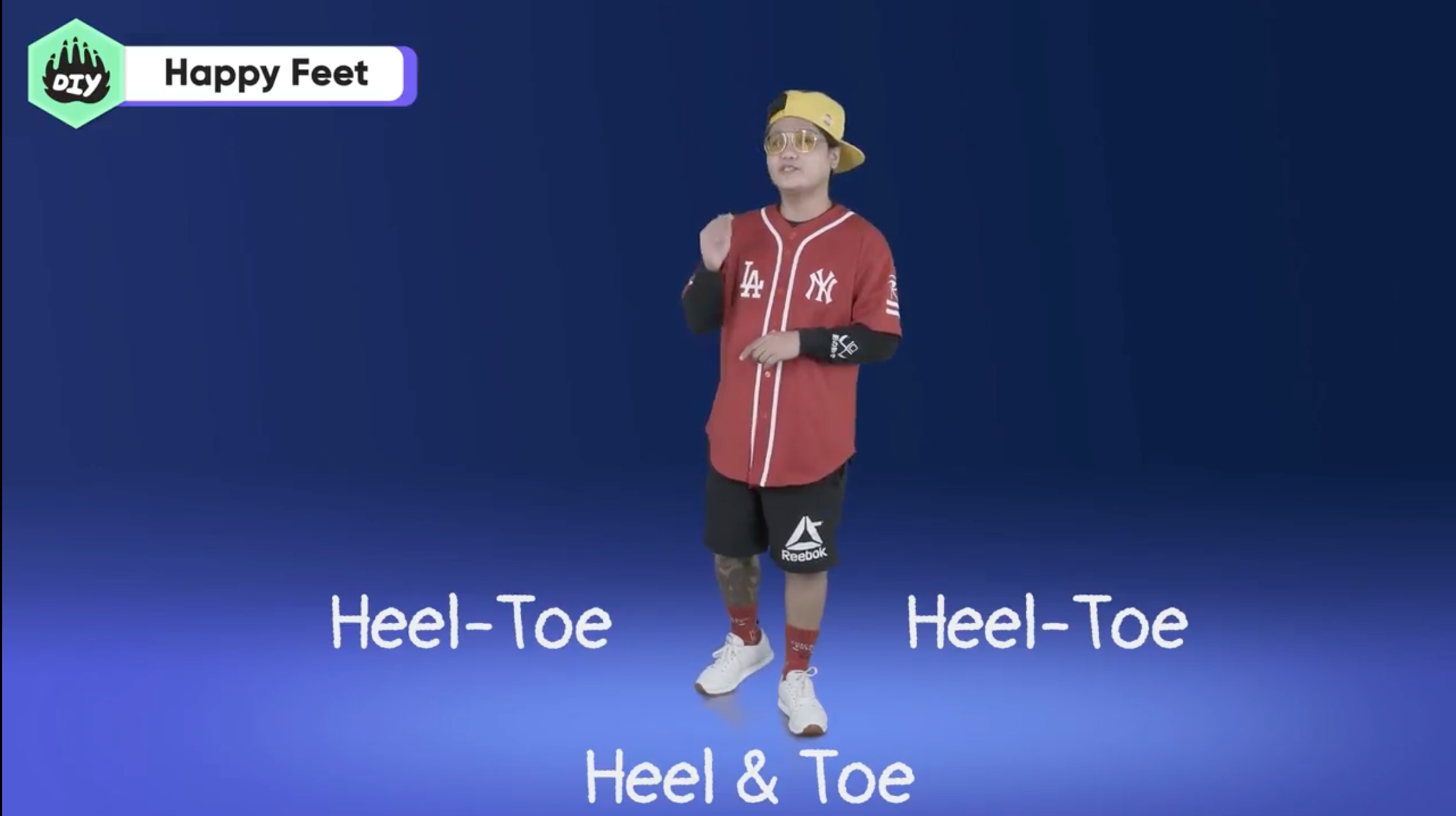
About this activity
Learn the Happy Feet dance routine: practice footwork, rhythm, timing, and posture to build coordination, musicality, and confidence through guided steps.
What you need
Step by step
- 1
Step 1
Put on your comfortable shoes so your feet feel safe and ready to move!
- 2
Step 2
Clear an open space the size of a large rug so you have room to dance.
- 3
Step 3
Play an upbeat song for the Happy Feet routine at a volume you like.
- 4
Step 4
Stand facing the mirror with your feet hip-width apart to check your posture.
- 5
Step 5
Practice the basic step-tap slowly by stepping right then tapping your left foot next to it.
- 6
Step 6
Practice the basic step-tap slowly on the other side by stepping left then tapping your right foot next to it.
- 7
Step 7
Alternate the right and left step-taps to make a steady four-count rhythm for one minute.
- 8
Step 8
Clap on the first beat of each four-count to help keep a steady timing.
- 9
Step 9
Add a simple arm swing by moving your arms gently opposite to your feet as you step.
- 10
Step 10
Run the full sequence with music slowly two times while keeping your posture and timing steady.
- 11
Step 11
Practice the routine a little faster for three runs while staying relaxed and smiling.
- 12
Step 12
Share your finished Happy Feet routine on DIY.org
Fun facts
How do I teach the Happy Feet dance routine to my child?
Start with a short warm-up to loosen legs and ankles. Demonstrate the routine in small sections, counting beats aloud and showing foot placement slowly. Practice each step slowly, then increase tempo as the child gains confidence. Use a mirror or video for feedback, clap to mark rhythm, and praise effort. Keep sessions short (10–20 minutes) and repeat steps over several days to build muscle memory, timing, and posture.
What materials do I need for the Happy Feet activity?
You only need a safe, open space with a flat, non-slip floor and comfortable shoes or bare feet. A music player with the chosen track or metronome helps with timing. Optional items: masking tape or floor markers to show foot positions, a mirror or tablet for video replay, water for breaks, and a timer to keep practice sessions short and consistent.
What ages is the Happy Feet routine suitable for?
Learn The Happy Feet is suitable for ages roughly 3–12 with simple adaptations. Preschoolers (3–5) enjoy shortened, simplified steps and more repetition; school-age kids (6–9) can handle longer sequences and timing challenges; preteens (10–12) can refine posture and rhythm. Adjust session length, complexity, and supervision to match each child’s attention, balance skills, and physical ability.
What are the benefits of practicing the Happy Feet dance routine?
Practicing this routine builds coordination, balance, and timing while improving musicality and posture. It boosts confidence as children master steps and perform, strengthens lower-body muscles, and supports cognitive skills like following directions and sequencing. Regular short practices also encourage fitness, social interaction when done in groups, and stress relief through movement and rhythm.
Watch & Learn
Need help?
What can I use if I don't have a mirror, comfortable shoes, or a speaker for the upbeat song?
Use a tablet or reflective window as your mirror, wear non‑slip socks or practice barefoot on carpet instead of comfortable shoes, and play the upbeat song from a phone or headphones so you can follow the step‑tap and clap on the first beat.
I'm losing the rhythm or keep tripping—how can I fix that?
Slow down the basic step‑tap practice (steps 5–6), count aloud or clap on every beat before returning to only the first beat, and mark a hip‑width stance on the floor to keep posture steady while you run the full sequence slowly two times.
How can I adapt the routine for younger toddlers or older kids?
For toddlers, hold hands and do seated or very slow step‑taps for about 30 seconds with clapping on each beat, while older kids can speed up the three faster runs, add more complex arm swings, turns, or longer sequences to the routine.
What's a simple way to personalize or extend our Happy Feet before sharing it on DIY.org?
Switch to a favorite upbeat song, add costume shoes or small props, invent new arm‑swing patterns or partner echoes during the runs, and record the final performance to upload to DIY.org.