How to draw the earth - a free earth drawing guide
Draw the Earth with continents, oceans, clouds, and shading using pencil and colored pencils; learn proportion, scale, and simple map placement.


Drawing Apps
Get inspired with these
Instructions
HOW TO DRAW EARTH EASY | how to draw earth for kids
Step 1
Place the paper flat and trace a circle using the round object and a light pencil line.
Step 2
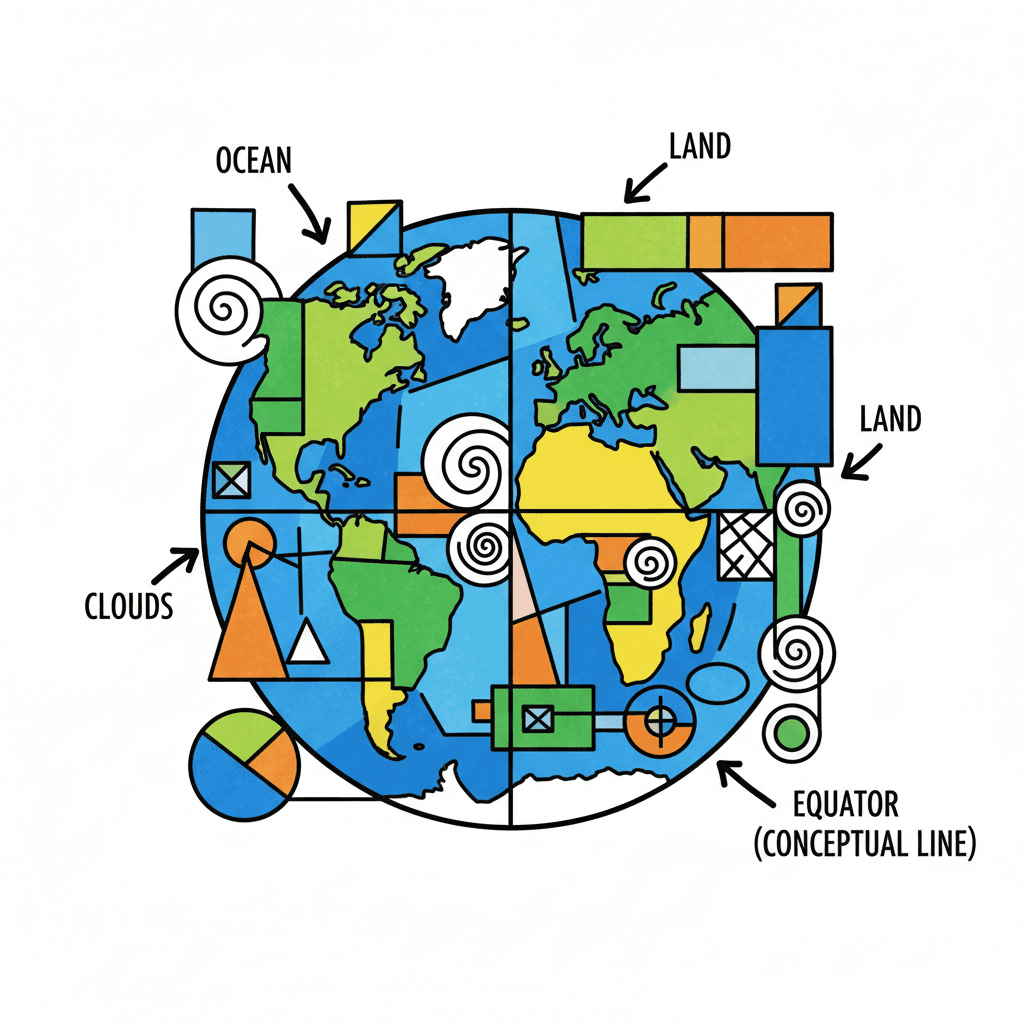
Draw a slightly tilted straight line through the circle to mark the Earth's axis.
Step 3
Draw a soft curved line across the circle to show the day and night edge (the terminator).
Step 4
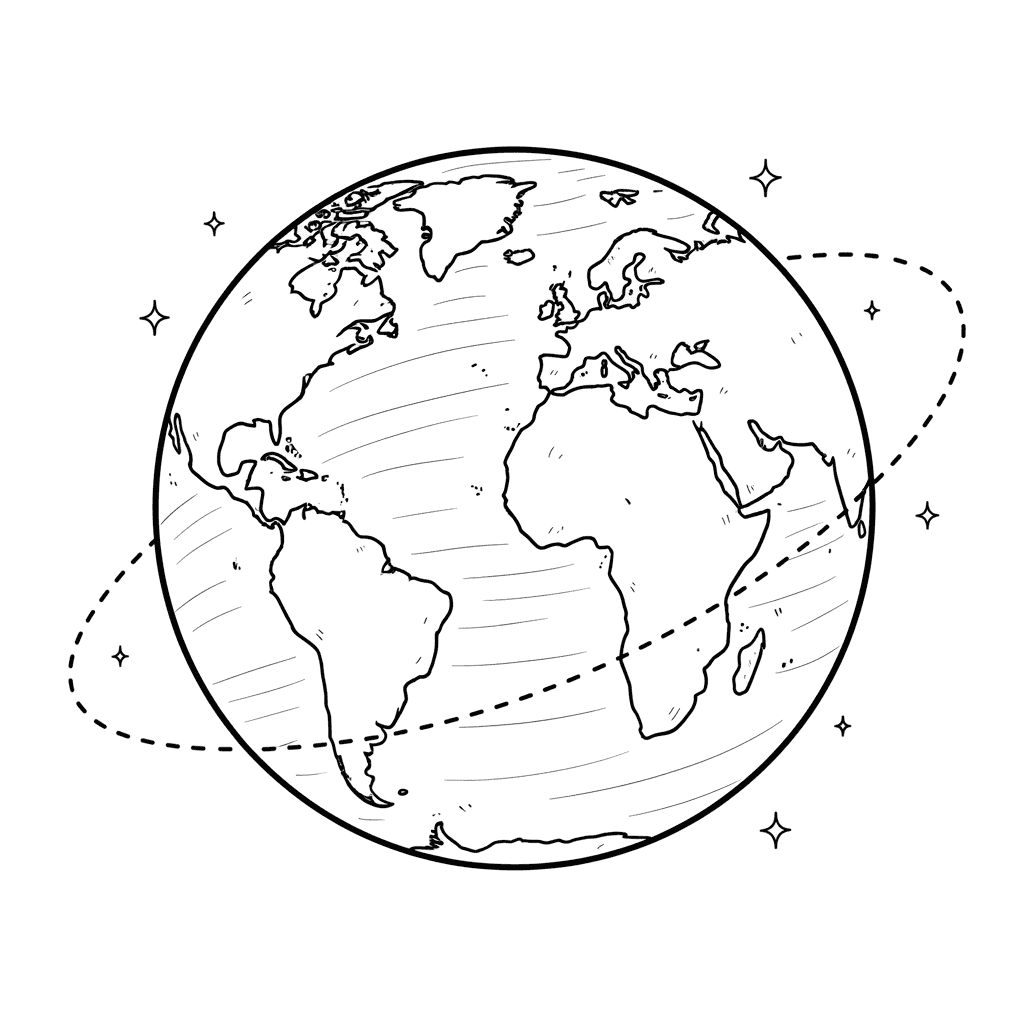
Lightly sketch the rough shapes of the continents in the correct halves of the circle.
Step 5
Go over the continent outlines with a slightly darker pencil line to make their shapes clearer.
Step 6
Shade the ocean areas with a blue colored pencil using soft even strokes as a base layer.
Step 7
Add darker blue around the edges of the oceans to suggest shadow and roundness.
Step 8
Color the continents with greens and browns adding slightly darker tones where land meets ocean.
Step 9
Gently blend the ocean shading from the edges toward the center with a blending stump or tissue to create a curved look.
Step 10
Lightly draw wispy cloud shapes over parts of the Earth with a white or light blue pencil.
Step 11
Use an eraser or white pencil to add small bright highlights on the ocean and a gray pencil to add faint shadows under some clouds.
Step 12
Sign and date your drawing in a small corner to finish your artwork.
Step 13
Share your finished creation on DIY.org
Help!?
I don't have a round object, a blending stump, or a blue colored pencil—what can I use instead?
Use a cup or jar lid to trace the circle, a folded tissue or cotton swab to blend the ocean shading, and crayons or a lightly watered-down blue marker as a substitute for the blue colored pencil when shading the oceans.
My Earth looks flat—how do I make it look round like in the instructions?
Darken the ocean edges with a darker blue as the instructions say, then gently blend those edges toward the center with a blending stump or tissue and add small bright highlights on the ocean with an eraser or white pencil to create roundness.
How can I adapt the steps for younger children or for older kids who want more challenge?
For younger kids, pre-trace the circle and let them color continents with crayons and skip subtle blending, while older kids can lightly sketch accurate continent shapes from a map, use colored pencils and a blending stump for curved ocean shading, add cloud details, then sign and date their work.
What are simple ways to extend or personalize the finished Earth drawing?
Personalize by labeling continents, adding tiny city lights on the night side with a yellow pencil, painting a thin white atmosphere halo with a white pencil or eraser highlights, or gluing small glitter accents on clouds before signing and sharing on DIY.org.
Related videos
How To Draw Earth (for young artists)
4 Videos
How To Draw Earth (for young artists)
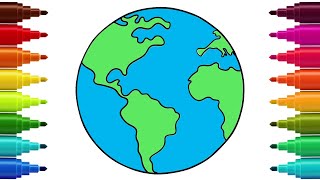
Drawing, Painting And Coloring Earth 🌍 | Easy Drawing For Kids
🌍 How to draw Easy Earth Drawing and Coloring for Kids | Learn to Draw Our Planet! #drawing
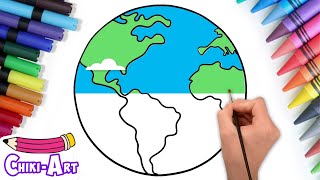
Draw Along Earth 🌍 | Easy Drawing For kids | Chiki Art 🎨
Fun Facts
🌍 About 71% of Earth's surface is covered by oceans — great reason to practice lots of blue shading!
☁️ At any moment roughly two-thirds of Earth is covered by clouds, so soft blending makes them look fluffy.
🗺️ Map projections like Mercator distort sizes — Greenland looks huge on many maps, but Africa is about 14× larger.
✏️ Colored pencils combine pigment with a wax or oil binder; artists layer and burnish to blend smoothly.
🎨 Chiaroscuro (light and dark) is a classic technique artists use to show roundness and make a globe look 3D.
How do you draw a realistic Earth with pencil and colored pencils?
What materials do I need to draw the Earth with pencils?
What ages is drawing a realistic Earth suitable for?
What are the benefits or fun variations of drawing the Earth?
