How to draw a whale - a free whale drawing guide
Draw a friendly whale step-by-step using pencil and color. Practice basic shapes, proportions, fins, tail placement, and simple shading to add dimension.


Drawing Apps
Get inspired with these
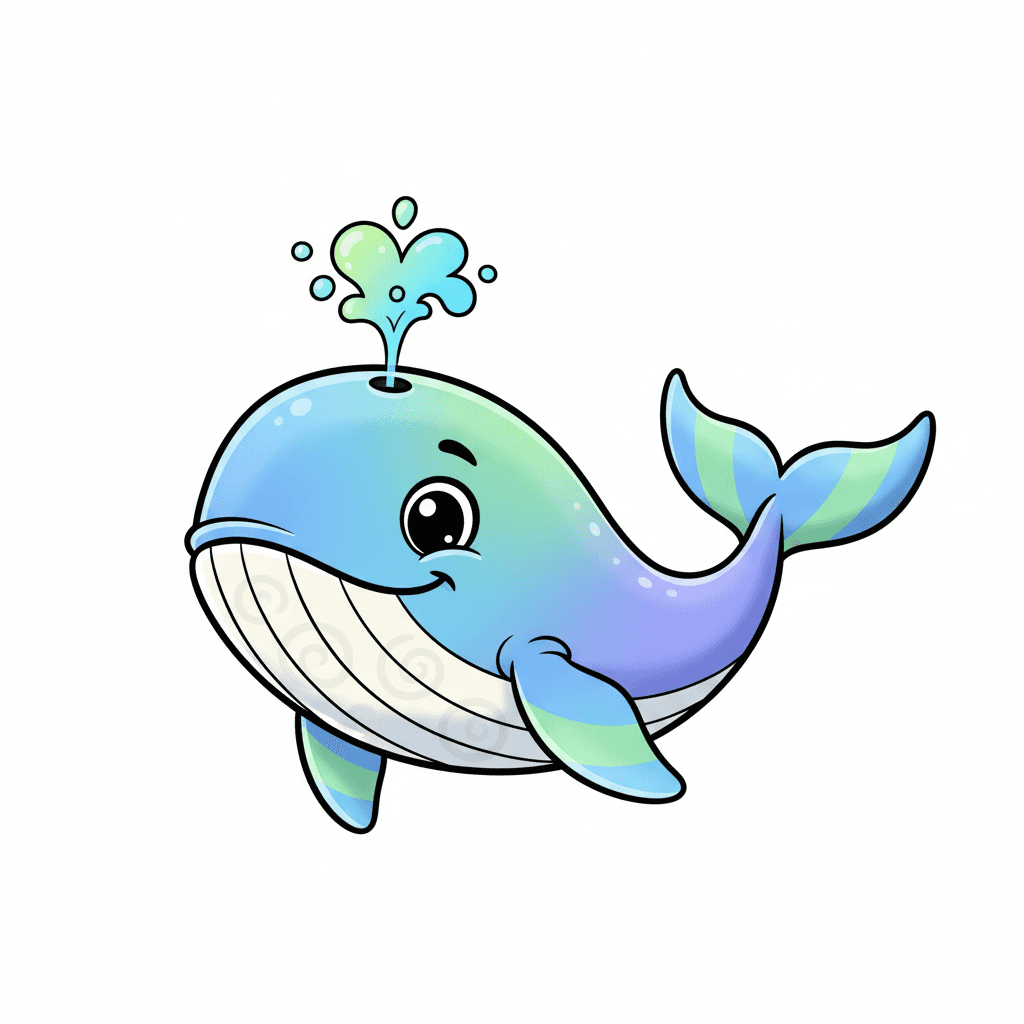

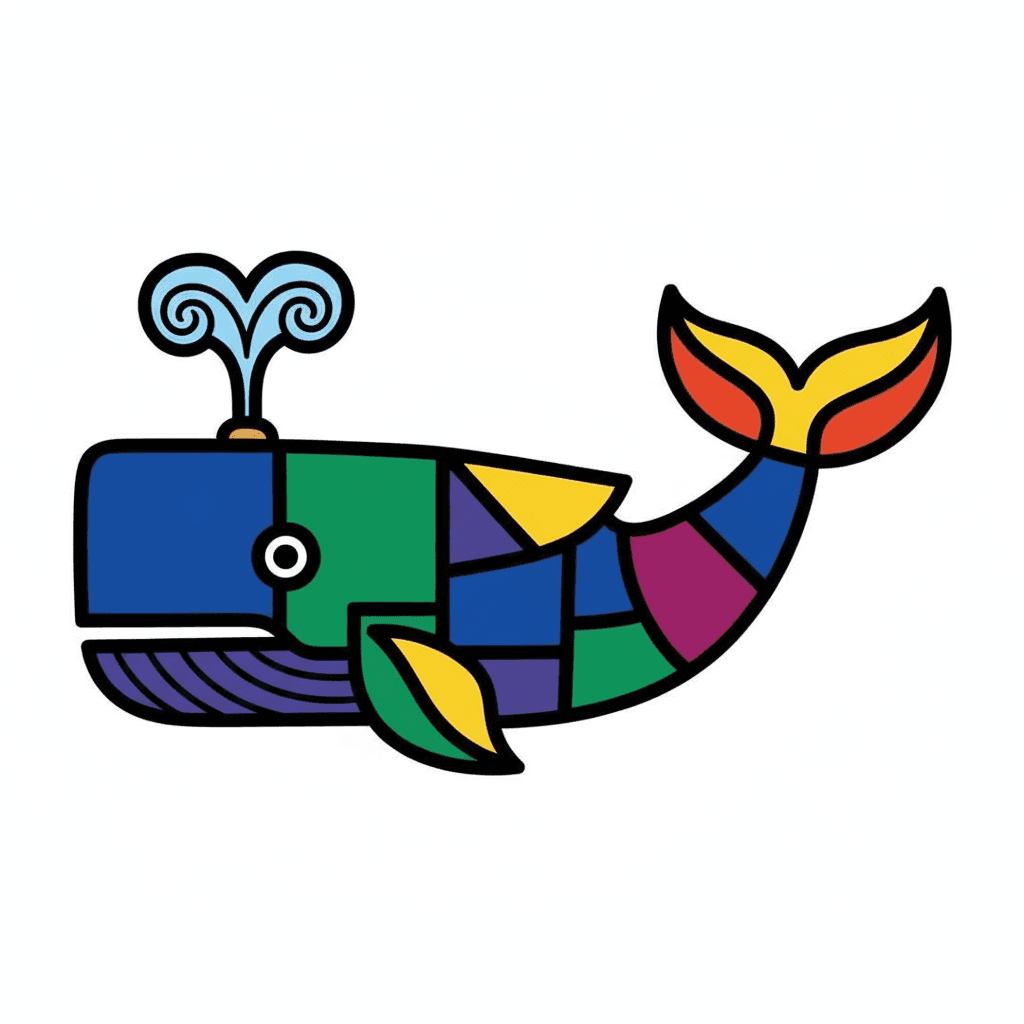
Instructions
How to Draw A Whale | Drawing Lesson for Kids | Step By Step
Step 1
Draw a large horizontal oval near the center of the page for the whale's body.
Step 2
Draw a smaller circle overlapping the front left of the oval to form the whale's head.
Step 3
Erase the overlapping inside line so the head and body blend into one smooth shape.
Step 4
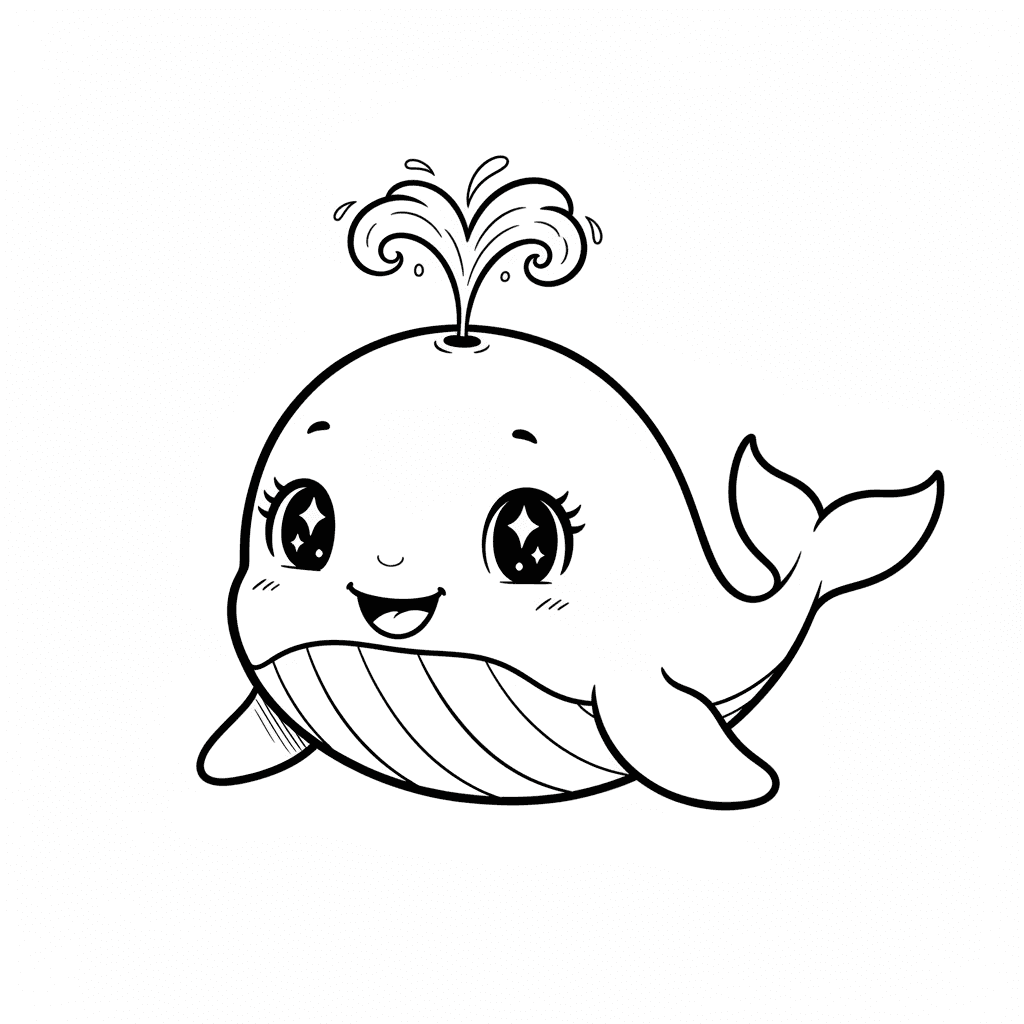
Draw a short curved line near the front to make a smiling mouth.
Step 5
Draw a small circle above the mouth for the eye.
Step 6
Draw a tiny curved line under the eye to make a friendly cheek.
Step 7
Draw a small oval on top of the head for the blowhole.
Step 8
Draw two small teardrop shapes above the blowhole to show water spouting.
Step 9
Draw a curved triangle on the lower middle of the body for the pectoral fin.
Step 10
Draw two rounded triangular flukes at the back of the body pointing outward to make the tail.
Step 11
Draw a gentle curved line along the bottom of the whale to mark the belly.
Step 12
Shade the top half of the whale with light pencil strokes to give it depth.
Step 13
Trace the main outlines with a darker pencil or marker to make them stand out.
Step 14
Color the whale using your coloring materials making the top darker and the belly lighter.
Step 15
Share your finished whale drawing on DIY.org.
Help!?
What can we use if we don't have a darker pencil, marker, or standard coloring materials?
Use a sharpened colored pencil or crayon to trace the main outlines instead of a marker, substitute watercolors, stickers, or torn colored paper for the coloring materials, and use a soft eraser to remove the overlapping inside line when blending the head and body.
My head and body don't blend smoothly after erasing — how do I fix that step?
If the overlapping inside line won't erase cleanly, gently rub it with a soft eraser, redraw the merged oval/circle with light pencil strokes to smooth the seam, then trace the main outlines with a darker pencil or marker.
How can I adapt the steps for younger or older children?
For younger kids, simplify to one big horizontal oval with a single eye, a smiling mouth, and bold traced outlines for easy coloring, while older kids can add detailed shading on the top half, refine the pectoral fin and tail flukes, and draw extra water spout teardrops and background waves.
How can we extend or personalize the whale drawing activity after coloring?
Extend the activity by adding a family of whales, drawing bubbles, ocean waves and a sky, using patterned collage or mixed media on the whale's body, or making a folded tail flap for a simple animation before sharing the finished whale on DIY.org.
Related videos
🐳 Easy Whale Drawing for Kids | Step-by-Step Fun
4 Videos
🐳 Easy Whale Drawing for Kids | Step-by-Step Fun
How to Draw a Whale fo Kids Easy and Cartoon
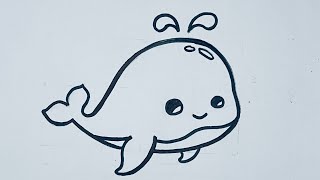
How to Draw a Super Cute Whale Step by Step 🐳 | Easy Drawing Tutorial for Kids
How to Draw a Cute Whale 🐋 | Easy & Fun Art Tutorial for Kids!
Fun Facts
🐋 Blue whales are the largest animals ever — adults can be as long as a school bus, which helps you think about scale when drawing!
✏️ Artists often begin with simple shapes (ovals, circles, triangles) to map out a whale’s proportions before adding details.
🐟 Unlike fish, whales have horizontal tail flukes, so draw the tail spreading left and right, not up and down.
🎨 A little shading along the belly and back can make your whale look rounded and three-dimensional in just a few strokes.
🌊 Humpback whales have very long pectoral fins (up to one-third of their body), a friendly detail you can exaggerate for charm.
How do I teach my child to draw a friendly whale step-by-step?
What materials do I need to draw a friendly whale with my child?
What ages is drawing a friendly whale suitable for?
What are the benefits of drawing a whale with my child?
