How to Draw a Stingray
Learn to draw a stingray step by step using simple shapes, add fins, tail, texture, and color to create a realistic or cartoon illustration.
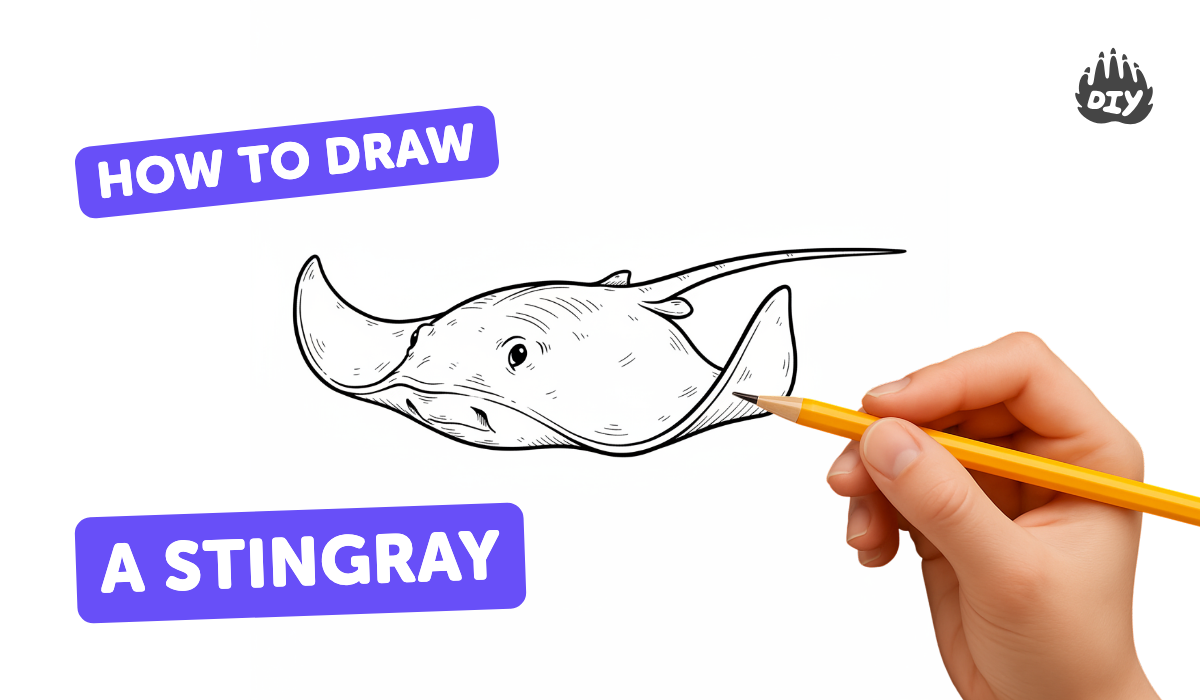
About this tutorial
Learn to draw a stingray step by step using simple shapes, add fins, tail, texture, and color to create a realistic or cartoon illustration.
What you need
Instructions
- 1
Step 1
Place your paper and pencil on a flat surface so you are ready to draw.
- 2
Step 2
Lightly sketch a wide rounded diamond shape for the stingray's flat body.
- 3
Step 3
Extend smooth curved lines from each side of the diamond to make the wing-like pectoral fins.
- 4
Step 4
Draw a small rounded bump at the front center of the body to show the stingray's head.
- 5
Step 5
Draw two small circles above the head for the eyes.
- 6
Step 6
Add tiny dots inside each eye to make the pupils.
- 7
Step 7
Draw a small curved line under the head to make a little mouth.
- 8
Step 8
Draw a long thin tail extending from the center of the back of the body.
- 9
Step 9
Add a small pointed stinger near the end of the tail.
- 10
Step 10
Draw light curved lines along each wing to show the wing folds and movement.
- 11
Step 11
Add a few round spots or a soft pattern on the top of the body for skin texture.
- 12
Step 12
Trace your favorite pencil lines with a black marker to make the drawing bold.
- 13
Step 13
Gently erase the remaining pencil marks after the marker ink dries.
- 14
Step 14
Color your stingray using crayons colored pencils or markers and add shading for depth.
- 15
Step 15
Share your finished stingray drawing on DIY.org.
Fun facts
How do I teach my child to draw a stingray step by step?
Start by drawing a wide, flat oval or rounded diamond for the body. Add two winglike pectoral fins by extending curved lines from the sides. Sketch a long, tapering tail and place small circles for eyes near the front. Refine outlines, erase construction lines, then add texture—dots, small lines, or a spotted pattern. Finish with bold outlines and color or shading for either a realistic or cartoon look.
What materials do I need to draw a stingray with my child?
You only need basic, child-friendly supplies: plain drawing paper, a pencil and eraser, a black marker or fineliner for outlines, and colored pencils, crayons, or washable markers for color. Optional items: watercolors and brushes, blending stumps for shading, and a reference photo. Choose non-toxic, washable materials for younger children and a protective surface to prevent stains.
What ages is drawing a stingray suitable for?
Drawing a stingray works well for ages about 4 and up with adult help. Preschoolers enjoy tracing simple shapes and coloring; ages 5–8 can follow step-by-step shapes to form fins and tails with supervision. Kids 9+ can practice realistic proportions, texture, and shading. Adjust complexity, pose, and materials to match your child’s motor skills and attention span.
What are the benefits of drawing a stingray and fun variations to try?
Drawing a stingray boosts fine motor skills, observation, creativity, and patience while introducing marine life awareness. It’s calming and great for storytelling. Variations include making a cartoon stingray with big eyes, a realistic study with shading, a watercolor wash background, a textured collage using torn paper, or a stencil-and-pattern activity for younger kids.
Watch & Learn
Need help?
What can we use if we don't have a black marker or crayons/colored pencils/markers?
If you don't have a black marker, trace your favorite pencil lines with a dark ballpoint pen or a sharpened 6B pencil, and for coloring use watercolors or torn colored-paper collage instead of crayons, colored pencils, or markers.
My fins look wobbly—how can I fix the wing-like pectoral fins so they look smooth like in step 2?
If the wing-like pectoral fins (step 2) look uneven, redraw them lightly with smooth, confident curved pencil strokes and erase stray marks before tracing with marker in step 11.
How can I change the steps to suit different ages?
For younger children, pre-draw the wide rounded diamond body (step 2) and let them add eyes, spots, and color from steps 4, 12, and 14, while older kids can add detailed wing-fold lines (step 10), layered shading, and realistic tail anatomy.
What are some fun ways to enhance or personalize the stingray drawing after following all the steps?
To enhance the drawing, add a reef background and other sea creatures, experiment with patterns beyond the 'round spots' in step 12, try mixed media for the coloring step, and write a short caption before sharing on DIY.org as in the final step.