How to Draw a Platypus
Draw a platypus step by step using simple shapes and pencils. Practice adding color and basic shading to learn proportions.
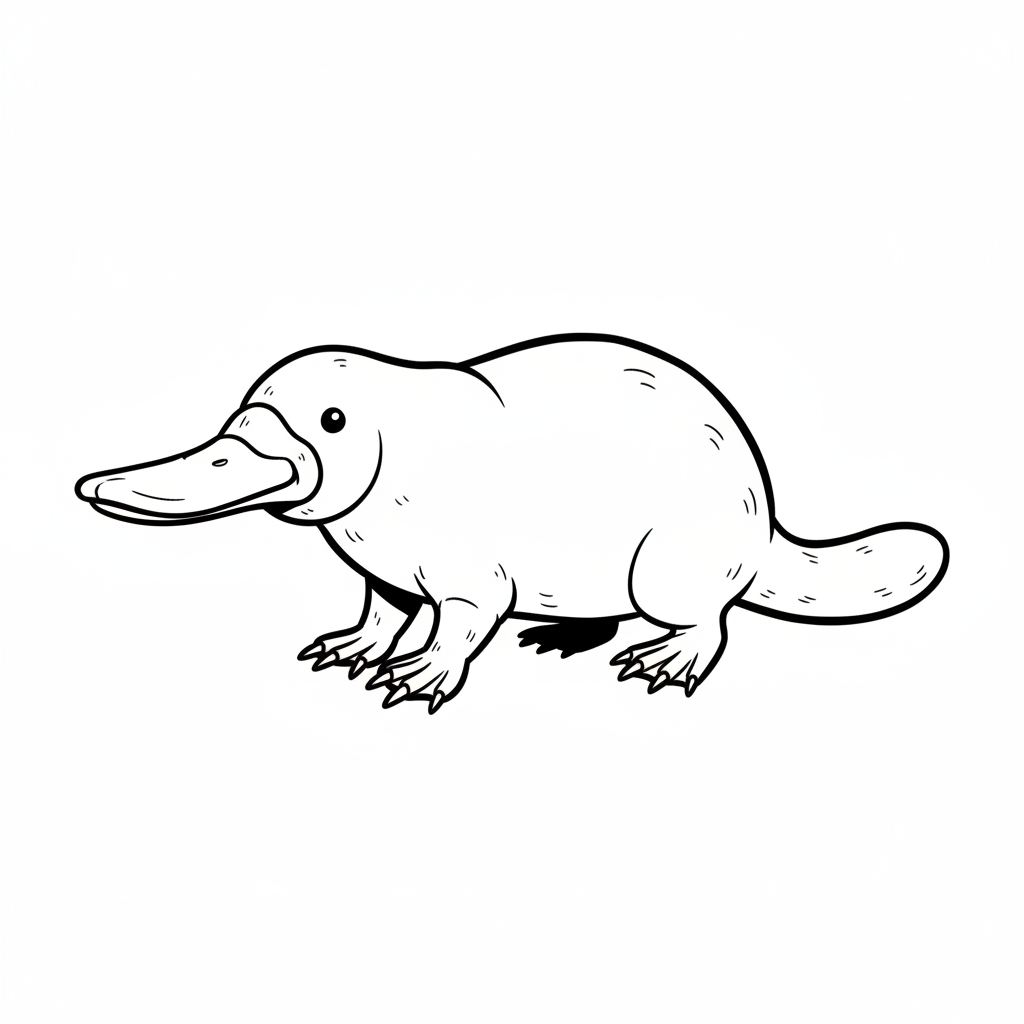
About this tutorial
Draw a platypus step by step using simple shapes and pencils. Practice adding color and basic shading to learn proportions.
What you need
Instructions
- 1
Step 1
Gather your materials.
- 2
Step 2
Lightly draw a large horizontal oval in the middle of the page for the platypus body.
- 3
Step 3
Draw a smaller oval touching one end of the body for the head.
- 4
Step 4
Sketch a long flat rounded shape attached to the front of the head for the bill.
- 5
Step 5
Add a wide paddle shaped tail at the back end of the body.
- 6
Step 6
Draw two small rounded legs under the body.
- 7
Step 7
Add three curved lines on each foot to make webbed toes.
- 8
Step 8
Draw a small circle on the head for the eye.
- 9
Step 9
Draw a tiny dot near the tip of the bill for the nostril.
- 10
Step 10
Smoothly connect the head body bill and tail with gentle curved lines to make one outline.
- 11
Step 11
Erase the extra overlapping shape lines so your platypus looks clean.
- 12
Step 12
Choose which side the light comes from and lightly shade the opposite side with soft pencil strokes.
- 13
Step 13
Color your platypus using your colouring materials and add darker color where you shaded.
- 14
Step 14
Share your finished platypus drawing on DIY.org.
Get inspired
Fun facts
How do I teach my child to draw a platypus step by step?
Start by sketching a large horizontal oval for the body and a smaller circle for the head, lightly with an HB pencil. Add a rounded rectangular bill, short neck, and a flat paddle-like tail. Draw simple webbed feet beneath the body and use guidelines for proportions. Refine outlines, erase guidelines, add eyes and fur lines, then finish with colored pencils and basic shading—pick a light source, darken the underside and tail, and blend gently.
What materials do I need to draw a platypus?
You’ll need plain drawing paper or a sketchbook, an HB pencil for light guidelines, a softer 2B pencil for shading and darker lines, a good eraser, and a sharpener. Colored pencils or crayons work well for color; an optional blending stump or cotton swab helps smooth pencil shading. A reference photo and a ruler for simple guidelines can make proportion practice easier.
What ages is this platypus drawing activity suitable for?
This activity suits children roughly 4–12 years old with adjustments. Ages 4–6 do simple shapes and tracing with adult help. Ages 6–8 can follow step-by-step shapes, add color, and try basic shading. Ages 9–12 refine proportions, practice blending, and add texture. Supervise younger kids with sharp tools and let older children experiment with pressure and shading techniques to build fine motor skills.
What are the benefits of drawing a platypus and fun variations?
Drawing a platypus develops observation, proportion understanding, fine motor control, and creativity. Practicing simple shapes and shading teaches how light affects form and builds confidence. Variations: turn the platypus into a cartoon character, place it in an Australian river habitat with plants and rocks, or try watercolor after the pencil sketch. For younger kids, use sticker shapes or tracing; older kids can experiment with cross-hatching and colored-pencil layering.
Watch & Learn
Need help?
What can I use if I don't have the exact drawing materials listed, like a soft pencil, eraser, or colored pencils?
Use an HB or 2B graphite pencil or a charcoal stick for the 'shade' step, a kneaded eraser or the clean corner of a tissue for blending/erasing, and crayons, markers, or watercolors to replace colored pencils for the 'Color your platypus' step.
My platypus looks messy when I try to connect the head, body, bill, and tail—how can I fix that?
Draw the initial ovals and shapes very lightly as instructed, then slowly redraw a single smooth outline connecting the head, body, bill and tail and carefully erase the extra overlapping shape lines so your platypus looks clean.
How can I adapt the instructions for different ages or skill levels?
For younger children simplify to one large oval for the body and a circle for the head with sticker eyes and pre-drawn webbed toes, while older kids can add fur texture, refine the three curved lines on each foot, and practice shading the side opposite the chosen light source.
What are some creative ways to enhance or personalize the platypus drawing after finishing the basic steps?
Extend the activity by adding a habitat background with water and rocks, experimenting with mixed media for the 'Color your platypus' step, creating multiple platypuses with different patterns, and photographing your finished platypus to share on DIY.org.