How to Draw a Pig Face
Draw a pig face using basic shapes: circle head, oval snout, rounded ears, dots for eyes. Practice adding shading and color.
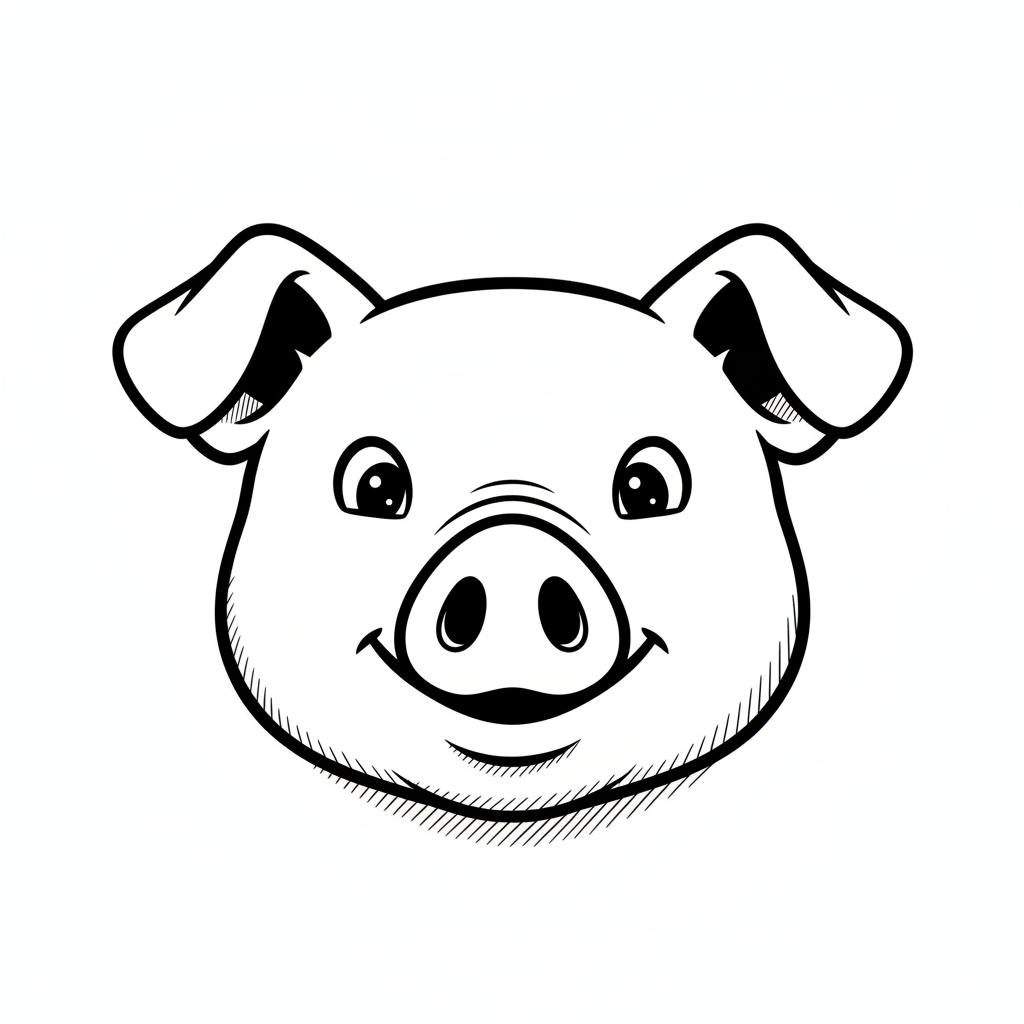
About this tutorial
Draw a pig face using basic shapes: circle head, oval snout, rounded ears, dots for eyes. Practice adding shading and color.
What you need
Instructions
- 1
Step 1
Place a sheet of paper on a flat surface so you have room to draw.
- 2
Step 2
Lightly draw a large circle near the center of the paper for the pig’s head.
- 3
Step 3
Draw a slightly flattened oval near the bottom center of the circle for the snout.
- 4
Step 4
Draw two small filled circles inside the oval to make the nostrils.
- 5
Step 5
Draw two rounded triangular ears on the top left and top right of the head.
- 6
Step 6
Draw two small dots or tiny circles above the snout for the eyes.
- 7
Step 7
Erase any extra overlapping lines so each shape looks neat and clear.
- 8
Step 8
Lightly shade just under the snout with your pencil to make a soft shadow.
- 9
Step 9
Lightly shade inside each ear with your pencil to add depth.
- 10
Step 10
Carefully trace the main head snout ears and eye outlines with the black marker to make the pig stand out.
- 11
Step 11
Color the pig’s head and ears pink using your coloring materials.
- 12
Step 12
Color the snout a slightly darker pink and color the nostrils and eyes a darker color.
- 13
Step 13
Add a tiny uncolored dot or small white highlight to each eye to make them look shiny.
- 14
Step 14
Take a photo of your finished pig face and share your creation on DIY.org.
Get inspired
Fun facts
How do you draw a pig face using basic shapes?
Start with a pencil sketch: draw a large circle for the head, then add a centered horizontal oval for the snout. Inside the snout, draw two small nostril circles. Add two rounded triangle ears on top and place two small dots for eyes. Sketch a simple curved line for a smile and optional cheek circles. Add light shading under the chin and around the snout, then color with pinks and darker tones. Outline with a fine marker to finish.
What materials do I need to draw a pig face?
You’ll need plain drawing paper or a sketchbook, a pencil (HB or 2B), an eraser, and a pencil sharpener. For color and finish: pink and dark-pink colored pencils or markers, a black fine-tip pen for outlines, and a white gel pen or crayon for highlights. Optional: blending stump or tissue for soft shading, watercolor paints for wash effects, and washable markers for younger kids. Keep materials non-toxic and age-appropriate.
What ages is drawing a pig face suitable for?
This pig-face drawing works for ages about 3–12 with adapted expectations. Toddlers (3–4) can trace or stamp simple circles and add dots with hand-over-hand help. Preschoolers (4–6) can sketch basic shapes with guidance. Early school-age kids (6–9) can follow steps independently and experiment with color; older kids (9–12+) can practice shading, proportions, and stylized or realistic versions. Supervise very young children and use washable supplies.
What are some variations and tips for drawing a pig face?
Try these fun variations: make a cartoon pig by exaggerating a big snout and tiny eyes; draw a profile pig head using an oval snout offset to one side; create a farm scene with a body and simple legs; use watercolor for soft blended pinks; collage with pink tissue paper for texture; or turn the pig into a character with hats, glasses, or speech bubbles. These changes build creativity and observation skills.
Watch & Learn
Need help?
What can I use instead of a black marker or pink coloring materials?
If you don't have a black marker, carefully trace the main head, snout, ears, and eye outlines (step 10) with a dark crayon or sharpened colored pencil, and use pink crayons, colored pencils, or washable markers instead of paint for coloring (steps 12–13).
My pig looks lopsided or the snout is too big — how can I fix it?
If the head or snout look lopsided, erase the extra overlapping lines (step 6), lightly redraw the large circle and slightly flattened oval (steps 2–3) until the proportions look right, and only trace with the black marker (step 10) when satisfied.
How can I adapt this drawing for toddlers or older kids?
For toddlers, pre-draw the large circle, snout oval, and ears for them to trace and color (steps 2–6, 12–13), while older kids can add realistic shading under the snout and inside ears (steps 8–9), extra facial details, and refine outlines with the marker (step 10).
How can we personalize or extend the pig-face activity?
To personalize and extend the activity, add accessories like a hat or bow before tracing (step 10), vary head and snout pinks when coloring (steps 12–13), draw a simple background, and take a photo to share on DIY.org (step 15).