How to Draw a Llama
Learn to draw a friendly llama step by step using simple shapes, pencil, eraser, and color to practice proportions and creativity.
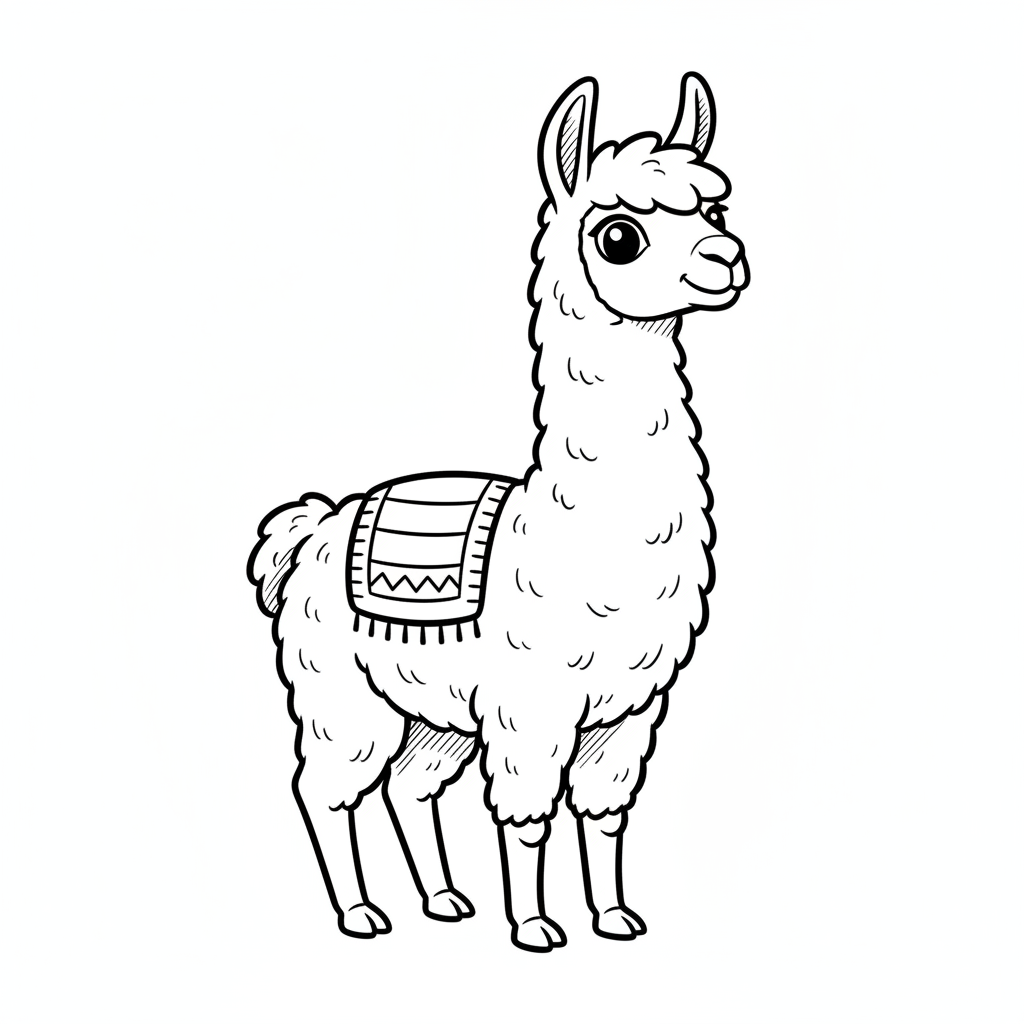
About this tutorial
Learn to draw a friendly llama step by step using simple shapes, pencil, eraser, and color to practice proportions and creativity.
What you need
Instructions
- 1
Step 1
Lightly draw a small oval near the top of the page for the llama's head.
- 2
Step 2
Lightly draw a larger oval below and slightly behind the head for the llama's body.
- 3
Step 3
Draw a short curved neck connecting the head and the body.
- 4
Step 4
Add two small triangle-shaped ears on top of the head.
- 5
Step 5
Draw simple facial features by adding two small circles for eyes a tiny rounded nose and a curved smile.
- 6
Step 6
Add short zigzag or fluffy lines along the neck and body edge to show the llama's fur.
- 7
Step 7
Draw four straight legs under the body ending with small rounded hooves.
- 8
Step 8
Add a short fluffy tail at the back of the body.
- 9
Step 9
Draw a decorative blanket or collar on the llama's back using simple shapes like rectangles triangles or stripes.
- 10
Step 10
Gently erase any extra sketch lines to clean up your drawing.
- 11
Step 11
Color your llama and its blanket using your colouring materials and add fun patterns or spots.
- 12
Step 12
Share your finished creation on DIY.org.
Get inspired
Fun facts
How do I draw a friendly llama step by step?
Start by sketching simple shapes: a rounded rectangle or oval for the body and a circle for the head. Add a short neck connecting them, then four tapered legs and small rounded hooves. Draw two pointy ears and a friendly face with big eyes and a smiling mouth. Add fluffy fur by sketching short curved lines, erase guidelines, ink or darken the final outline, and finish by coloring with pencils or markers.
What materials do I need to draw a llama with my child?
You'll need a pencil for sketching, a soft eraser for cleaning guidelines, a sharpener, and plain drawing paper. For finishing: colored pencils, crayons, or washable markers. Optional: fine black marker to outline, blending stump for smooth shading, ruler for straight guides, and a printed reference photo of a llama. Keep non-toxic, washable materials for young children and a safe workspace with good light.
What ages is drawing a simple llama suitable for?
This activity suits ages 4–12 with simple adjustments. Preschoolers (4–6) enjoy big shapes and coloring with close supervision; use thicker pencils and washable markers. Ages 7–9 can follow step-by-step proportions and add simple textures. Ages 10–12 can refine proportions, shading, and patterns for more detail. Always supervise very young children and adapt instructions to each child's fine motor skill and attention span.
What are the benefits of teaching my child to draw a llama and how do I keep it safe?
Drawing a friendly llama builds fine motor skills, hand–eye coordination, and understanding of proportions. It encourages creativity, patience, and step-by-step problem solving. For safety use non-toxic, washable art supplies and supervise small children with sharp tools. Variations: make a baby llama, add patterned blankets or flowers, try watercolor washes after ink outlines, or create a cartoon version to simplify shapes for beginners.
Watch & Learn
Need help?
What can we use if we don't have an eraser, colored pencils, or special drawing paper mentioned in the instructions?
Use printer or notebook paper instead of art paper, color your llama and its blanket with crayons, felt-tip markers, or watercolors if you don't have colored pencils, and if you lack an eraser draw very lightly so you can redraw on a fresh sheet or use a kneaded or white vinyl eraser to gently remove extra sketch lines.
My llama's neck and legs look wrong — how do I fix proportions during the drawing steps?
Because the instructions tell you to lightly draw a small head oval and a larger body oval with a short curved neck and four straight legs, fix proportions by gently erasing and shortening or lengthening the curved neck or straight legs before you erase extra sketch lines for a cleaner result.
How can I adapt the llama drawing for younger or older kids using the steps given?
For younger children simplify the steps by using one big oval for the body, stick legs, and big circles for eyes while letting them color with crayons, and for older kids encourage adding fluffy zigzag fur details, decorative blanket patterns, and shading from the instructions to increase complexity.
How can we extend or personalize the activity after finishing the basic llama drawing and coloring?
Extend the activity by adding a patterned background, using fabric scraps or stickers to decorate the blanket, drawing a herd of llamas with different patterns and colors, and then share your finished creation on DIY.org as the instructions suggest.