How to Draw a Horse
Learn to draw a horse step-by-step using simple shapes, pencils and erasers; practice proportions, shading, and adding mane and tail details.
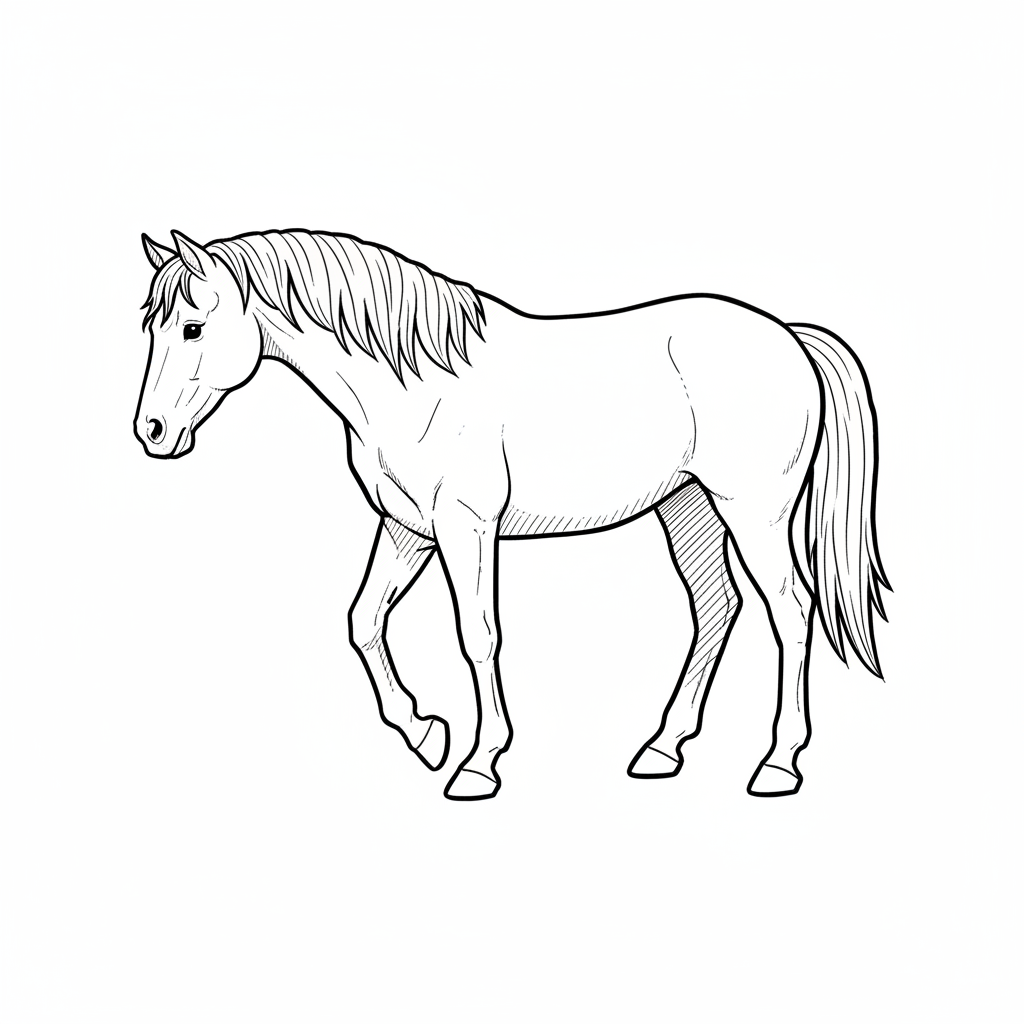
About this tutorial
Learn to draw a horse step-by-step using simple shapes, pencils and erasers; practice proportions, shading, and adding mane and tail details.
What you need
Instructions
- 1
Step 1
Gather your paper pencil eraser and sharpener and put them on a flat surface.
- 2
Step 2
Lightly draw a large oval for the horse’s body and a smaller circle in front of it for the head.
- 3
Step 3
Draw two curved lines between the head and body to make the neck shape.
- 4
Step 4
Add four straight guide lines down from the body where the legs will go and put small circles for the knee and fetlock joints.
- 5
Step 5
Sketch a small oval at the front of the head for the muzzle and a small triangle on top for one ear.
- 6
Step 6
Turn each leg guide into a leg by drawing two parallel lines around the guide and add small rectangles at the bottom for hooves.
- 7
Step 7
Smooth the body outline by drawing curved lines to connect the head neck and body and make the horse’s shape natural.
- 8
Step 8
Erase the extra guide circles and lines so only the clean horse outline remains.
- 9
Step 9
Draw the mane as a row of flowing curved lines along the top of the neck and draw a long tufted tail from the back of the body.
- 10
Step 10
Add an eye a nostril and a short mouth line on the head for facial details.
- 11
Step 11
Shade lightly under the belly behind the legs and under the neck using short pencil strokes then blend gently with your finger or a stump.
- 12
Step 12
Sign your name in the corner and share your finished horse drawing on DIY.org
Get inspired
Fun facts
How do you draw a horse step-by-step for kids?
Start lightly with simple shapes: draw an oval for the body, a smaller circle for the chest, and a circle for the head. Add a slender neck connecting head to body, and mark joints with small circles where legs will go. Sketch legs as elongated cylinders and block in hooves. Shape the muzzle, ears, eyes, and add flowing mane and tail with quick strokes. Erase construction lines, refine contours, then add gentle shading to show muscles and form. Practice proportions and use a photo reference.
What materials do I need to teach my child to draw a horse?
You’ll need plain drawing paper, a set of pencils (HB for sketching, 2B–4B for darker lines and shading), a soft eraser, and a pencil sharpener. Optional helpful tools: a blending stump or cotton swab for smooth shading, a ruler for initial guidelines, and reference photos of horses. For younger kids, include washable colored pencils or markers to make the activity more fun and less precise while learning shapes.
What ages is learning to draw a horse suitable for?
Drawing a horse can be adapted for many ages. Preschoolers (3–5) can practice with very simple shapes and bold lines. Elementary children (6–9) can focus on connecting shapes into recognizable bodies and basic shading. Older kids (10+) can work on proportions, muscle detail, and realistic shading. Provide guidance and simplify steps for younger kids, and offer reference images and challenges for older children to keep progress age-appropriate.
What are the benefits of practicing horse drawing for children?
Drawing horses improves fine motor skills, hand–eye coordination, and observational abilities as kids study shapes and proportions. It builds patience, concentration, and confidence as they see progress from simple sketches to detailed drawings. The activity also encourages creativity — experimenting with poses, colors, and styles — and supports learning about animals and anatomy. Variations like cartoon horses, realistic studies, or digital drawing keep practice engaging and suitable for differ
Watch & Learn
Need help?
Can I substitute any of the listed materials if I don't have them?
Use a mechanical pencil instead of a sharpener, a kneaded or rubber eraser if you don't have a standard eraser, and plain printer paper or a sketchbook sheet placed on a flat surface instead of special paper.
What should I do if my horse's legs or neck look wrong as I draw?
If the neck or legs look off, lighten and erase the large oval, small circle, and the two curved neck lines or the four straight leg guide lines, then redraw the neck and straighten the guide lines before adding the parallel leg lines and rectangles for hooves.
How can I change the steps to suit different ages or skill levels?
For preschoolers simplify to one big oval and one circle and let them add a mane and tail, for school-age kids keep the knee and fetlock guide circles and hooves, and for older kids add the shading under the belly and refined facial details like the nostril and eye.
How can we extend or personalize the finished horse drawing?
Add a saddle, patterned coat markings, a fence or field background, color the mane and tufted tail, then sign your name in the corner and share the finished horse on DIY.org.