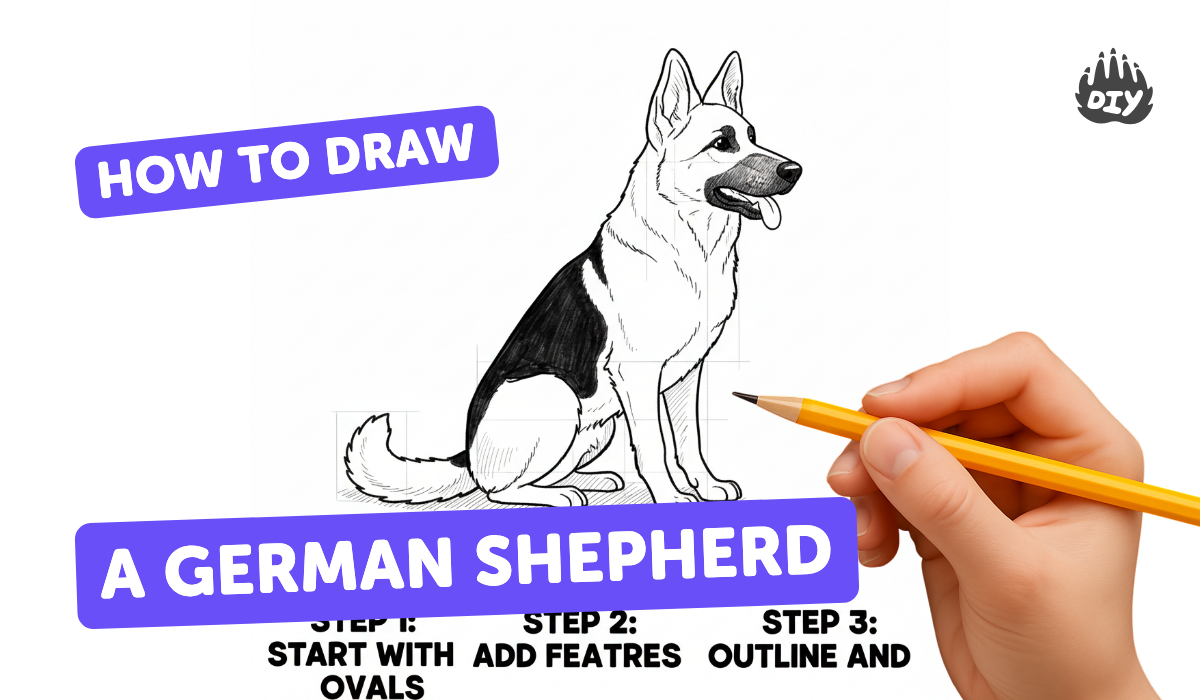
How to draw a german shepherd - a free german shepherd drawing guide
Draw a realistic German Shepherd step-by-step using simple shapes, pencils, and markers, practicing observation, proportion, and shading to capture fur and expression.


Drawing Apps
Photos of German Shepherd drawing examples
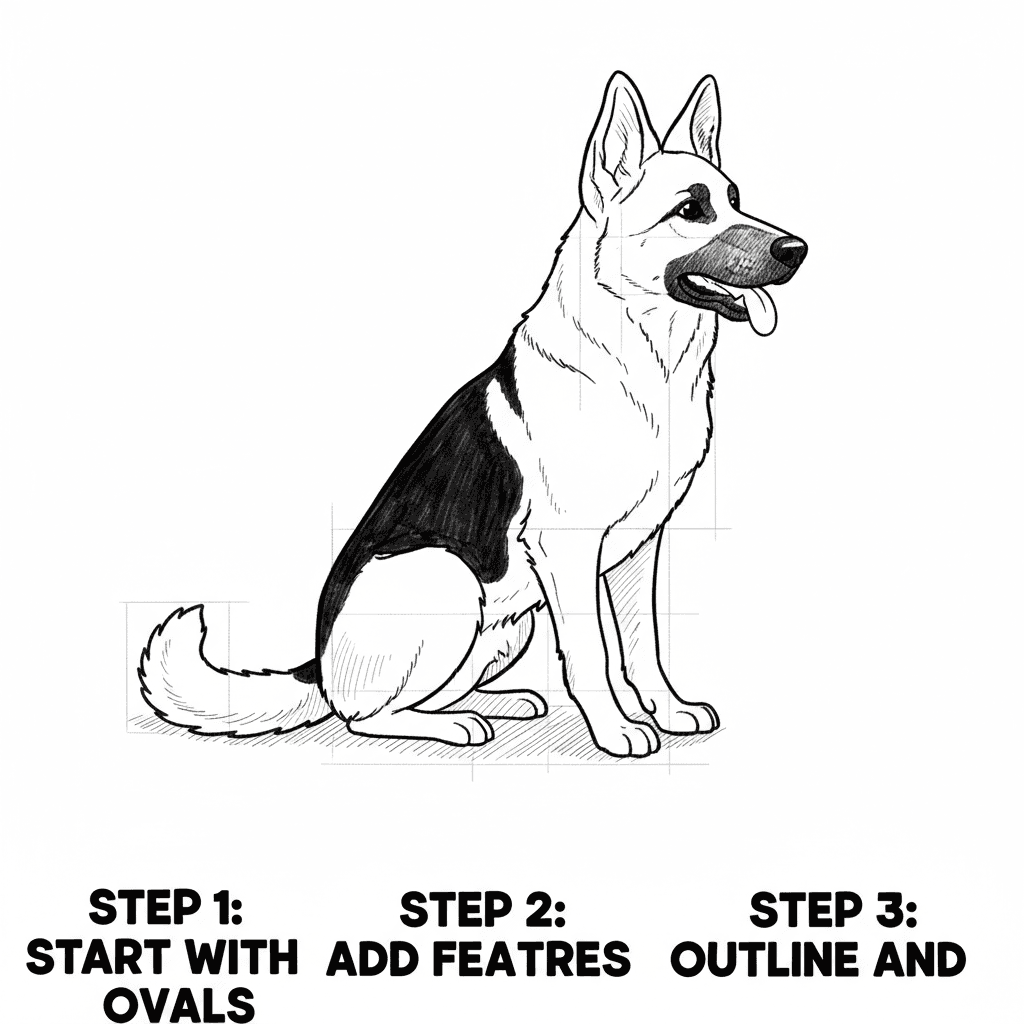
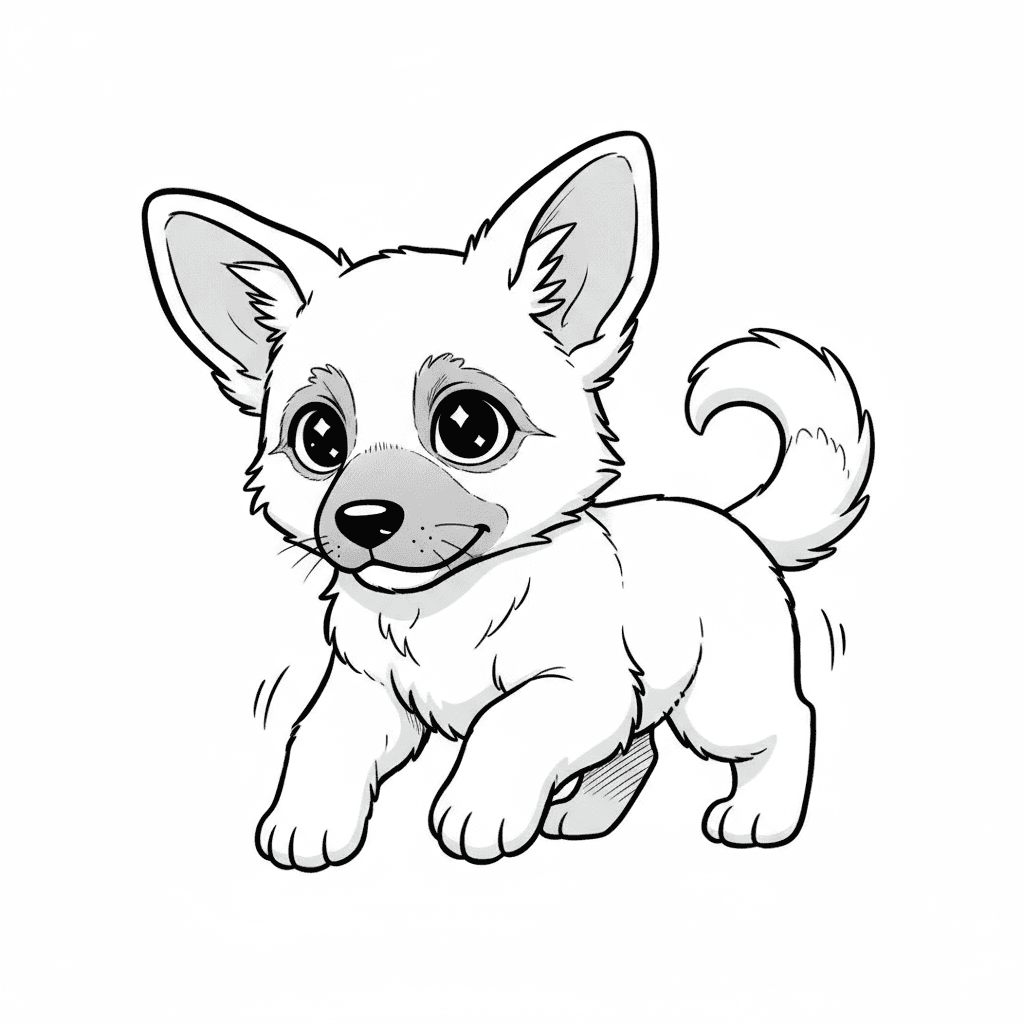
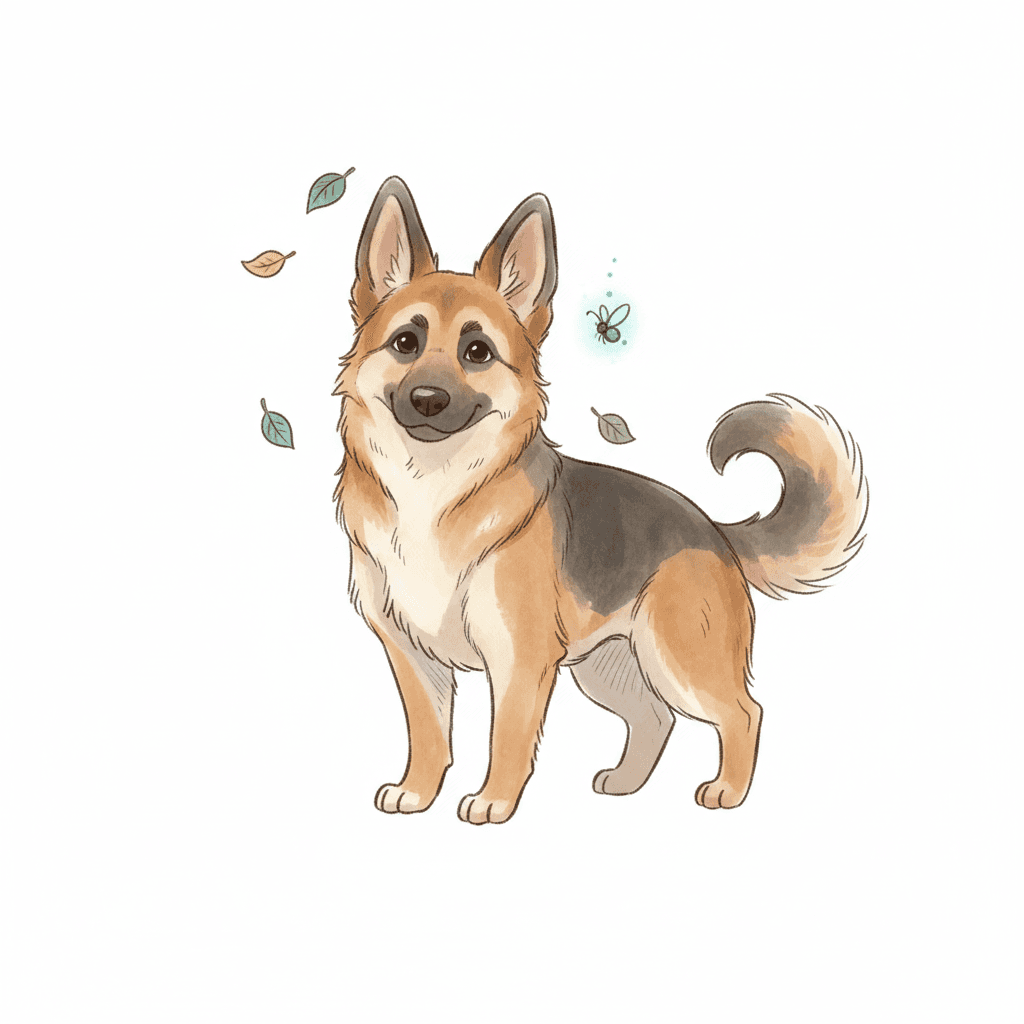
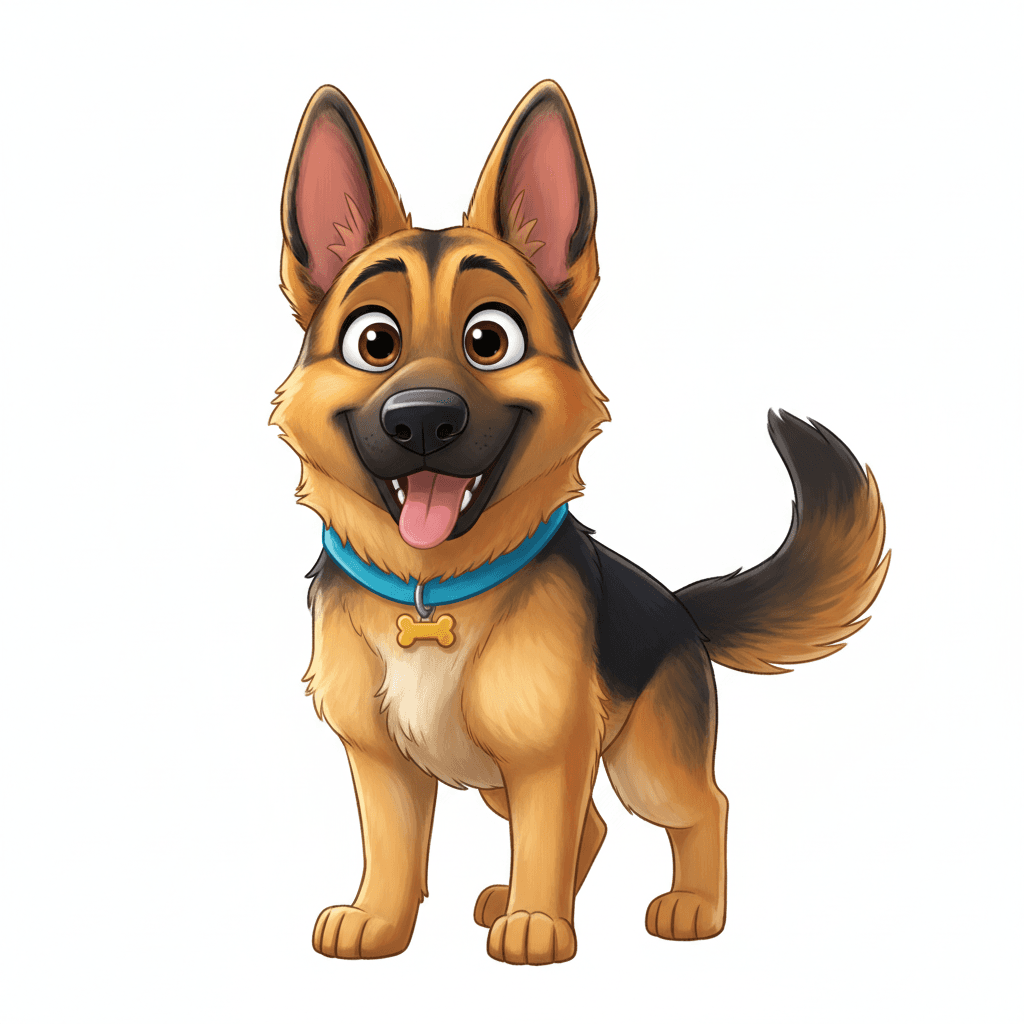

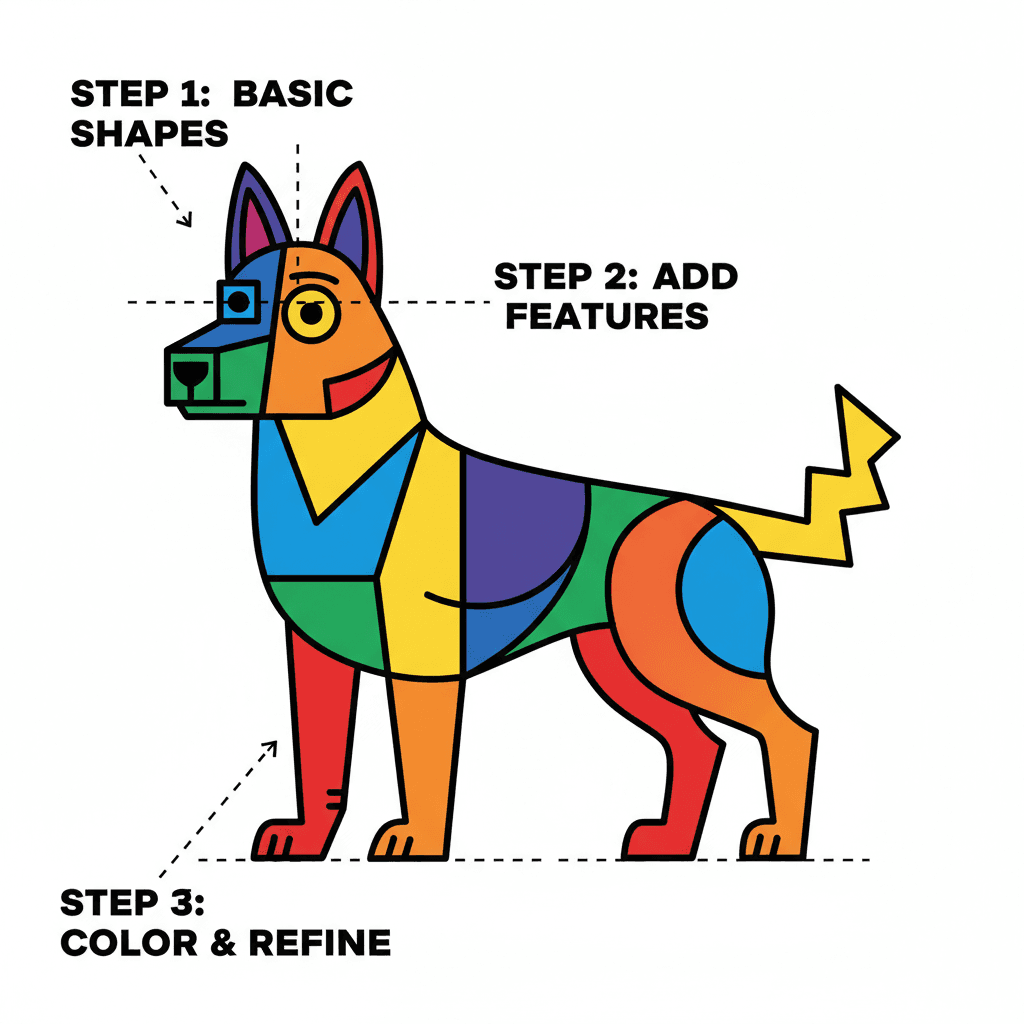
Step-by-step guide to draw a German Shepherd
How To Draw a DOG | GERMAN SHEPHERD | Step By Step Sketch Tutorial
Step 1
Gather your materials and place the reference photo where you can see it clearly.
Step 2
Lightly sketch the dog’s basic shapes by drawing a circle for the head and a larger oval for the body.
Step 3
Draw a vertical centerline and a horizontal eye line across the head to guide the face placement.
Step 4
Sketch the muzzle as a rounded rectangle or tapered shape in front of the head circle.
Step 5
Draw two large pointed triangle shapes on top of the head for the German Shepherd’s ears.
Step 6
Draw two curved lines to connect the head and body to form the neck and chest.
Step 7
Block in the legs using long narrow rectangles or cylinders and add small ovals at the ends for paws.
Step 8
Draw a long curved tail behind the body to match the dog’s pose in your photo.
Step 9
Refine the outer lines by smoothing the basic shapes into the dog’s real body contours.
Step 10
Erase extra construction lines gently so only the refined outline and main guides remain.
Step 11
Draw the eyes on the eye line and add the nose and mouth using small shapes from the reference.
Step 12
Add short fur strokes following the direction of the coat and shade with your pencil to build volume and show dark and light areas.
Step 13
Trace your final important outlines and fur-texture lines with a marker if you want a bolder look.
Step 14
Colour the coat areas with your colouring materials to match the reference, layering darker tones for depth.
Step 15
Take a photo of your finished German Shepherd and share your creation on DIY.org
Help!?
What can I use if I don't have a marker, colored pencils, or a printed reference photo?
If you lack a marker or colored pencils, use a darker HB/2B pencil or crayons for tracing and coloring, and display the reference photo on a phone or tablet as in step 1.
My German Shepherd looks out of proportion—how do I fix that?
Re-check and resize the head circle and larger body oval, then use the vertical centerline and horizontal eye line from steps 2–3 to reposition the muzzle, ears, and eyes before refining the contours in step 9.
How can I adapt this drawing activity for different ages?
For younger kids, simplify step 2 by tracing or using large shape stickers and skip shading, while older kids can add the short fur strokes and layered pencil shading from steps 12–13 and finish with marker in step 14 for more detail.
How can we extend or personalize the finished drawing?
Personalize by changing coat colors in step 15, adding a collar or background, trying different tail poses by altering the long curved tail in step 7, and then photograph and share the result as in step 16.
Watch videos on how to draw a German Shepherd
How To Draw A German Shepherd
4 Videos
How To Draw A German Shepherd
How to Draw a Cute German Shepherd Puppy for Kids & Beginners #lidoartworks 2
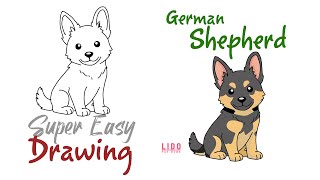
How to Draw a Cute German Shepherd Puppy for Kids & Beginners #lidoartworks
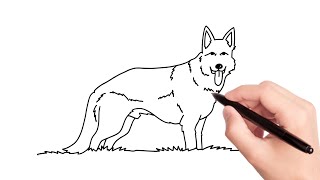
How to Draw a GERMAN SHEPHERD DOG Easy and Simple
Facts about animal drawing for kids
🐶 German Shepherds were developed in Germany in the late 1800s and are one of the most popular dog breeds worldwide.
🎨 German Shepherd coats come in colors like black-and-tan, sable, solid black, and bi-color—so pick your reference before coloring.
📏 Artists often use a pencil held at arm's length to measure and compare proportions between the head, body, and legs.
✏️ Graphite grades matter: H pencils make light construction lines, B pencils give darker tones perfect for deep fur shading.
🧭 To draw realistic fur, use short strokes that follow hair growth and layer light-to-dark values to build volume and texture.
How do I draw a realistic German Shepherd step-by-step?
What materials do I need to draw a realistic German Shepherd?
What ages is this realistic German Shepherd drawing activity suitable for?
What are the benefits of having my child draw a realistic German Shepherd?
