How to draw a football player - a free football player drawing guide
Learn to draw a football player step-by-step using simple shapes, add details like uniform and ball, and practice shading and posing.


Drawing Apps
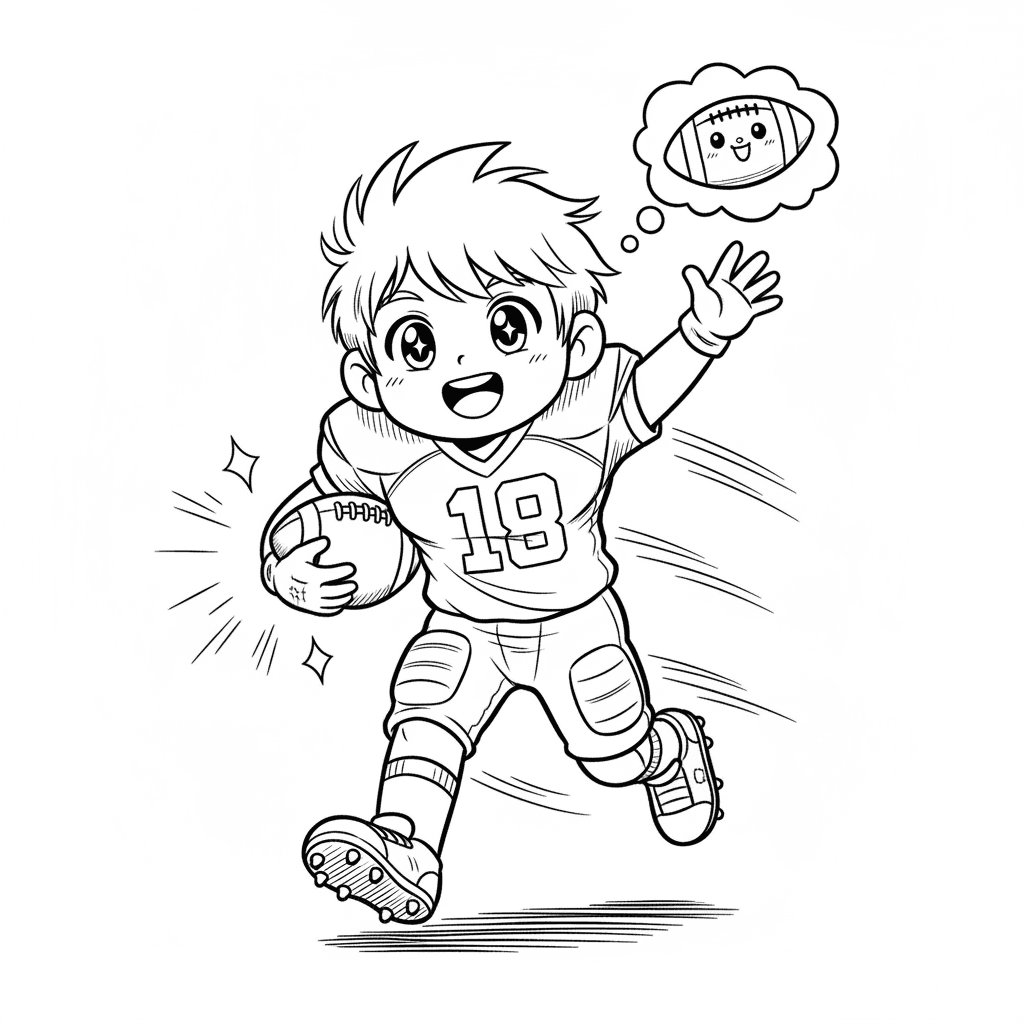
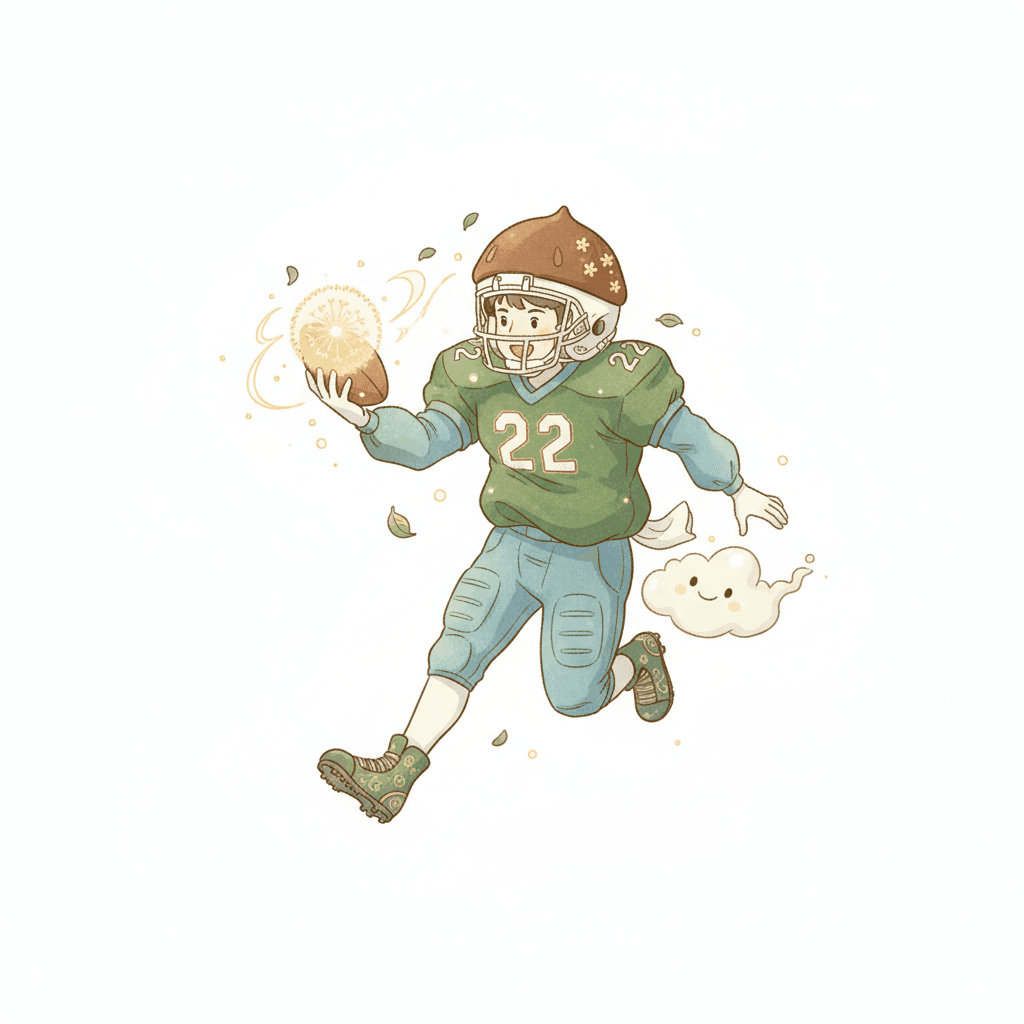
Photos of football player drawing examples
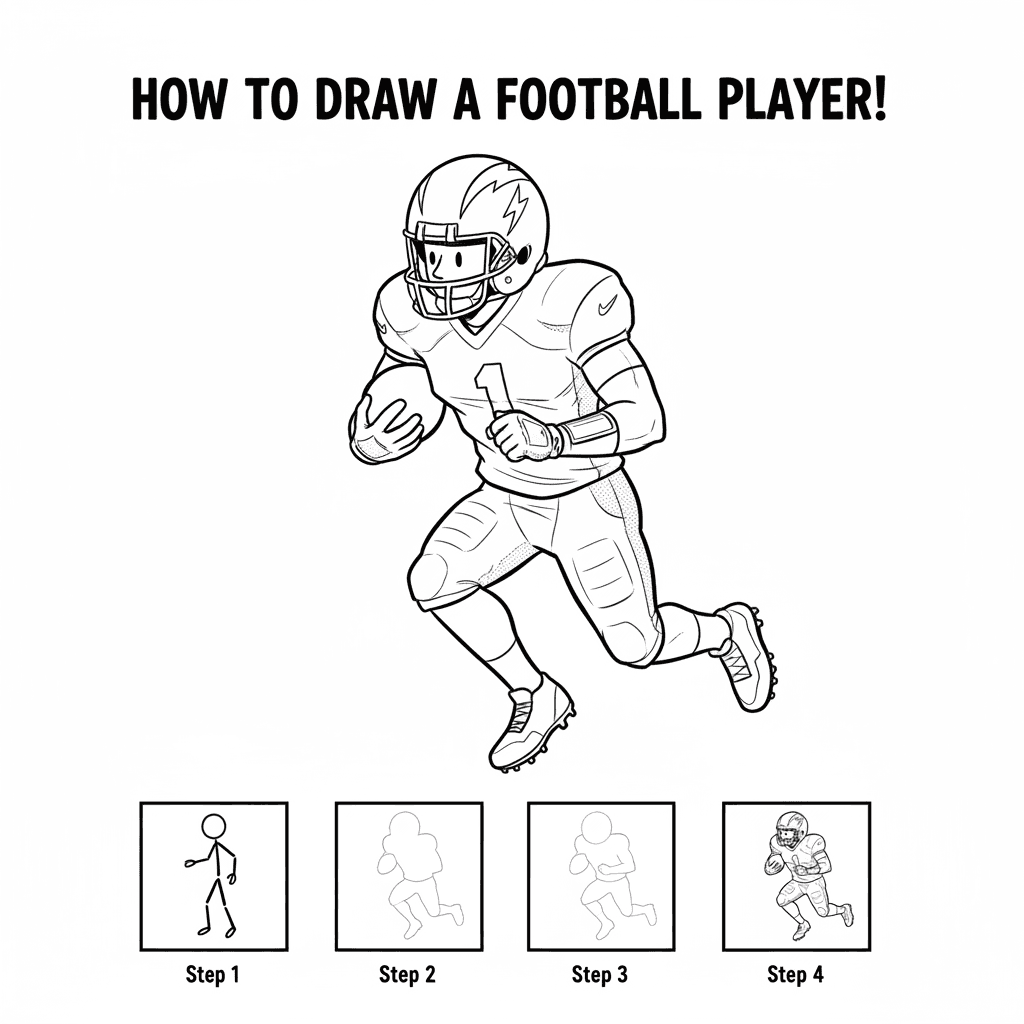
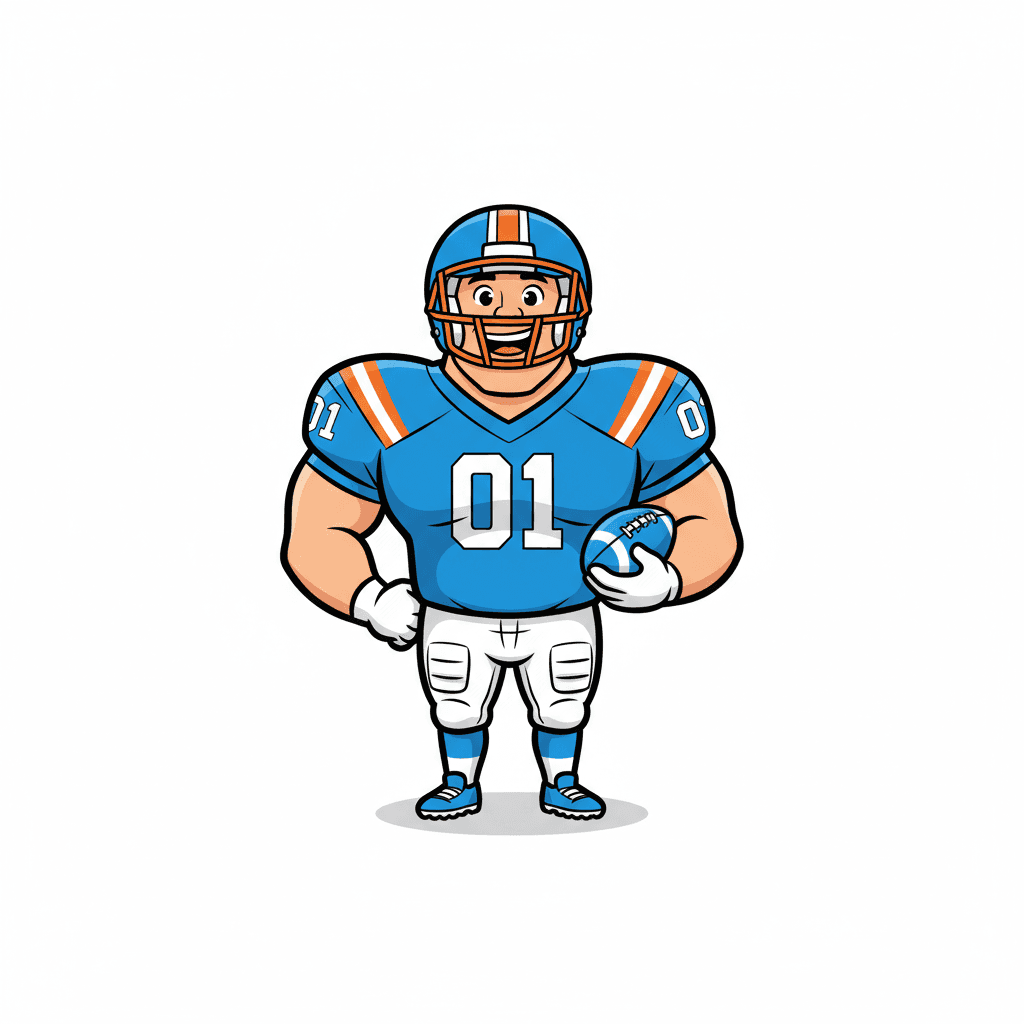

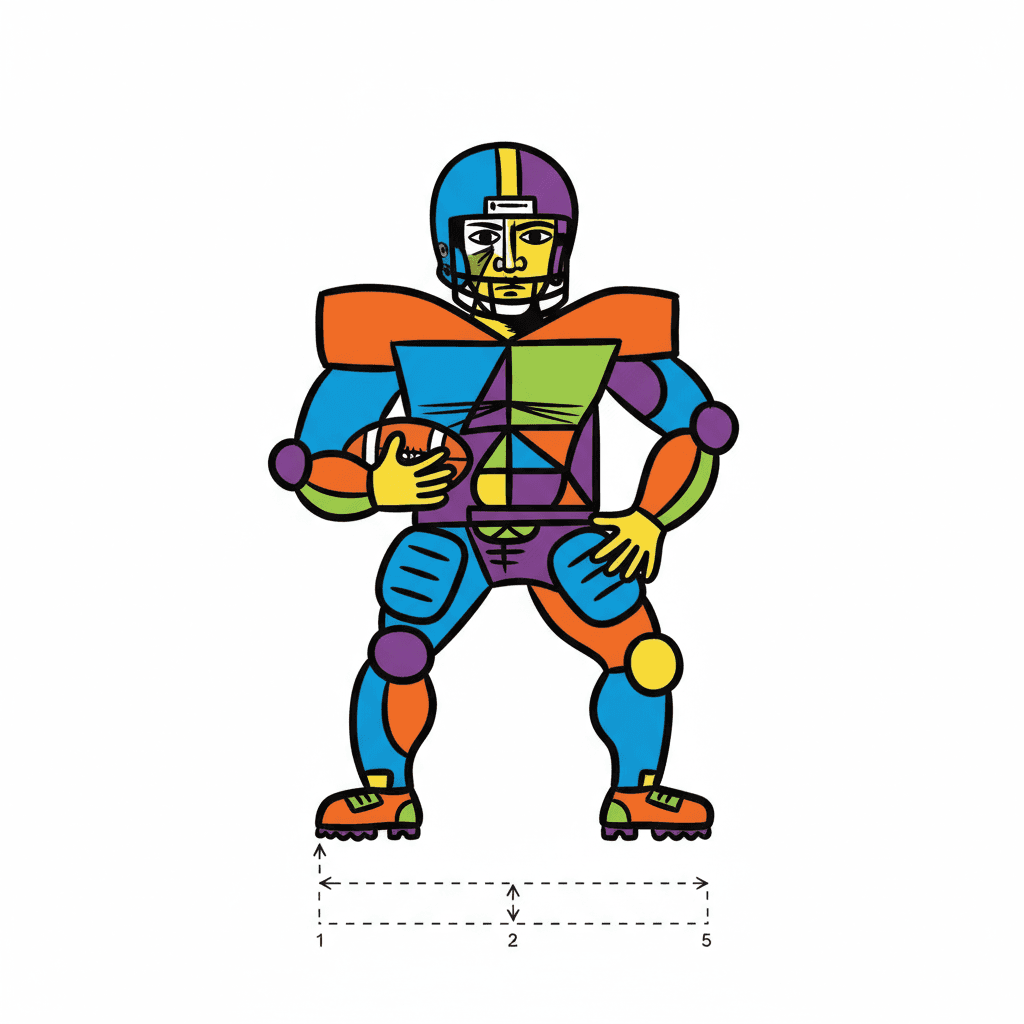
Step-by-step guide to draw a football player
How to Draw a FOOTBALL PLAYER | Easy Step-by-Step for Kids
Step 1
Gather your materials and find a flat place to draw where you can sit comfortably.
Step 2
Draw a light circle near the top of your paper for the player's head.
Step 3
Draw a single light vertical line down from the head to show the player's center and balance.
Step 4
Draw a large oval around the top of the vertical line for the chest area.
Step 5
Draw a smaller oval below the chest oval for the hips.
Step 6
Sketch simple stick arms and stick legs from the chest and hips to set the player's pose.
Step 7
Add small circles for hands and ovals for feet at the ends of the stick limbs.
Step 8
Draw tube shapes around the stick arms and legs to turn them into real arms and legs.
Step 9
Draw the jersey and shorts shape over the chest and hips to make the uniform.
Step 10
Draw the football near a foot or in a hand depending on the pose you chose.
Step 11
Erase the light guidelines and stick lines so the player shape looks clean.
Step 12
Add light shading on one side of the body and the ball and gently blend with a tissue to show light and shadow.
Step 13
Trace your final lines with a black marker or pen to make the drawing bold.
Step 14
Color the uniform the ball and any small details with your coloring materials.
Step 15
Share your finished football player creation on DIY.org
Help!?
I don't have a black marker or a tissue—what can I use instead?
Use a dark-colored pen or fine-tip crayon to trace your final lines instead of a black marker, and blend the light pencil shading with a cotton ball, Q-tip, or your clean fingertip in place of a tissue.
My drawing looks lopsided or the limbs are the wrong length—how do I fix the proportions?
Go back to the light vertical center line, realign the head circle with the chest and hips ovals, compare arm and leg stick lengths to the head circle as a unit of measure, then erase and redraw the offending stick lines before adding tubes.
How can I change this activity for different ages?
For younger kids, pre-draw the light head, chest and hips shapes and let them add stick limbs and color with crayons, while older kids can skip some guides, refine tube shapes into muscles, practice the light shading and blending step, and trace with a black marker for a finished look.
What are easy ways to personalize or extend the football player drawing?
Add a team number and logo on the jersey, sketch a stadium background or motion lines around the football, glue on textured fabric for the uniform, and then trace and color before sharing your finished football player on DIY.org.
Watch videos on how to draw a football player
How To Draw A Football Player
4 Videos
How To Draw A Football Player
How To Draw A Football Player - Super Simple
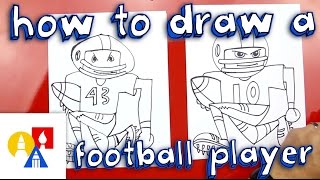
How To Draw A Football Player
How To Draw A Soccer Player
Facts about figure drawing for kids
✏️ Artists often do gesture drawings in 30 seconds to 2 minutes to quickly capture movement and energy.
⚽ A professional soccer (association football) player typically runs about 7–12 km in a 90-minute match—great inspiration for active poses.
🏈 Some American football linemen weigh over 350 lb (160 kg), so studying different body types helps make players look realistic and varied.
🎨 Using just three tonal values—light, midtone, and dark—can make a flat sketch look convincingly three-dimensional.
🤸 A single curved 'line of action' can instantly turn a stiff figure into a dynamic, lively pose.
How do you draw a football player step-by-step?
What materials do I need to draw a football player?
What ages is this drawing activity suitable for?
What are the benefits, safety tips, and variations for drawing football players?
