How to Draw a Duck
Learn step by step how to draw a simple duck using pencil, eraser, and colors; practice shapes, proportions, and adding fun details.
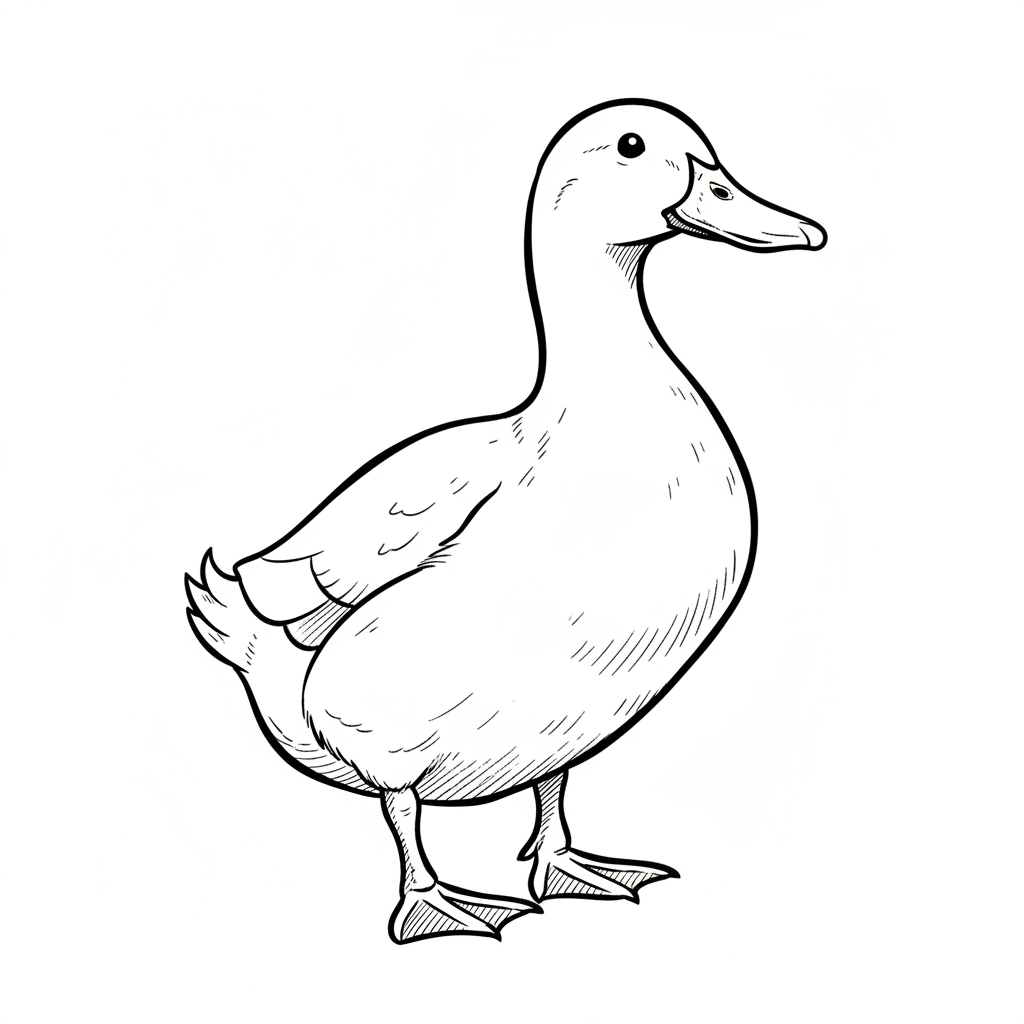
About this tutorial
Learn step by step how to draw a simple duck using pencil, eraser, and colors; practice shapes, proportions, and adding fun details.
What you need
Instructions
- 1
Step 1
Draw a circle near the top of your paper for the duck's head.
- 2
Step 2
Draw a larger oval below the circle that overlaps the bottom of the circle for the duck's body.
- 3
Step 3
Draw a short curved line between the circle and the oval to make the neck.
- 4
Step 4
Draw a small rounded triangle on the side of the head for the beak.
- 5
Step 5
Draw a small circle near the top of the head for the eye.
- 6
Step 6
Draw a tiny dot inside the eye to make it sparkle.
- 7
Step 7
Draw a curved line on the side of the oval to show the wing.
- 8
Step 8
Draw two short lines down from the bottom of the body for the legs.
- 9
Step 9
Draw webbed feet at the end of each leg by making three connected rounded toes.
- 10
Step 10
Add a few short curved lines at the back of the oval for tail feathers.
- 11
Step 11
Erase any extra overlapping lines and sketch marks to clean up your duck outline.
- 12
Step 12
Color your duck yellow and color its beak and feet orange and add any extra colors or patterns you like.
- 13
Step 13
Share your finished duck on DIY.org.
Get inspired
Fun facts
How do I teach my child to draw a simple duck step by step?
Start with light pencil guidelines: draw a circle for the head and a larger oval for the body, slightly overlapping. Connect them with a curved neck line. Add a small triangle or oval for the beak, a round eye, and a curved line for the wing. Sketch two short legs with webbed feet and a few tail feathers. Erase extra lines, darken the final outline, then color and add patterns or background. Encourage practicing shapes and adjusting proportions.
What materials do I need to draw a duck with kids?
You'll need a pencil and eraser, plain drawing paper, and coloring tools like colored pencils, crayons, or washable markers. A sharpener, smudge-free surface, and a blunt-tipped safety scissor (optional) help. Choose non-toxic, age-appropriate supplies and washable colors for easy cleanup. For older kids add blending stumps or markers; for younger ones use thicker crayons and pre-drawn guidelines to simplify the activity.
What ages is drawing a simple duck suitable for?
Drawing a simple duck works well for many ages. Preschoolers (3–5) enjoy tracing and coloring basic shapes with close adult help. Early elementary children (5–8) can follow step-by-step instructions, correct proportions, and add simple details. Older kids (9+) can try shading, patterns, and stylized or realistic versions. Adjust complexity, provide guidance for fine motor skills, and supervise very young artists.
What are the benefits of teaching my child how to draw a duck?
Drawing ducks builds fine motor control, hand–eye coordination, shape recognition, and proportion awareness. It boosts creativity, confidence, and focus while offering a calm, screen-free activity for emotional expression. Variations include cartoon ducks, realistic waterfowl, seasonal themes, or making a storybook page. For safety, use non-toxic, washable materials and supervise small children with small parts. Praise effort over perfection to keep the activity fun and educational.
Watch & Learn
Need help?
What can we use if we don't have crayons or colored pencils to color the duck yellow with an orange beak and feet?
If you don't have crayons or colored pencils, use markers, watercolor paints, or cut and glue colored paper to color your duck yellow and make the beak and feet orange.
My duck looks messy with lots of overlapping lines and the neck doesn't connect right — how do I fix that?
Lightly sketch the circle and larger oval first so the curved neck line (step 3) fits between them, then follow step 11 and use an eraser to remove extra overlapping lines and redraw any awkward joins.
How can I adapt this duck drawing for younger kids or make it more challenging for older kids?
For younger children simplify by tracing or using a pre-drawn head and body with a sticker eye and U-shaped feet instead of three webbed toes, while older kids can add detailed wing lines (step 7), tail feather texture (step 10), shading, and complex color patterns before sharing on DIY.org.
What are some fun ways to extend or personalize the finished duck drawing?
Personalize it by adding patterned feathers, a pond background, googly eyes, collage textures, drawing a family of ducks, or turning multiple drawings into a flipbook and then sharing the finished duck on DIY.org.