How to Draw a Crocodile
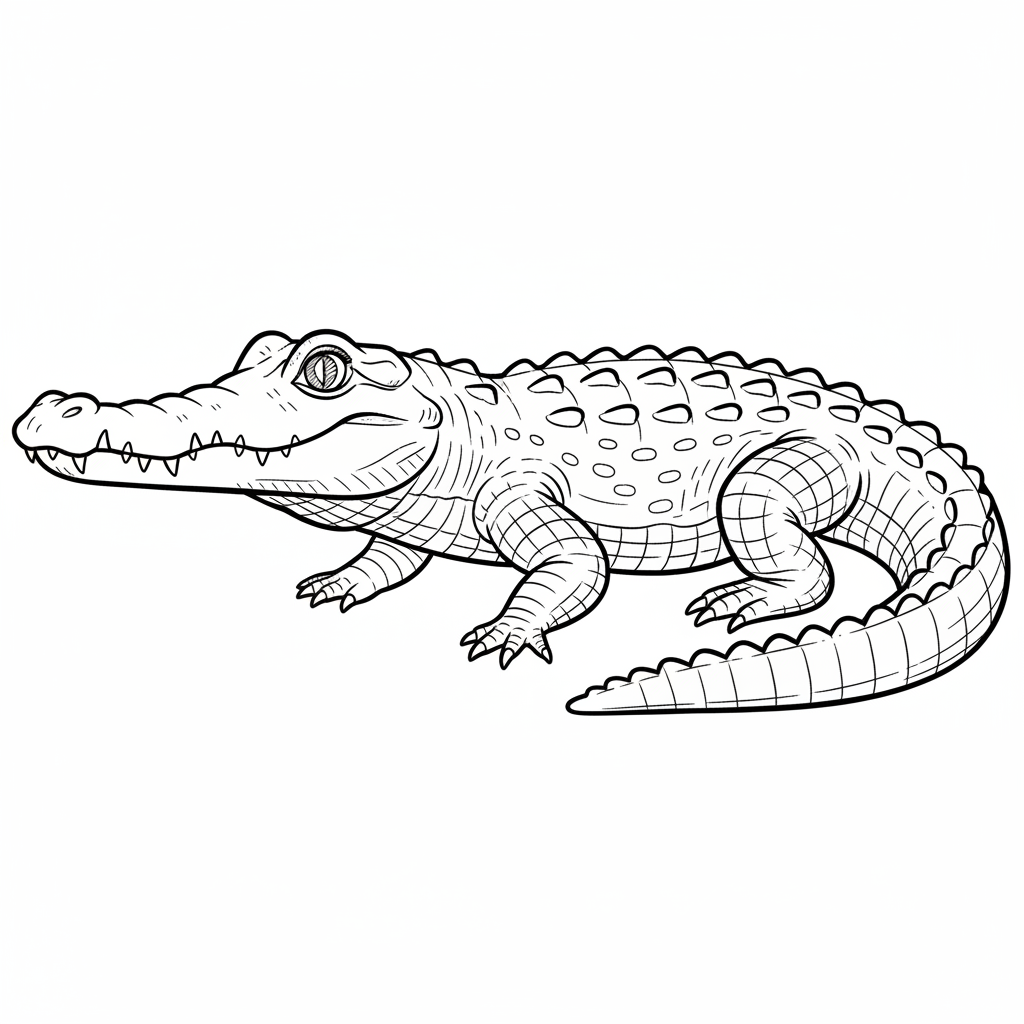
Learn to draw a friendly crocodile step by step using simple shapes, practice sketching, shading, and adding details to create your own crocodile drawing.
About this tutorial
Learn to draw a friendly crocodile step by step using simple shapes, practice sketching, shading, and adding details to create your own crocodile drawing.
What you need
Instructions
- 1
Step 1
Lightly draw a long horizontal oval in the middle of the paper for the crocodile's body.
- 2
Step 2
Add a slightly smaller circle overlapping one end of the oval for the crocodile's head.
- 3
Step 3
Draw two parallel curved lines from the opposite end of the head that meet in a point to make the tail.
- 4
Step 4
Sketch four short rounded legs under the body using small ovals or rectangles spaced evenly.
- 5
Step 5
Draw a long curved line across the front of the head to make the crocodile's mouth.
- 6
Step 6
Add small triangle teeth along the top and bottom edges of the mouth.
- 7
Step 7
Draw two rounded eye bumps on top of the head for the crocodile's eyes.
- 8
Step 8
Put pupils inside the eyes and draw two small nostril dots on the snout.
- 9
Step 9
Draw a row of small triangles along the crocodile's back to make the spiky ridges.
- 10
Step 10
Sprinkle small oval scales across the body to give your crocodile texture.
- 11
Step 11
Trace over the final lines with a darker pencil or fine-tip marker to make the drawing bold.
- 12
Step 12
Gently erase the light sketch lines so only the clean outline remains.
- 13
Step 13
Shade under the belly and legs with light pencil strokes and then colour the crocodile with greens yellows or your favorite colors.
- 14
Step 14
Share your finished crocodile drawing on DIY.org
Get inspired
Fun facts
How do I teach a child to draw a friendly crocodile step by step?
Start by lightly sketching simple shapes: an oval for the body, a circle for the head, and a long rounded rectangle for the snout. Add two small circles for eyes on top of the head and a curved line for the smiling mouth. Sketch short legs with rounded toes, a long tapering tail, and a row of triangular scales along the back. Refine lines, erase guidelines, add teeth, nostrils, and texture, then outline and color. Work slowly and celebrate progress.
What materials do I need to draw a crocodile with my child?
Gather plain drawing paper, a soft HB pencil for sketching, a darker pencil (2B) for shading, and a good eraser. You’ll also want a sharpener, colored pencils or markers for coloring, and optional tools like a fine black pen for outlines and a blending stump for smooth shading. A simple reference image of a friendly crocodile helps. For classroom or messy play, washable markers and scrap paper are handy.
What ages is drawing a friendly crocodile suitable for?
Drawing a friendly crocodile can be adapted for many ages. Toddlers (3–5) enjoy simple shapes and coloring with adult help. Early elementary kids (6–9) can follow step-by-step guides, practice proportions, and add basic shading. Older children (10+) can work on realistic textures, perspective, and advanced shading. Adjust complexity to the child’s attention span and motor skills, and offer step-by-step support for younger artists.
What are the benefits and fun variations of drawing crocodiles?
Drawing crocodiles builds fine motor skills, observational ability, and patience while encouraging creativity and confidence. It connects to science lessons about habitats and animal features. For variations, try cartoon crocodiles with big eyes, realistic studies with textured scales, or mixed media: collage scales from patterned paper, watercolor backgrounds, or adding a jungle scene. You can also make a storybook about your crocodile to practice writing and imagination.
Watch & Learn
Need help?
What can we use if we don't have a fine-tip marker, colored pencils, or an eraser?
If you don't have a fine-tip marker, trace the final lines with a darker pencil or ballpoint pen, use crayons or watercolors to color the crocodile, and replace an eraser with a kneaded eraser or a clean piece of white bread to lift light sketch lines.
My head and body don't look right or the tail point won't meet—how can I fix that?
If the overlapping circle for the head and the long horizontal oval for the body aren't aligned, redraw them very lightly and use a pencil guideline for the tail so the two curved lines meet in a clean point, then gently erase extra sketches before tracing.
How can I adapt this drawing for different ages?
For younger kids, simplify by drawing a single big oval body, a circle head, four rounded leg ovals and skip scales and spikes, while older kids can add the row of triangles for spiky ridges, many small oval scales, detailed teeth, and shading under the belly and legs.
How can we extend or personalize the crocodile drawing activity?
Enhance the drawing by adding a river or swamp background, creating color patterns on the scales, gluing textured green paper for bumpy skin, or turning the finished crocodile into a short comic strip before sharing on DIY.org.