How to Draw a Chinese Dragon
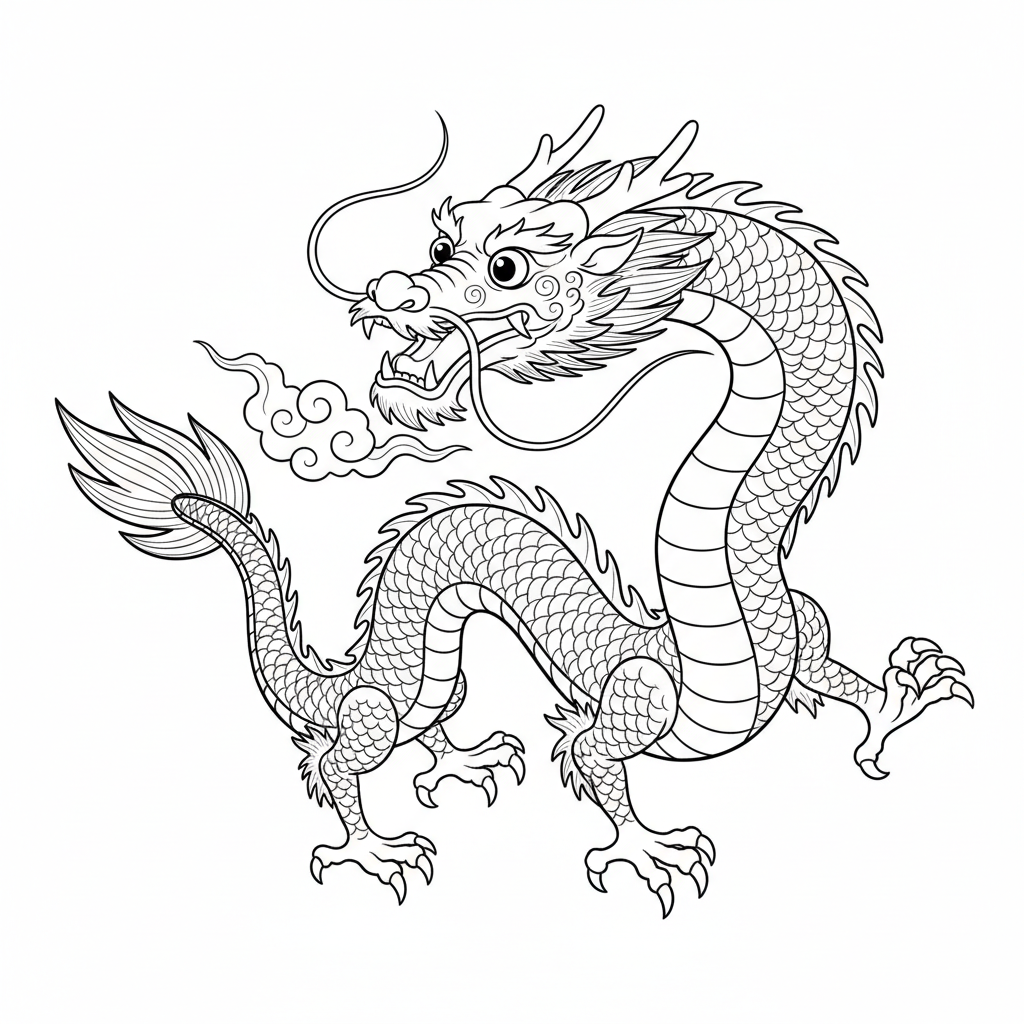
Draw a detailed Chinese dragon step by step using simple shapes, scales, and color; practice line control, symmetry, and patterning to create your own dragon.
About this tutorial
Draw a detailed Chinese dragon step by step using simple shapes, scales, and color; practice line control, symmetry, and patterning to create your own dragon.
What you need
Instructions
- 1
Step 1
Gather your materials and find a clean flat workspace where you can draw comfortably.
- 2
Step 2
Lightly draw a long S-shaped centerline across the paper to show where your dragon will bend.
- 3
Step 3
Sketch a large oval at one end of the centerline for the dragon’s head.
- 4
Step 4
Draw two parallel curved lines along the centerline to form the dragon’s long serpentine body.
- 5
Step 5
Add three short legs spaced along the underside of the body using small ovals and three short claw lines on each leg.
- 6
Step 6
Draw a round eye with a dark pupil and a small eyebrow shape to give the dragon expression.
- 7
Step 7
Draw two curved horns on top of the head and long flowing whiskers coming out from the snout.
- 8
Step 8
Sketch a wavy mane along the head and neck using flowing lines to show movement.
- 9
Step 9
Draw rows of overlapping semicircles along the body to create scales in a repeating pattern.
- 10
Step 10
Add decorative patterns like stripes or cloud shapes equally on both sides of the body to practice symmetry.
- 11
Step 11
Lightly erase any construction lines that you don’t want to keep so your dragon looks clean.
- 12
Step 12
Trace over your final lines with a black pen or marker to make the drawing bold and clear.
- 13
Step 13
Color the dragon’s body and head with your chosen base colors filling large areas neatly.
- 14
Step 14
Add darker tones and highlights near curves and edges to give your dragon depth and texture.
- 15
Step 15
Take a photo of your finished Chinese dragon and share your creation on DIY.org
Get inspired
Fun facts
How do you draw a detailed Chinese dragon step by step?
To draw a detailed Chinese dragon, start with a light pencil sketch of a winding S-shaped spine for the body. Block in simple shapes: an oval head, horn curves, and a long tail. Add facial features—eyes, whiskers, and an open mouth—then sketch overlapping crescent scales and a spiky mane along the back. Work symmetrically on paired features, refine lines, erase guidelines, ink outlines, and color using layered strokes to emphasize form and pattern. Practice line control and repetition for consis
What materials do I need to draw a Chinese dragon?
You'll need plain drawing paper or a sketchbook, HB and softer pencils (HB, 2B), a good eraser, and a sharpener. Add fine liners or black markers for inking, colored pencils, markers, or watercolor paints for color, and blending stumps for shading. Optional items: reference images, a ruler for symmetry guides, tracing paper for practice, and thicker paper if using paint. Keep materials non-toxic and age-appropriate for kids.
What ages is drawing a detailed Chinese dragon suitable for?
This activity suits children differently by skill level: ages 4 to 6 can make simplified dragon shapes and basic color blocking with adult help. Ages 7 to 9 are ready to practice scales, mane patterns, and controlled lines. Ages 10 and up can tackle detailed symmetry, intricate scales, and shading techniques. Always adapt complexity, provide tracing templates for beginners, and supervise younger kids with sharp tools or paint to ensure safety and confidence-building.
What are the benefits of drawing a Chinese dragon for kids?
Drawing a Chinese dragon boosts fine motor skills, pattern recognition, and hand-eye coordination through repeated scale and line practice. It fosters symmetry awareness, patience, and sequential thinking when following step-by-step shapes. The activity also encourages cultural curiosity about Chinese traditions and lets children express creativity with colors and patterns. Group projects can build teamwork; displaying finished pieces increases pride and motivation to try more complex designs.
Watch & Learn
Need help?
What can I use if I don't have a black pen or marker or special coloring supplies?
If you don't have a black pen or marker, trace your final lines with a dark graphite pencil or fine-tip ballpoint and use colored pencils, crayons, or watercolors to color the dragon’s body and head as the instructions say.
My dragon's body or scales look uneven — how do I fix that?
Keep the 'long S-shaped centerline' and the 'two parallel curved lines' very light, adjust spacing before adding the 'rows of overlapping semicircles' for scales, and lightly erase and redraw sections until the body and scales look even before you trace over final lines.
How can I adapt this drawing activity for different ages or skill levels?
For younger children simplify by using one big curved body, a single oval head, and fewer 'rows of overlapping semicircles' to color, while older kids can add more 'decorative patterns,' fine horn and whisker details, and practice 'darker tones and highlights' for depth.
What are simple ways to extend or personalize the dragon drawing?
Personalize your dragon by adding mirrored 'cloud shapes' from the decorative step for a background, using metallic pens or textured paper when you 'color the dragon’s body,' or cutting it out to make a puppet and then 'take a photo of your finished Chinese dragon' to share on DIY.org.