How to Draw a Cat Face
Draw a cat face step-by-step using simple shapes, pencil guidelines, and basic shading. Learn proportions, whiskers placement, and expressive eyes.
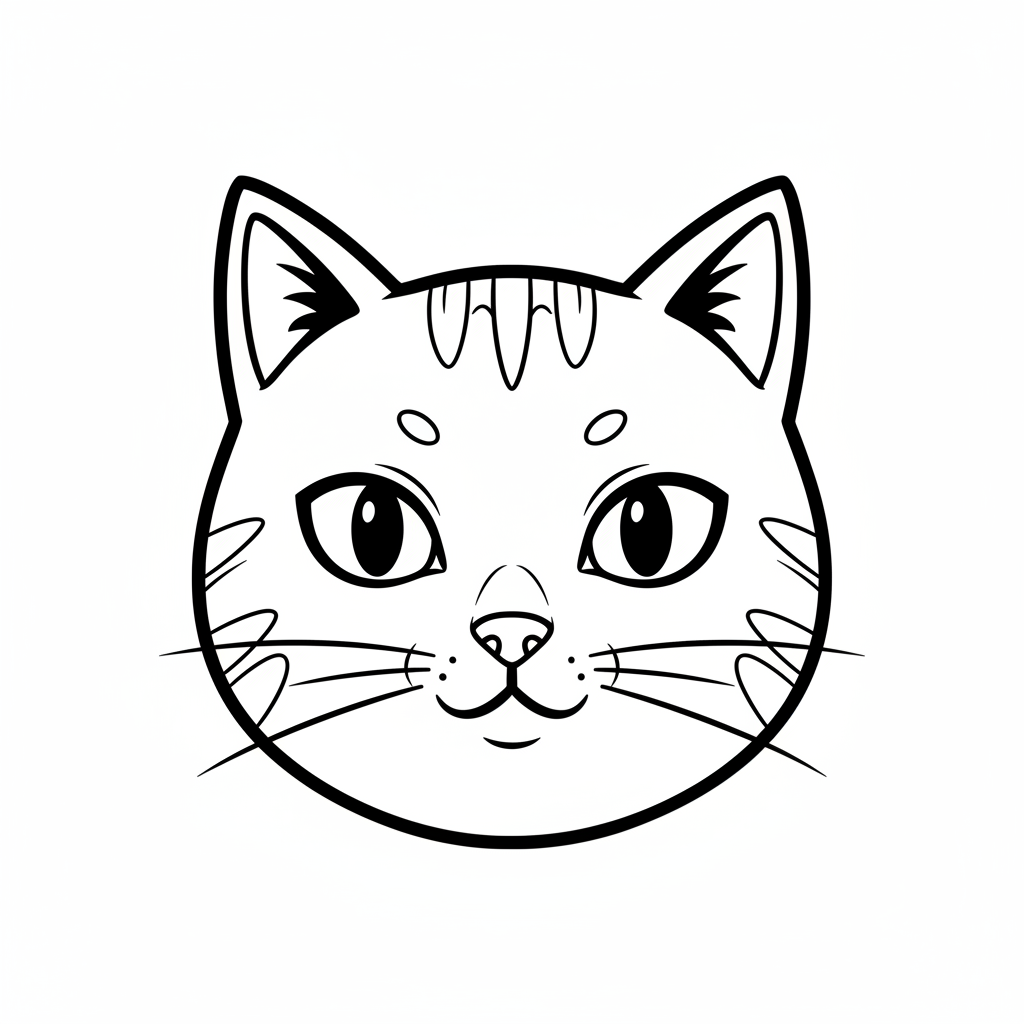
About this tutorial
Draw a cat face step-by-step using simple shapes, pencil guidelines, and basic shading. Learn proportions, whiskers placement, and expressive eyes.
What you need
Instructions
- 1
Step 1
Lightly draw a large circle near the middle of your paper for the cat's head.
- 2
Step 2
Draw one vertical line down the center of the circle and one horizontal line across the middle as simple guidelines.
- 3
Step 3
Add two triangle shapes on top of the circle for the ears placing one on each side.
- 4
Step 4
On the horizontal guideline draw two almond-shaped eyes spaced about one eye-width apart.
- 5
Step 5
Inside each eye draw a smaller circle for the iris and leave a tiny white spot for the highlight.
- 6
Step 6
Draw a small upside-down triangle on the vertical guideline below the eyes for the nose.
- 7
Step 7
Draw a short vertical line from the bottom of the nose to mark the center of the mouth.
- 8
Step 8
From the end of that line draw two small curved lines outwards to make the smiling mouth.
- 9
Step 9
Put three small dots on each cheek and draw three whisker lines from each dot outward.
- 10
Step 10
Gently erase the guideline lines so the cat face shapes look clean.
- 11
Step 11
Add short quick strokes around the face and ears to show fluffy fur.
- 12
Step 12
Shade lightly inside the ears and add soft shading on one side of the face to show form.
- 13
Step 13
Colour the eyes and fur if you want using your colouring materials.
- 14
Step 14
Share your finished cat face on DIY.org.
Get inspired
Fun facts
How do you draw a cat face step-by-step?
Start with light pencil guidelines: draw a circle for the head and a vertical line to center features. Add a horizontal eye line halfway down the circle. Sketch two triangles for ears and oval eyes on the guideline. Place a small upside-down triangle for the nose, draw a simple mouth and curved cheeks, then add whisker dots and lines. Soften lines with an eraser, add basic shading under the ears, eyes, and chin for depth.
What materials do I need to draw a cat face?
You'll need at least a medium pencil (HB or 2B), a plain sheet of drawing paper, a soft eraser and a pencil sharpener. Add a blending stump or a tissue for smooth shading, plus colored pencils or markers if you want color. A kneaded eraser helps lift soft highlights. Optional: a ruler for straight guidelines and a fine liner for outlining once the sketch is finished. All materials are safe for kids with supervision.
What ages is this cat-face drawing activity suitable for?
This cat-face drawing works well for preschoolers through tweens. Ages 4–6 can practice basic shapes and simple faces with adult help. Ages 7–9 can follow step-by-step guidelines independently and try basic shading. Ages 10+ can refine proportions, explore realistic fur texture, and advanced shading. Adjust complexity, time, and tools for each child. Supervise younger kids with sharp pencils and small tools to ensure safety.
What are the benefits of drawing cat faces and how can I vary the activity?
Drawing cat faces builds fine motor control, hand-eye coordination, observation of proportions, and concentration. It boosts creativity and confidence as kids personalize expressions and markings. For variations, try cartoonified features for younger children, realistic fur texture for older kids, or create a whole cat character with different poses. Use colored pencils, watercolor washes, or collage to mix media. Encourage copying photos for realism and imaginative play for storytelling.
Watch & Learn
Need help?
What can I use if I don't have a regular pencil or eraser for the guidelines?
Use a mechanical pencil or a light-colored colored pencil to draw the circle and guidelines and a soft kneaded eraser or clean white eraser to gently erase the guideline lines as instructed.
My eyes look uneven or too close together—how can I fix that?
Mark one eye-width on the horizontal guideline with the tip of your pencil or a small coin as a spacer, then redraw the almond-shaped eyes lightly so you can gently erase and adjust spacing.
How can I adapt this cat-face drawing for different ages?
For younger children simplify to a big circle and triangle ears and skip detailed irises and whisker dots, while older kids can add the short quick strokes for fluffy fur, soft shading on one side of the face, and colored irises.
What are some ways to enhance or personalize the finished cat face?
Personalize it by adding stripes or spots with your colouring materials, changing the mouth curve to create different expressions, experimenting with varied short quick strokes for fur texture, and then share the result on DIY.org.