How to Draw a Car
Draw a simple car step by step using pencil, ruler, eraser and colored pencils to learn shapes, proportions, symmetry and adding wheels, windows, decorations.
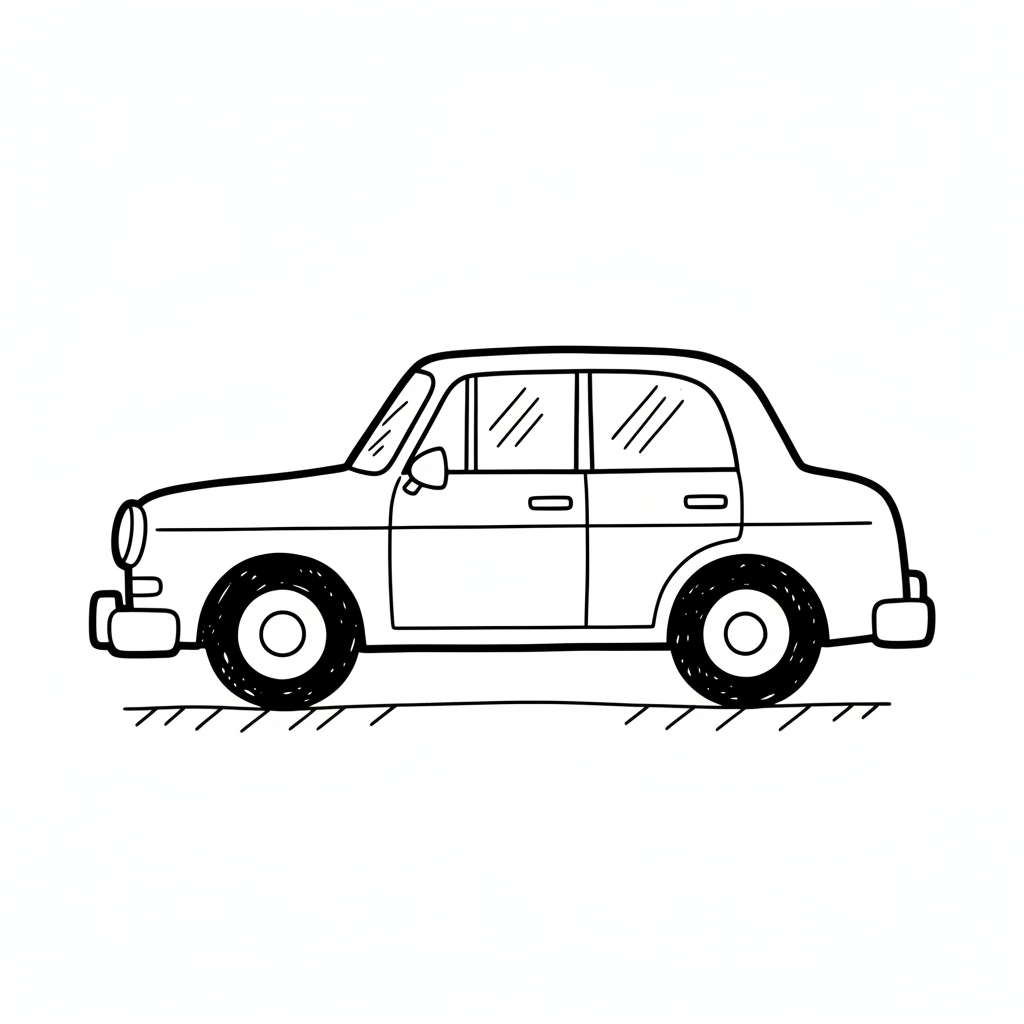
About this tutorial
Draw a simple car step by step using pencil, ruler, eraser and colored pencils to learn shapes, proportions, symmetry and adding wheels, windows, decorations.
What you need
Instructions
- 1
Step 1
Gather your materials and place them on a clear flat surface.
- 2
Step 2
Use your ruler to lightly draw a long horizontal rectangle for the car body.
- 3
Step 3
Draw a curved line across the top of the rectangle to form the car roof.
- 4
Step 4
Measure the bottom edge of the rectangle with your ruler and put a small mark at one third and two thirds for the wheel centers.
- 5
Step 5
Draw a circle around each mark to make the two wheels.
- 6
Step 6
Draw a smaller circle inside each wheel to make the hubcaps.
- 7
Step 7
Erase the rectangle lines that cross through the wheels so the wheels look like they sit outside the car body.
- 8
Step 8
Add small rectangles at the front and back ends of the body to make bumpers.
- 9
Step 9
Draw a thin vertical pillar line under the roof to split the front and rear window areas.
- 10
Step 10
Draw a slanted windshield shape in front of the pillar.
- 11
Step 11
Draw a rear or side window shape behind the pillar.
- 12
Step 12
Add a small rectangle for a door handle on the side of the car.
- 13
Step 13
Draw a little oval or rectangle near the front corner for a side mirror.
- 14
Step 14
Color the car body wheels windows and details using your colored pencils or crayons.
- 15
Step 15
Share your finished car drawing on DIY.org.
Get inspired
Fun facts
How do I teach my child to draw a simple car step by step?
Start by drawing a horizontal guideline for the car's base with a ruler. Sketch a rounded rectangle for the body, then add a smaller rounded rectangle on top for the roof. Use evenly spaced vertical guideline to keep symmetry, mark wheel centers, draw two circles for wheels and smaller inner circles for rims. Add windows, doors, headlights and details, erase guidelines, refine lines, and color with colored pencils. Encourage slow, measured strokes.
What materials do I need to draw a simple car with my child?
You'll need plain drawing paper, an HB or 2B pencil, a ruler for straight guidelines, a clean eraser and a sharpener. Colored pencils or crayons add color; a compass or a round coin helps draw neat wheels. Optional: a fine-tip black marker to outline, scrap paper for practice, and masking tape to secure the paper. All materials are low-cost and child-safe when supervised.
What ages is drawing a simple car suitable for?
This activity suits ages about 4–12 with adjustments. Ages 4–6 can trace or draw simple box-and-circle cars with adult help to learn shapes. Ages 7–9 can practice proportions, symmetry, and use a ruler to add straight lines. Ages 10+ can refine details, perspective and decorations. For younger children simplify steps and offer larger tools; older kids can try shading and more complex designs.
What are the benefits of teaching children to draw a car step by step?
Drawing a car builds fine motor skills, hand–eye coordination, and understanding of shapes, proportions and symmetry—useful for early geometry. Step-by-step drawing teaches planning, sequencing and patience, while decorating encourages creativity and color choice. It boosts confidence as children see progress from guidelines to a finished picture. Try variations like different perspectives, race cars, or designing imaginary vehicles to extend learning and keep the activity fresh.
Watch & Learn
Need help?
What can we use if we don't have a ruler, compass, or colored pencils?
Use the straight edge of a hardcover book or cereal box as a ruler, trace coins or small cups for the wheels in step 4 instead of a compass, and substitute markers or washable paint for colored pencils or crayons when coloring in step 13.
My wheels look uneven or cut through the car body — how do I fix that?
If the wheels are uneven or overlapping the body, lightly erase and remeasure the bottom edge to place marks at one-third and two-thirds (step 3), redraw the wheel circles (step 4), and then use the eraser as in step 7 to remove rectangle lines that cross through the wheels so they sit outside the car body.
How can I adapt this activity for younger or older children?
For younger children, pre-draw the long horizontal rectangle and wheel center marks from steps 2 and 3 and let them complete simple wheels and color in step 13, while older children can add details like window pillars and slanted windshield proportions (steps 9–11), perspective, panel lines, and shading.
How can we extend or personalize the car drawing to make it more creative?
Extend or personalize the activity by adding headlights and a license plate near the bumpers from step 8, painting custom stripes or a logo on the car body before coloring in step 13, gluing on paper cutouts for mirrors or hubcaps from step 6, and then share the finished drawing on DIY.org as suggested.