Hoop Around Your Arms
Make lightweight arm hoops from cardboard or pool noodles, decorate them, then practice passing and spinning them around your arms to build coordination.
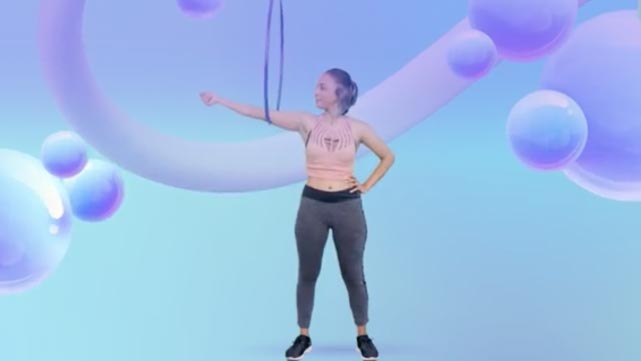
About this activity
Make lightweight arm hoops from cardboard or pool noodles, decorate them, then practice passing and spinning them around your arms to build coordination.
What you need
Step by step
- 1
Step 1
Wrap a string or measuring tape around the widest part of the arm where you want the hoop to sit and mark the length.
- 2
Step 2
Use a marker and ruler to transfer that length onto your cardboard or mark the same length on the pool noodle and add a little extra for overlap.
- 3
Step 3
Carefully cut the cardboard strip or cut the pool noodle at the marked length to make a straight piece.
- 4
Step 4
Join the two ends together and tape or glue them securely to form a round hoop.
- 5
Step 5
Slide the hoop onto your arm to check it fits comfortably and make note if it needs to be tighter or looser.
- 6
Step 6
Decorate the hoop with markers stickers or other coloring materials to make it bright and fun.
- 7
Step 7
Let any glue or wet decorations dry fully before you start moving with the hoop.
- 8
Step 8
Place the hoop on your wrist and practice pushing it up to your elbow and back down slowly five times.
- 9
Step 9
Put the hoop on your forearm and practice flicking your wrist to spin the hoop around your arm five times.
- 10
Step 10
Try passing the hoop from one arm to the other by sliding it across your body slowly three times.
- 11
Step 11
Walk slowly in a small circle while keeping the hoop spinning on one arm for 30 seconds to practice balance and coordination.
- 12
Step 12
Share a photo or video of your finished hoop tricks on DIY.org.
Fun facts
How do you play Hoop Around Your Arms?
To play Hoop Around Your Arms, make lightweight arm hoops sized to slide over a child’s hand and rest on the forearm. Start with gentle practice: slide a hoop from wrist to elbow, then back down, and practice spinning it around the arm. Use slow, repeated motions and demonstrate first. Progress to passing hoops between arms, using two hoops, and adding music. Keep sessions short and positive to build coordination.
What materials do I need for Hoop Around Your Arms?
You’ll need lightweight hoop materials such as short sections of pool noodle, thin cardboard rolled into rings, or flexible foam tubing. Also get scissors or a craft knife (adult use), duct tape or hot glue, sandpaper or tape to smooth edges, paints/markers/stickers for decorating, and a ruler to size rings. Optional: velcro strips to adjust fit and a soft mat for practice. Avoid heavy or sharp materials.
What ages is this activity suitable for?
Hoop Around Your Arms suits toddlers through school-age kids with adjustments: 3–5 year olds benefit from simple passing and one-arm spins with close supervision. Ages 6–10 can learn faster spins, passing between arms, and timed challenges. Younger than 3 is not recommended due to small-piece and balance risks. Always supervise and adapt hoop size and session length for each child’s coordination level.
What safety tips and variations should I consider?
Safety: use soft, lightweight materials, smooth or tape any rough edges, clear a wide practice area, and supervise young children. Avoid small decorations that could detach. Variations: make relay races, add music for rhythmic spins, challenge with different hoop sizes, try one-handed passes, or use scarves for a gentler version. Turn it into a cooperative game where kids pass hoops to each other for teamwork practice.
Watch & Learn
Need help?
What can I use instead of a pool noodle or cardboard if I can't find them?
Use a rolled-up magazine, a strip of thin plastic tubing, or a foam craft sheet cut to the same length you measured with the string or measuring tape and transferred with a marker and ruler as a substitute for the cardboard or pool noodle.
My hoop keeps coming apart at the seam, how can I fix it?
Overlap the two ends an extra inch and secure them with strong duct tape or a bead of hot glue when you join the two ends together and tape or glue them securely to form a round hoop.
How can I adapt this activity for younger or older kids?
For toddlers use a softer pool noodle cut slightly larger than their arm and adult supervision during cutting, while older kids can increase difficulty by timing five pushes from wrist to elbow or attempting the 30-second walk-and-spin balance challenge.
How can we make the hoop more fun or showcase skills?
Decorate the hoop with glow-in-the-dark paint, sequins, or stickers during the decorate step, let any glue or wet decorations dry fully, add a lightweight bell for sound, and record a short trick video to share on DIY.org.