Have someone edit your writing
Exchange short stories or essays with a peer or family member to receive feedback, learn revision techniques, and improve clarity and grammar.
About this activity
Exchange short stories or essays with a peer or family member to receive feedback, learn revision techniques, and improve clarity and grammar.
What you need
Step by step
- 1
Step 1
Choose one short story or essay you wrote that is about one page long to share.
- 2
Step 2
Find a friend or family member who will swap writing with you.
- 3
Step 3
Agree together on two simple rules: be kind and be specific and set a timer for the feedback time.
- 4
Step 4
Exchange your writing by handing over the paper or sending the file to each other.
- 5
Step 5
Read your partner’s piece silently one time to understand the main idea.
- 6
Step 6
Write a one-sentence summary of the piece at the top to check how clear it is.
- 7
Step 7
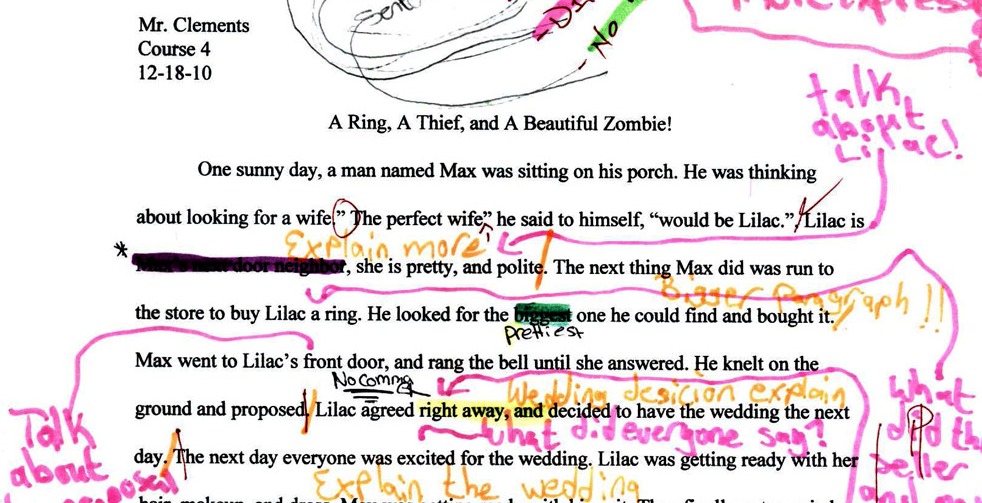
Circle or underline up to five sentences that seem confusing or unclear.
- 8
Step 8
Underline spelling or grammar mistakes and write a short correction or note next to each one.
- 9
Step 9
Write two specific compliments about things you liked in the writing.
- 10
Step 10
Write two clear suggestions the author could try to improve the piece.
- 11
Step 11
Swap back and read the feedback you received from your partner.
- 12
Step 12
Choose one suggestion to try first and revise your story to improve it.
- 13
Step 13
Share your finished creation on DIY.org
Fun facts
How do I organize a peer editing session so my child can exchange short stories or essays?
Start by setting a clear goal (clarity, grammar, or voice) and a time limit. Have each child read their piece aloud or swap printed copies. Use a simple feedback structure: praise what works, ask questions about unclear parts, and suggest one or two concrete fixes. Encourage authors to take notes and then revise. Finish with a short reflection: what did the writer learn and what will they change next? Adults can model feedback for younger children.
What materials do I need for a writing exchange and editing activity?
You’ll need copies of the stories or essays (printed or digital), pens or highlighters, and sticky notes for quick comments. Provide a simple checklist or rubric with items like 'clear beginning' and 'complete sentences.' A timer helps keep rounds brief; a notebook lets authors record revision ideas. Optional items: a laptop or tablet for typed edits, colored pencils for younger kids, and a quiet, comfortable workspace to read and talk.
What ages is peer editing for short stories or essays suitable for?
Peer editing can work for most school-age kids. Ages 5–7 benefit from oral feedback and one-on-one adult guidance focusing on simple ideas and sentences. Ages 8–11 can use short written checklists and practice giving kind, specific comments. Ages 12+ handle more detailed critique on structure, clarity, and grammar and can work independently in small groups. Adjust expectations and adult support based on reading and writing levels, not just age.
What are the benefits of exchanging writing for feedback, and how can I keep it safe and positive?
Exchanging writing builds editing skills, clarity, empathy, and confidence. Kids learn to spot grammar issues, organize ideas, and accept constructive criticism. To keep it positive, teach the sandwich method: start with praise, give one concrete suggestion, and end with encouragement. For safety, supervise exchanges for younger children, avoid sharing personal details in stories, and set rules for respectful language. Consider family-only swaps or teacher-moderated groups for extra security.
Watch & Learn
Need help?
What can we use if we don't have printed paper or a computer to exchange the story, or if we don't have a timer?
If you don't have printed paper or a computer file to exchange, use a notebook page or take a clear photo of your handwritten story to send, and use a kitchen timer or a phone timer for the feedback time.
What should we do if we can't write a one-sentence summary or we keep circling too many sentences?
If you can't write a clear one-sentence summary or keep marking too many lines, re-read the piece silently focusing on the main idea in the first and last paragraphs, highlight the topic sentence, and limit yourself to the five most confusing sentences as the instructions say while using the timer to stay focused.
How can we change the activity for younger or older kids while still following the steps?
For younger children have the partner read the story aloud and give one spoken compliment and one suggestion while an adult writes them down, and for older kids have them underline up to five confusing sentences and list three specific revision choices before choosing one to try.
How can we extend or personalize the activity after making the first revision?
Turn the chosen suggestion into a one-paragraph revision plan that lists steps (for example, fixing underlined grammar mistakes and rewriting circled sentences), then publish the revised story and a short reflection on DIY.org.