Go scavenging for free stuff
Collect safe, free items like leaves, rocks, and discarded recyclables with an adult; identify, sort, and reuse them to make simple crafts.


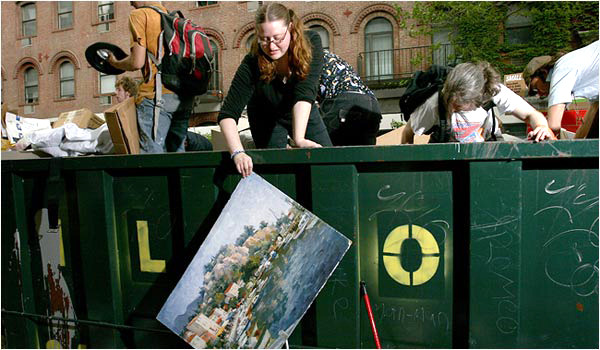

Step-by-step guide to scavenging for safe, free items
What is Safeguarding? An Early Years Guide to Safeguarding Children
Step 1
Put on your gloves so your hands stay clean and safe.
Step 2
Take your small bag or basket outside with an adult.
Step 3
Walk slowly and look carefully for safe free items on the ground or in the yard.
Step 4
Pick up only safe items such as whole leaves rocks and clean containers and put them in your bag.
Step 5
Say the name of each item out loud to identify what you found.
Step 6
Bring your collected items home with your adult.
Step 7
Wash your hands with soap and water before you start crafting.
Step 8
Lay out your protective mat or towel and spread your items on it.
Step 9
Sort the items into groups like leaves rocks and recyclables.
Step 10
Choose one group of items to turn into a simple craft.
Step 11
Set up your work area by placing glue scissors tape string and colouring materials on the mat.
Step 12
Attach and arrange your chosen items to build your craft using glue tape or string.
Step 13
Let your craft dry or set completely and then share your finished creation on DIY.org
Help!?
What can we use instead of disposable gloves or a small bag if we don't have them?
If you don't have disposable gloves or a small bag, an adult can supervise while you use clean household rubber gloves and a reusable grocery bag or an old shoebox to follow 'Put on your gloves' and 'Take your small bag or basket'.
What should we do if collected items won't stick to the craft or get too dirty?
If items won't stick when you 'Attach and arrange your chosen items,' press heavier pieces with extra glue, use tape or string for bulky items, and pick dry, clean pieces from 'Pick up only safe items' then follow 'Let your craft dry or set completely'.
How can we adapt the activity for different ages?
For toddlers, stick to large leaves and rocks with a glue stick and close adult help during 'Pick up only safe items' and 'Set up your work area,' while older kids can sort groups, use scissors, string and recyclables for more complex designs before sharing on DIY.org.
How can we extend or personalize the finished craft?
After you 'Sort the items into groups,' personalize the project by painting leaves, labeling items with their names, making a hanging mobile with string, or decorating clean containers with colouring materials before letting them dry and sharing the finished creation on DIY.org.
Watch videos on how to scavenge for safe, free items
Safe and Unsafe Situations | Safety Tips for Kids!
4 Videos
Safe and Unsafe Situations | Safety Tips for Kids!
Teaching Children about Safe and Unsafe | Twinkl Board Games
Sensory Seekers: 5 Powerful Activities That Really Help | Practical Ideas for Parents
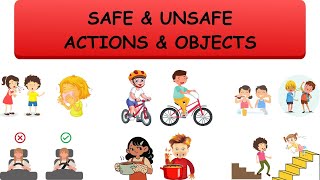
Safe and Unsafe Actions & Objects | Safe and Unsafe Actions | Safe and Unsafe Objects @paxberrytv
Facts about upcycling and nature exploration
🍃 Leaves make great nature stamps — press paint on a leaf and print awesome patterns!
🪨 Rocks are grouped into igneous, sedimentary, and metamorphic — look for layers or crystals to tell them apart!
♻️ Only about 9% of all the plastic ever produced has been recycled, so reusing items really helps the planet!
🔎 Small found objects like bottle caps and buttons are perfect for mosaics — just clean them first with an adult's help!
🎨 Sorting finds by color, size, or material makes it easy to plan and build cool upcycled crafts!
How do we go scavenging for safe, free items and turn them into simple crafts?
What materials should we bring for a scavenger hunt and crafting session?
What ages is scavenging for free items and making crafts suitable for?
What are the benefits, safety tips, and fun variations for a scavenging-and-crafting activity?
