Experiment with light
Build a simple spectroscope from a cardboard tube, CD, and flashlight to split light into colors and explore reflection and refraction.


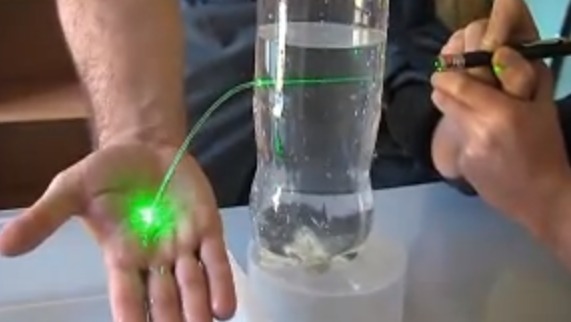

Step-by-step guide to build a simple spectroscope
Light Experiment | Kids Science
Step 1
Gather all the materials listed and bring them to a clean table.
Step 2
Ask an adult to help you before you use scissors or make any cuts.
Step 3
Use the ruler and pencil to mark and trim the cardboard tube to about 20 cm long.
Step 4
Cut two small rectangles of black paper about 4 cm by 2 cm.
Step 5
Tape the two black paper rectangles over one end of the tube leaving a narrow gap of about 2 mm between them to form a slit.
Step 6
Use scissors to cut a diagonal slot about 2 cm long near the opposite end of the tube at a 45° angle.
Step 7
Slide the CD into the diagonal slot with the shiny side facing the slit and the edge of the CD tilted toward the middle of the tube.
Step 8
Tape around the CD gently so it stays at that angle and does not wobble.
Step 9
Cut a small round viewing hole about 1.5 cm wide next to the CD on the end of the tube so you can put your eye close to the CD.
Step 10
Turn off the room lights so the room is dim.
Step 11
Have an adult hold the flashlight about 20 cm away and point the beam straight at the slit.
Step 12
Look through the viewing hole and slowly tilt the tube or CD until you see a rainbow of colors appear inside the tube.
Step 13
Take a picture or make a drawing of the colors you see and share your finished spectroscope and your discoveries on DIY.org
Help!?
What can I use if I don't have some of the listed materials like a CD or black paper?
If you don't have a CD use an old DVD or a small piece of shiny gift-wrap cut into a disc and slid into the diagonal slot (step 6), and if you lack black paper cover the slit with black electrical tape or paint it black (step 5).
I don't see any rainbow—what likely went wrong and how can I fix it?
If no colors appear, make sure the slit is about 2 mm wide (step 5), the CD is tilted and taped securely in the 45° diagonal slot (steps 6–7), the flashlight is about 20 cm away and aimed straight at the slit (step 11), and the room is dark (step 10), adjusting each until a spectrum shows inside the tube (step 12).
How can I adapt this activity for different ages?
For younger kids have an adult do the ruler measurements, cutting of the tube and the diagonal slot (steps 2–6) while the child tapes the CD and decorates the tube, and for older kids add a protractor to fine-tune the CD angle, record different tilt settings, and photograph spectra through the viewing hole (steps 6–9, 12).
How can we extend or personalize the finished spectroscope?
To extend the activity compare spectra from different light sources (flashlight, sunlight, lamp), try a diffraction grating instead of the CD in the diagonal slot for sharper lines (step 6), secure the flashlight at a fixed distance with a clamp for repeatable tests, and decorate before sharing your results on DIY.org (step 12).
Watch videos on how to build a simple spectroscope
Top 10 Experiments For Kids with Light and Optics | STEM | Kid science Ep 32
4 Videos
Top 10 Experiments For Kids with Light and Optics | STEM | Kid science Ep 32
Refraction Of Light In Water | Science Experiments for Kids | Sema's Lab
Light Travels in a Straight Line | Science Experiment
Refraction of Light Experiment | Dispersion of Light through Prism | Science Experiments for kids
Facts about light and optics
🔬 A spectroscope splits white light into its colors so you can see the different wavelengths — red is about 700 nm and violet about 400 nm.
🌈 Isaac Newton used a prism in the 1660s to prove white light is made of all colors, kickstarting the study of light.
💿 A shiny CD's tiny grooves act like a diffraction grating and can separate light into rainbow patterns.
🔦 Even a plain white flashlight is made of many colors; your homemade spectroscope will reveal them.
👀 Human eyes can distinguish roughly one million different colors, but a spectroscope shows the exact wavelengths that make them up.
How do I build a simple spectroscope from a cardboard tube, CD, and flashlight?
What materials do I need to make a cardboard tube spectroscope?
What ages is building a simple spectroscope suitable for?
What safety precautions should I follow when doing this light-splitting experiment?
